
2,000 SMEs Benefit From Oil And Gas Training Ahead Of First Oil In August 2026
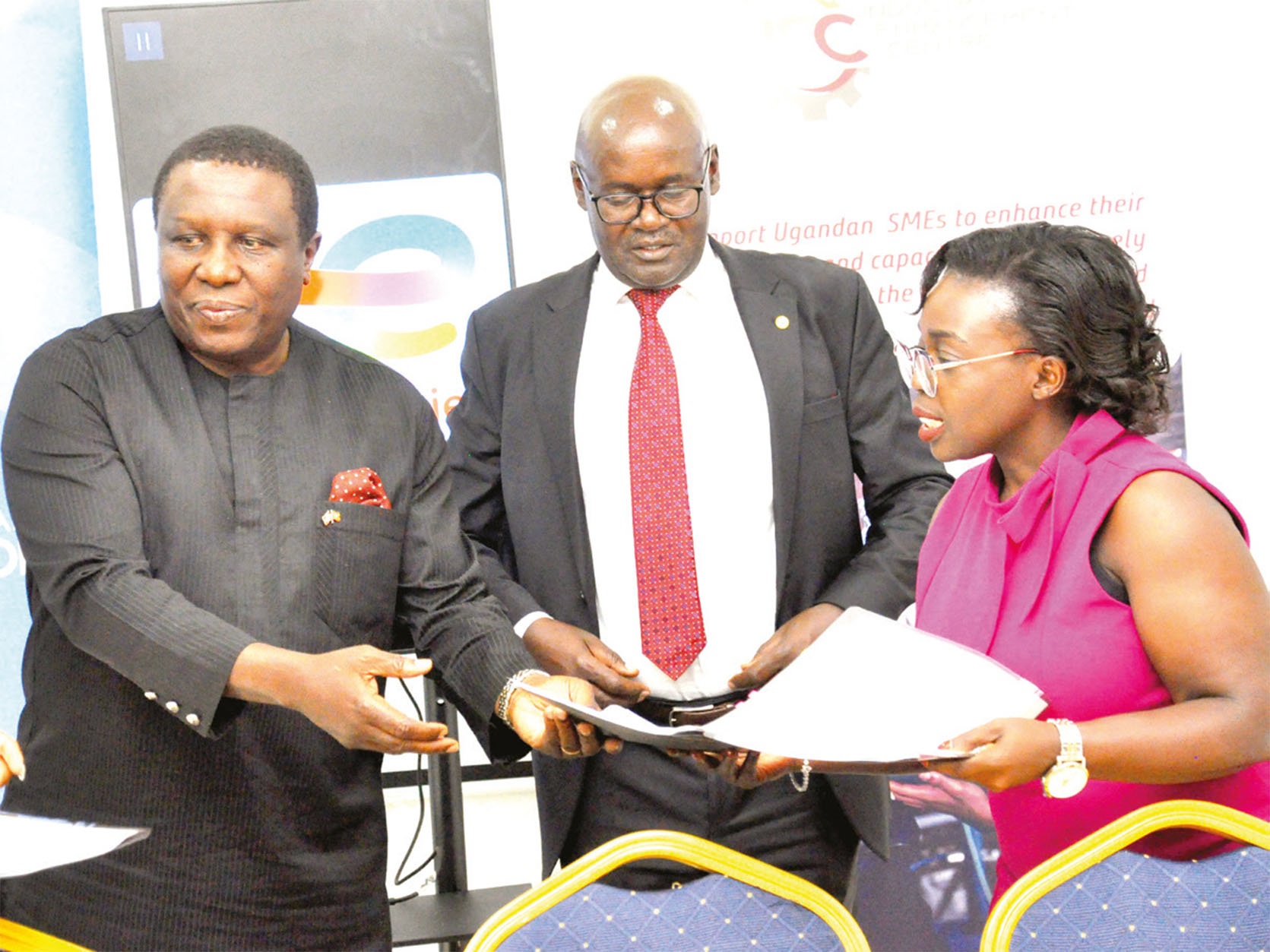
L-R: Mugerwa, Habumugisha and Barbara Daisy Nabuweke, the legal director compliance officer EACOP during the MOU signing at Industry Enhancement Centre in December 2025
HABARI DAILY I Kampala, Uganda I More than 2,000 small and medium-sized enterprises (SMEs) have so far benefited from specialised oil and gas training as efforts intensify to position local businesses to take advantage of opportunities in Uganda’s emerging petroleum industry.
The initiative has received a boost following the signing of a Memorandum of Understanding (MoU) between IEC and the East African Crude Oil Pipeline (EACOP), aimed at enhancing SME participation in the oil and gas value chain. The MoU was signed last week at IEC offices in Kololo by Mugerwa, whose Zoramu Consulting Group oversees IEC operations, and John Bosco Habumugisha, the Deputy Managing Director of EACOP.
IEC is an oil and gas sector-led initiative established to empower Ugandan SMEs to sustainably participate in petroleum-related activities through targeted training, enterprise development and advisory support. The partnership with EACOP aligns with Uganda’s National Content Policy, which seeks to maximise local participation in the oil and gas sector by prioritising Ugandan companies, skills and services.
EACOP is a flagship regional infrastructure project designed to transport crude oil from Uganda’s Lake Albert oilfields to the Tanzanian port of Tanga for export. Once completed, the 1,443-kilometre pipeline will be the world’s longest electrically heated crude oil pipeline, playing a central role in Uganda’s journey to first oil exports expected in 2026.
Speaking at the MoU launch, Mugerwa said the initiative is focused on building the capacity and competitiveness of local firms so they can meet industry standards and successfully bid for oil and gas contracts. “There is a lot of money being injected into the oil and gas sector in Uganda. We hope to see more local businesses taking part and benefiting from it,” he said.
He noted that by exposing SMEs to required standards, compliance frameworks and procurement processes, the training prepares them to participate not only in the crude oil pipeline project but also in upstream and downstream petroleum activities. Mugerwa added that the MoU signals long-term commitment by stakeholders to continue strengthening local enterprise capacity.
IEC supports SMEs through enterprise development programmes that include coaching, advisory services, access to networks and linkages to financing. These interventions are intended to help businesses overcome common barriers such as limited technical capacity, compliance gaps and access to capital.
Beyond oil and gas-specific training, IEC has partnered with institutions such as the Uganda Revenue Authority, National Social Security Fund, dfcu Bank and the Petroleum Authority of Uganda to provide all-round training. This broader approach covers tax compliance, social security obligations, financial management and regulatory requirements, equipping SMEs to operate sustainably.
As Uganda edges closer to commercial oil production, initiatives such as the IEC-EACOP partnership are expected to play a critical role in ensuring that local businesses are not spectators but active participants in a sector seen as transformative for the country’s economy and livelihoods.
EACOP deputy managing director John Bosco Habumugisha emphasised that through supporting SMEs, broader economic development will be realized.
“We want to train the businesses to be strong, skilled and competitive. This will ensure that they meet the oil and gas industry standards which are quite stiff,” he asserted.
Rosette Komugisha, the national content lead at TotalEnergies EP Uganda, who are one of the sponsors of IEC, reiterated that through financing the training of SMEs, Ugandan enterprises will take part in the oil and gas activities.
Uganda holds about 6.5 billion barrels of oil in place, with roughly 1.4 to 1.7 billion barrels estimated as recoverable reserves, primarily in the Albertine Graben. The Petroleum Authority of Uganda (PAU) recently updated this recoverable figure to 1.65 billion barrels, with significant progress on the Tilenga and Kingfisher projects leading towards first commercial oil slated for mid 2026.
About the Author