
Hajji Yunus Kakande
HABARI DAILY I Kampala, Uganda I There is a huge reshuffle in the works, and talk in the corridors of power has revealed that it will affect many people currently working in the President’s Office. Although the reported October reshuffle has not yet been accompanied by an official list of affected officers, statements from the Office of the President indicate that Resident District Commissioners (RDCs) and Resident City Commissioners (RCCs) who fail to meet performance expectations could be removed, while others may be transferred as part of a wider administrative restructuring.
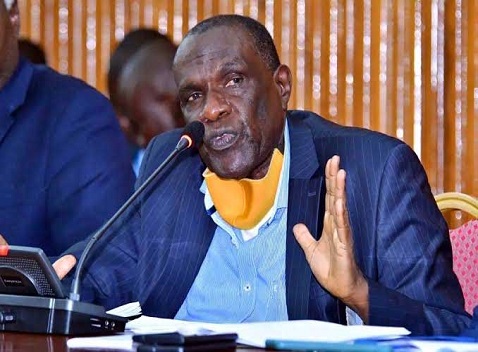
The changes are expected to affect government representatives at district and city level, with Permanent Secretary in the Office of the President, Hajji Yunus Kakande, saying the government periodically evaluates the performance of commissioners and takes action where necessary.
Kakande has described the transfers and promotions as routine administrative measures intended to strengthen government presence and improve service delivery rather than punishment for political disagreements.
Non-performers face removal
Under the reported October changes, commissioners considered to have failed to meet expected standards are expected to be dropped, with government seeking alternative assignments or options for those affected.
The Office of the President has previously emphasized that RDCs are central to monitoring government programmes and coordinating implementation at local level. Government planning documents describe the RDC office as an important link between central government programmes and citizens at district level.
Kakande has also dismissed speculation that administrative changes are being driven by grievances arising from the recent political primaries, saying deployment decisions are based on performance, leadership requirements and strategic considerations.
The planned reshuffle comes against a broader government policy of moving officers between stations. In September, Kakande urged administrative officers to accept transfers directed by President Yoweri Museveni, noting that some officers may remain in their positions because of their experience, competence or institutional knowledge.
Mass transfers expected
According to Kakande, the RDC/RCC changes are part of a wider exercise expected to see many civil servants in both central and local government transferred.
The transfers are intended to strengthen public administration and improve service delivery by ensuring officers are deployed where their skills and experience are considered most useful.
The developments could therefore affect more than the commissioners themselves, as other government officers may also receive new postings as the restructuring progresses.
Salary increase pushed to 2027/28
While commissioners are facing possible transfers and changes in deployment, their anticipated salary enhancement will not be implemented in the current 2026/27 financial year.
Kakande previously confirmed that government had planned to enhance the salaries of RDCs, deputy RDCs and assistant RDCs, but the adjustment was postponed after government prioritised salary increases for arts teachers. The salary enhancement is now expected in the 2027/28 financial year.
Earlier government discussions had proposed substantially increasing RDC remuneration, with Kakande previously indicating that the President supported a salary of up to Shs9 million.
More vehicles for commissioners
The restructuring is also being accompanied by efforts to improve the logistical capacity of commissioners.
Government has finalized plans to procure more than 100 vehicles for RDCs and their deputies who currently lack transport, while offices in newly created districts, particularly in northern and eastern Uganda, are also expected to receive furniture.
Kakande has previously said government was procuring additional vehicles to ease commissioners’ movements, with a commitment that deputy RDCs would receive vehicles.
The planned logistical support is intended to enable commissioners to reach communities and monitor government programmes more effectively.