

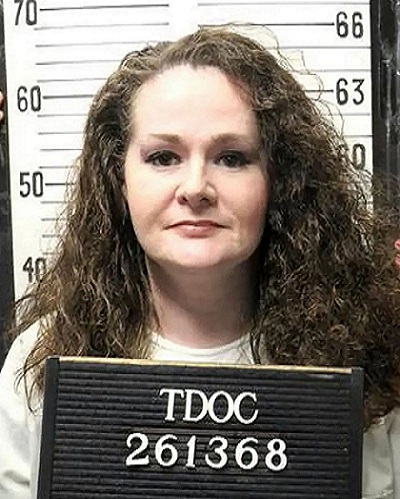
Christa Pike
HABARI DAILY I Kampala, Uganda I Medically speaking, it is impossible to determine simply from the number of injections whether a person will die if the drug does not reach the bloodstream at a sufficient concentration. This may help explain how convicted murderer Christa Pike survived two injections of pentobarbital during a failed execution in Tennessee.
Pike, 50, was taken to hospital and placed under “life-saving measures” after authorities failed to end her life during the execution attempt on Wednesday evening.
Pike was sentenced to death in 1996 for the murder of 19-year-old Colleen Slemmer, whom she attacked alongside her then-boyfriend, Tadaryl Shipp.
The execution had already been the subject of a lengthy legal battle, with the US Supreme Court allowing the lethal injection to proceed at the last minute.
Pike was administered two syringes of pentobarbital. However, according to her legal team, neither injection stopped her heartbeat, and witnesses reported that she could still be heard snoring.
How pentobarbital causes death
Pentobarbital is a powerful sedative that depresses the central nervous system. At sufficiently high concentrations, it can severely suppress brain activity, including the body’s ability to maintain normal breathing.
In a lethal-injection setting, the objective is to produce profound central nervous system depression, followed by apnoea, meaning breathing stops, and ultimately cardiovascular failure.
However, the drug must reach the bloodstream in a sufficient concentration to produce those effects.
Dr Joel Zivot, a professor at Emory University School of Medicine and a medical expert retained by Pike’s legal team, told the BBC that Pike probably never reached a sufficiently high blood concentration of pentobarbital to cause apnoea and cardiovascular failure.
That means the failure may not necessarily have been caused by the drug being inherently incapable of causing death. Instead, questions could centre on whether the drug entered Pike’s circulation properly and whether enough active medication reached the tissues where it needed to act.
The authorities have not yet provided a definitive medical explanation for why the injections failed.
Could degraded drugs explain the failure?
Another possibility under scrutiny is the condition of the pentobarbital itself. Pike’s lawyers have alleged that the drug used by Tennessee may have been “degraded”. Medication can lose potency when it is improperly stored, becomes too old or passes its expiration date.
However, Tennessee’s Department of Correction has not specifically confirmed that the drug was degraded.
The department defended the execution procedure, saying in a statement that “the lethal injection chemical in the protocol has consistently been effective”.
The conflicting positions mean that laboratory testing and the independent review ordered by Tennessee Governor Bill Lee could become important in establishing what happened.
Delay could have caused brain damage
After the unsuccessful execution, Pike was transferred to an off-site medical facility.
One of her lawyers said she was receiving “life-saving measures”, although her precise medical condition was not immediately known.
Zivot warned that the delay before resuscitation could have serious consequences. He said it was “very possible” Pike could suffer a brain injury as a consequence of the delay in beginning resuscitation.
The brain requires a continuous supply of oxygen. When breathing or effective circulation is severely impaired, oxygen levels can fall, potentially causing permanent neurological damage. The extent of any injury would depend on factors including how long the brain was deprived of adequate oxygen and how quickly effective circulation and breathing were restored.
Tennessee faces questions over protocol
The incident has also raised questions about what authorities are supposed to do when a lethal injection fails.
According to the Associated Press, Tennessee’s execution protocol does not clearly specify what should happen if an inmate remains alive after a second dose.
The Department of Correction said its protocol did not permit additional procedures beyond those already carried out.
The failed execution was not Tennessee’s first problematic lethal-injection attempt this year. In May, the execution of Tony Carruthers was postponed after officials failed to locate a suitable vein for administering the drugs.
Nationally, the Death Penalty Information Center says lethal injection has the highest rate of botched executions among execution methods. The organisation reported that more than a third of US executions in 2022 were botched or highly problematic.
Pike’s case has now prompted Governor Lee to order a third-party review, while the state’s remaining execution scheduled for this year has been postponed. Whether authorities will make another attempt to execute Pike remains unresolved.







About the Author