

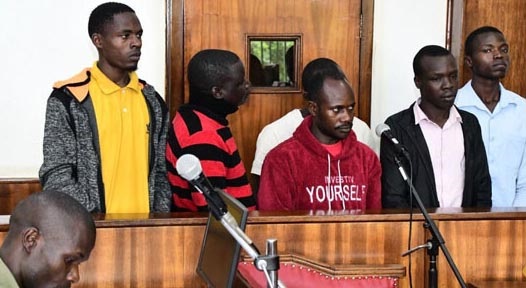
The suspects lined up at the KCCA court
HABARI DAILY I Kampala, Uganda I Although it has by and large been a flawless kickoff, the 2026 Uganda Certificate of Education (UCE) examinations have been hit by a crackdown on six suspects accused of trading fake examination papers on social media, as more than 500,000 candidates sit their national examinations.
The six suspects were remanded to prison by the Kampala Capital City Authority (KCCA) Magistrate’s Court until October 19, 2026, following their arrest over the alleged circulation and sale of counterfeit examination materials online.
The suspects are accused of using social media platforms to distribute and trade purported UCE examination papers, taking advantage of candidates and other individuals seeking advance access to the assessments.
Their arrest comes as the Uganda National Examinations Board (UNEB) intensifies efforts to protect the credibility of the national examinations and warn candidates, parents and the public against falling for examination fraud schemes.
The case was adjourned to October 19, when the suspects are expected to return to court as the legal process continues.
UNEB warns social media users
UNEB has warned that individuals involved in circulating examination papers through social media groups risk prosecution under Section 25 of the UNEB Act, Cap 259.
Jennifer Kalule-Musamba, UNEB’s Principal Public Relations Officer, cautioned that the warning extends beyond individuals who create, sell or distribute examination materials to those who remain in online groups used to share purported examination papers.
The warning is intended to discourage candidates and other users from participating in online networks that claim to provide leaked UCE papers, whether the materials are genuine or fabricated.
Such schemes can exploit candidates’ anxiety during examination periods, with fraudsters reportedly using the promise of advance access to papers to solicit money or attract people into online groups.
The board’s position is that examination materials should be obtained only through authorised channels and that participation in online activities involving the unauthorised circulation of papers can expose individuals to legal consequences.
However, the allegations against the six suspects will have to be established through the judicial process.
Fake papers threaten examination integrity
The crackdown highlights the growing challenge faced by examination authorities as social media platforms provide fast and wide-reaching channels for distributing examination-related content.
Fake papers can mislead candidates into preparing for questions that will never appear in the examinations, while purportedly leaked genuine papers can undermine the fairness and security of the assessment process.
The circulation of such materials can also create unnecessary panic among candidates and parents, particularly when messages are presented as authoritative or accompanied by claims that the examinations have been compromised.
UNEB has repeatedly urged the public to rely on official communication from the board rather than unverified information circulating online.
The arrests also serve as a warning to individuals who attempt to profit from examination anxiety by selling counterfeit papers or claiming to possess confidential assessment materials.
With hundreds of thousands of learners sitting the UCE examinations, protecting the security of examination papers is essential to ensuring that candidates are assessed fairly and that the results reflect their actual performance.
Candidates urged to remain vigilant
The board’s warning comes as schools, teachers and parents support candidates through the national examination period.
Candidates have been urged to concentrate on their preparations and avoid online offers promising access to examination questions before they are officially administered.
Parents and guardians also have a role in discouraging learners from joining suspicious social media groups or sending money to individuals claiming to possess leaked papers.
UNEB’s warning that even membership of groups sharing examination papers may attract prosecution underscores the need for social media users to exercise caution and avoid participating in activities that could compromise examination integrity.
The six suspects will remain on remand until October 19, 2026, as the case proceeds through court.
Their prosecution is part of the wider effort to deter examination malpractice and preserve public confidence in Uganda’s national assessment system. The court proceedings will determine the outcome of the allegations against them.







About the Author