
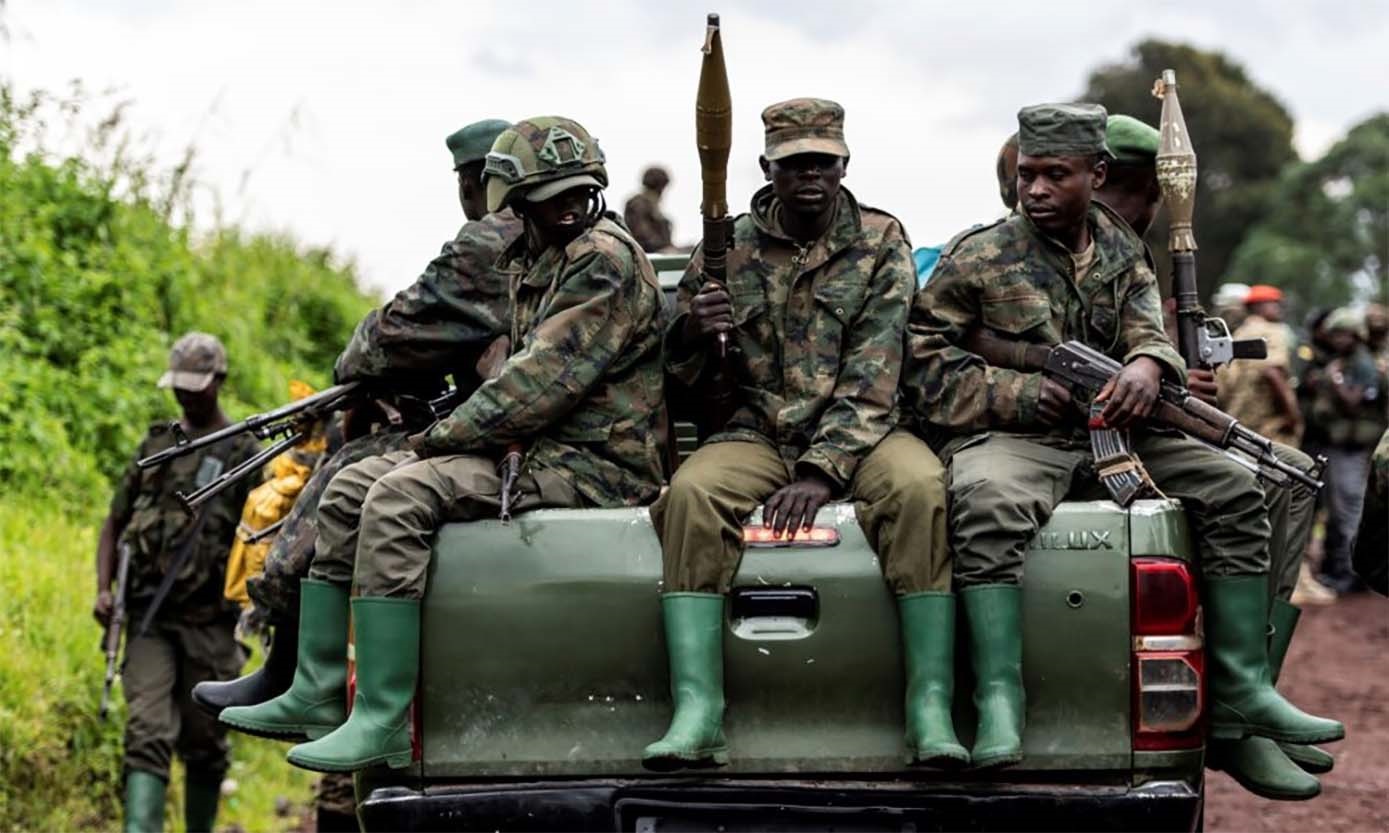
The AFC/M23 rebels
HABARI DAILY I Kampala, Uganda I The tough talk by the Donald Trump administration, threats of possible sanctions and restrictions on military cooperation, cracked the defiant Alliance Fleuve Congo (AFC) rebels, the political wing of M23, leading to a decision to withdraw from the DRC city of Uvira.
Only a few days after seizing the city, the rebels announced their decision to pull out of Uvira to reportedly give the Doha peace process a chance of success.
Corneille Nangaa, the rebel leader said that their decision to withdraw from the key city was at the request of the US, calling for a neutral force to be deployed in the city.
The decision came days after US Secretary of State Marco Rubio said the capture of Uvira by rebel forces violated a peace deal.
“We will take action to ensure promises made to the President [Donald Trump] are kept,” Rubio reportedly said.
President Paul Kagame, who has been accused of supporting the M23 rebels by the UN and Western powers, signed a peace accord on December 4th with his DR Congo counterpart, Felix Tshisekedi, at a ceremony in Washington hosted by Trump.
“AFC/M23 will unilaterally withdraw its forces from the city of Uvira as requested by the United States mediation,” Nangaa said in a statement, adding that this was being done to give the Qatar-brokered peace process the “maximum chance to succeed”.
He however did not indicate when the withdrawal would take place, but called for the deployment of a “neutral force” to monitor a ceasefire and to prevent DR Congo’s army from regaining control of territory it had lost.
M23 claimed past experience showed that Congolese forces and allied militias had exploited previous withdrawals to retake territory and target civilians perceived as sympathetic to the group.
It urged guarantors of the peace process to ensure protection of the population and infrastructure during the pullback.
About 200,000 people have fled their homes in eastern DR Congo since the latest round of fighting started early this month, the UN says.
At least 74 people, mostly civilians, had been killed, and 83 others had been admitted to hospital with wounds, it added.
Economic reasons
The huge reserves of minerals in eastern DRC has been blamed for the instability in the region. The land is rich in cobalt, copper, lithium, manganese and tantalum – needed to make the electronic components used in computers, electric vehicles, mobile phones, wind turbines and military hardware.
The US State Department said in 2023 that DR Congo had an estimated $25tn (£21.2tn) in mineral reserves.
Sources have revealed that the Trump administration hopes that its peace initiative will work and pave the way for US companies to boost their investments in the resource-rich region.







About the Author