
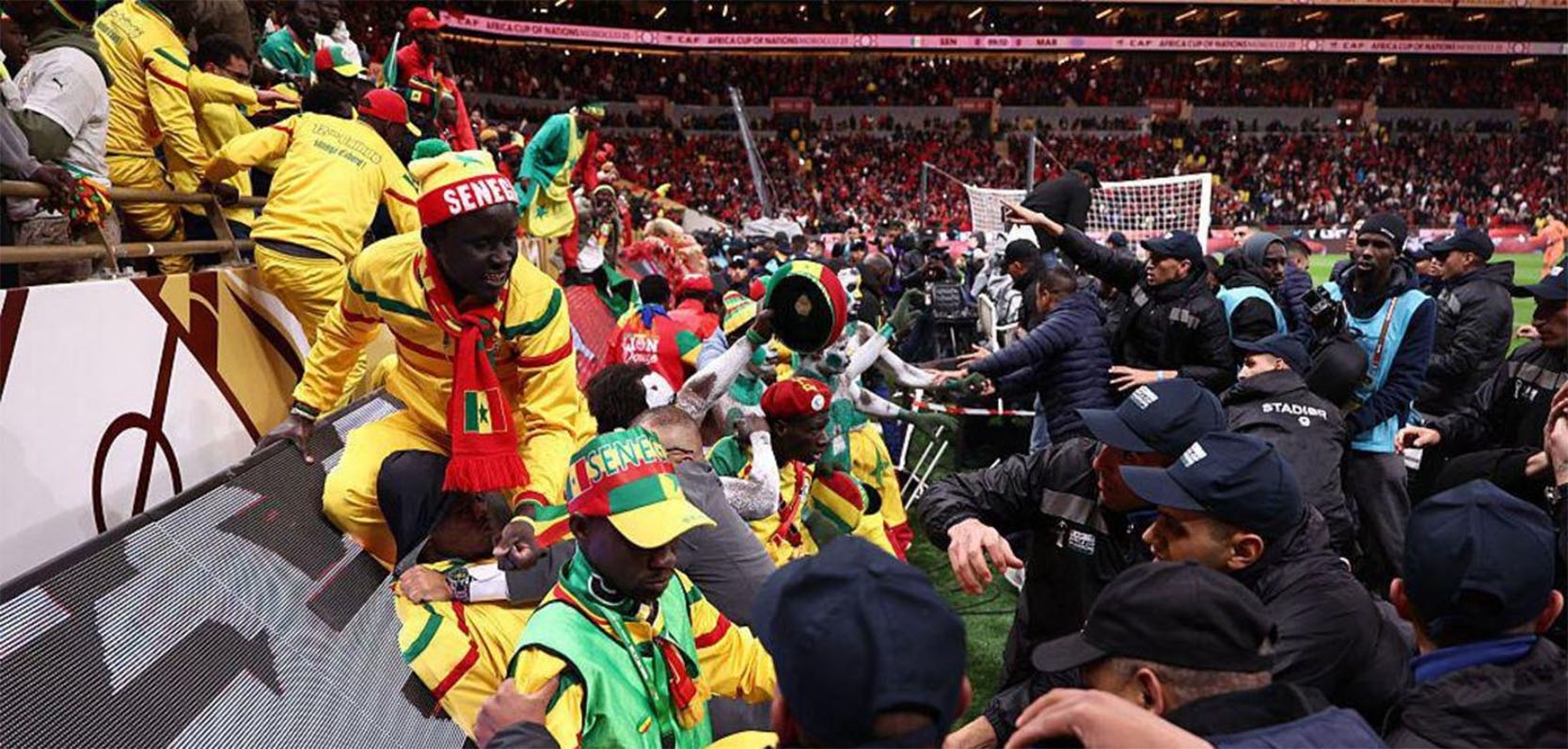
Morocco-Senegal fans in a violent confrontation after the match
HABARI DAILY I Kampala, Uganda I The Africa Cup of Nations (AFCON) final in Morocco will be remembered less for Senegal’s historic triumph and more for the chaotic scenes that cast a shadow over African football on its biggest stage, denting the image of a tournament that had otherwise been widely praised for its organisation and competitiveness.
Senegal emerged champions after a dramatic 1-0 extra-time victory over hosts Morocco at the Prince Moulay Abdellah Stadium in Rabat, but the manner in which the final unfolded left an uncomfortable aftertaste. What should have been a celebration of African football instead descended into confusion, confrontation and controversy, raising questions about discipline, officiating and crowd control at the continent’s showpiece event.
The defining moment came deep into stoppage time of normal play when Congolese referee Jean-Jacques Ndala, following a VAR review, awarded Morocco a penalty after Brahim Diaz was pulled down in the box by Senegal full-back El Hadji Malick Diouf while defending a corner. The decision sparked immediate outrage from Senegal’s players and officials, who surrounded the referee as he consulted the pitch-side monitor.
Tempers boiled over moments later when Senegal coach Pape Bouna Thiaw ordered his players to walk off the pitch in protest. Officials and players jostled on the touchline as confusion spread around the stadium, with the match halted for nearly 14 minutes. It took the intervention of Senegal’s talisman, Sadio Mane, to persuade his teammates to return to the field and allow the game to continue.
For many observers, those scenes represented a major blight on African football, undermining years of progress in improving the professionalism and global perception of the continental game. While passion has always been part of AFCON’s appeal, the images from Rabat risk reinforcing damaging stereotypes about disorder at major African sporting events.
Ironically, Morocco failed to capitalise on the reprieve. Diaz, visibly shaken, attempted an ill-judged Panenka-style penalty that floated tamely into the arms of goalkeeper Edouard Mendy. The miss stunned the home crowd of 66,526 and seemed to galvanise Senegal, who seized the momentum almost
immediately.
Senegal’s Sadio Mane celebrates after winning CAF Africa Cup of Nations 2026
Just four minutes into extra time, midfielder Pape Gueye struck the decisive blow. Mane won possession in midfield and fed Idrissa Gana Gueye, who released his namesake through the centre. Holding off the retreating Moroccan captain Achraf Hakimi, Pape Gueye advanced to the edge of the box and unleashed a superb strike into the top corner, silencing the stadium.
Morocco were distraught, none more so than Diaz, who was substituted soon after. They came agonisingly close to forcing penalties when Nayef Aguerd headed against the crossbar late in extra time, but fate was not on the hosts’ side. For Morocco, defeat prolonged a painful record in the competition, with their only AFCON title still dating back 50 years.
The dramatic finale overshadowed what had been a tense, tightly contested match, low on clear chances but rich in tactical discipline—an illustration of the defensive strength of Africa’s top-ranked teams. Senegal’s Iliman Ndiaye was denied by Yassine Bounou when clean through in the first half, while Morocco squandered a golden opportunity before the hour mark when Ayoub El Kaabi prodded wide from close range.
Senegal could have made the result more comfortable had Cherif Ndiaye not missed a late chance in extra time, but they held on to secure their second AFCON title in three editions, following their penalty shootout win over Egypt in 2022. Remarkably, Gueye’s strike was the first goal Senegal have ever scored in an AFCON final, having failed to find the net in their previous three appearances in the showpiece.
Yet even as Senegal celebrated, attention quickly turned to the damage done by the chaotic scenes. Any post-tournament review is likely to scrutinise the conduct of Senegal’s players and officials, the reaction of fans, and whether Moroccan organisers could have managed the crisis more effectively.
African football has worked hard to enhance its global standing, and AFCON 2025 had largely succeeded in showcasing the continent’s talent and organisational capacity. But the final served as a sobering reminder that moments of indiscipline and disorder can undo years of progress in a single night, leaving a dent that will take time to repair.







About the Author