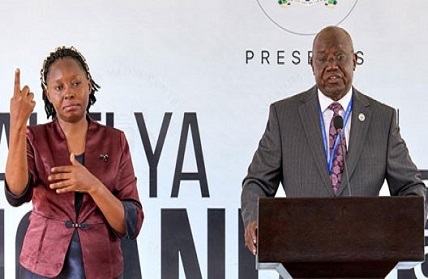
Bryan Katamba, dfcu Bank
HABARI DAILY I Kampala, Uganda I Education institutions that grow their school fees collections through dfcu by at least 20 percent, will be some of the major beneficiaries of the Bank’s nationwide Back-to-School campaign dubbed “School Fiiz! Weight Off.”
Also to benefit are schools that take up a bancassurance policy during the campaign period.
“These stand a chance to win a Library Stock-Up worth sh5m, directly supporting improved learning infrastructure, said officials, who described the campaign as an integrated education financing initiative designed to ease the financial pressure of school fees for parents and guardians.
“The package is aimed at strengthening cash flow and operational resilience for education institutions as the first school term begins,” said Bryan Katamba, the Head of Education and Health Sector at dfcu Bank.
He added that the reopening of schools traditionally represents one of the most financially demanding periods for Ugandan households and schools alike,” reads part of a recently issued press statement.
“This initiative is one that has been timed to respond to these seasonal pressures,” noted Katamba, adding that it shows the Bank’s commitment to supporting education stakeholders at critical moments in the academic calendar.
“School fees season places significant pressure on families and schools. Through the campaign, we are providing practical, accessible solutions that make it easier to pay fees, bridge short-term funding gaps, and protect education institutions as they reopen for full operations,” he said.
He noted that under the campaign, parents and guardians can pay school fees conveniently through multiple dfcu channels, including the dfcu QuickApp, dfcu Agents, dfcu branches, and partner platforms such as SchoolPay, SurePay, and PegPay.
“The three-month nationwide campaign directly addresses short-term liquidity challenges across the entire education ecosystem,” further says Katamba, adding that the campaign targets parents, guardians, schools, students, and education suppliers, offering a combination of convenient school fees payment channels, tailored credit solutions, and comprehensive insurance products.
He said that together, these solutions aim to reduce both the financial and emotional burden associated with school fees, while promoting financial inclusion and literacy.
“Beyond payments, dfcu Bank is extending flexible credit solutions to support both households and education institutions. These include unsecured personal loans of up to Shs 400 million, dfcu Mobi-Loans of up to Shs 5 million, and school owners’ financing of up to Shs 500 million, enabling customers to manage term-opening expenses with greater ease.
“Schools are a central focus of the campaign. These include”
Parents are also rewarded throughout the campaign. “Each week, 15 parents will win cash rewards of up to Shs 500,000 for either paying school fees through dfcu or borrowing during the campaign period. In total, 195 winners will be rewarded over the three months, with borrowing customers earning tiered rewards based on loan value.”
Katamba added that additionally, the campaign integrates the Bank’s Schools Comprehensive Insurance Cover and School Motor Comprehensive Insurance, offering protection for school property, vehicles, students, staff, and third-party liabilities; an increasingly critical consideration as schools resume full operations.
Through this campaign, dfcu Bank continues to reaffirm its position as a long-term financial partner for parents, schools, and the wider education ecosystem, going beyond transactions to deliver meaningful, practical support.
dfcu Bank started in 1964 as the Development Finance Company of Uganda (DFCU), a development finance institution created by the UK’s CDC and the Ugandan government to support economic growth.
It evolved into a major commercial bank (dfcu Bank) in 2000 by acquiring Gold Trust Bank. It currently offers universal banking with a focus on transforming lives and businesses through loans, entrepreneurial support and digital services, and playing a significant role in Uganda’s economy.







About the Author