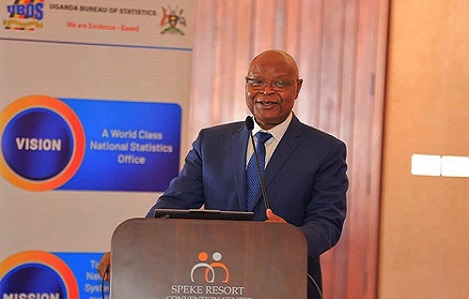


Mike Mukula
HABARI DAILY I Kampala, Uganda I Aviation experts have renewed calls for Uganda Airlines Ltd to be run strictly as a commercial enterprise, warning that political interference in management and decision-making could undermine the national carrier’s long-term viability.
Among the strongest voices is businessman and aviation enthusiast Mike Mukula, who argues that the airline’s success hinges on professional governance, commercial discipline and insulation from politics.
“Uganda Airlines can only succeed if it is run as a commercial airline, not a political project,” Mukula said. “Global experience is very clear: national carriers thrive when governance is professional, decisions are data-driven, and management is protected from political interference,” he said on his X handle, formerly Twitter.
Mukula pointed to Ethiopian Airlines as a practical and proven African model Uganda can learn from. He noted that Ethiopia’s national carrier has grown into one of the continent’s most profitable and respected airlines precisely because it operates with commercial autonomy.
“The Ethiopian Airlines model offers a blueprint that works in Africa,” he said. “You need commercial independence, strong capitalization, disciplined fleet planning and world-class human capital. That is how you build a serious airline.”
According to Mukula, one of the critical weaknesses facing Uganda Airlines is undercapitalization, which forces the carrier into survival-mode operations and disrupts long-term planning. “An airline cannot grow on stop-start funding,” he explained. “Uganda Airlines must be fully capitalized, especially in its early and consolidation phases, so management can plan routes, fleets and partnerships with confidence.”
He also stressed the importance of strict fleet discipline to control costs and improve reliability. “In the beginning, you should not operate more than two aircraft types,” Mukula said. “Preferably stick to one manufacturer, such as Boeing. This reduces training costs, simplifies maintenance, lowers inventory requirements and improves safety and operational reliability.”
Beyond fleet and financing, Mukula emphasized the strategic value of investing in technical capacity. He argued that Uganda Airlines should prioritize building a fully equipped in-house maintenance, repair and overhaul (MRO) facility. “An internal MRO lowers operating costs and strengthens technical independence,” he said. “In the long run, it can even generate third-party revenue by servicing other airlines in the region.”
However, Mukula was clear that leadership remains the single most important factor. He called for the appointment of a highly experienced chief executive officer with a strong international aviation background and the authority to run the airline commercially.
“Leadership matters most,” he said. “Uganda Airlines needs a CEO who understands global aviation, supported by a professional management team made up of experts in marketing, flight operations, maintenance engineering and financial control.”
He warned that without professional governance, even well-funded airlines struggle. “If governance is right, the people are right and politics stay out, Uganda Airlines can become competitive, credible and profitable,” Mukula said. “But if politics drives decisions, no amount of patriotism or public funding will save it.”
As Uganda Airlines continues to navigate its growth phase, experts say the choice is clear: treat the carrier as a serious commercial business or risk repeating the failures that have plagued politically run national airlines across the world.







About the Author