

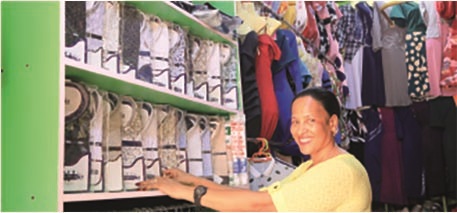
Masaba tending to her clothes in her shop in Jinja
HABARI DAILY I Kampala, Uganda I A transformative women-focused financing initiative is breathing new life into small and medium enterprises in Uganda’s clothing industry, offering renewed hope for businesswomen seeking to scale up their operations and create jobs.
One of the beneficiaries is Ms Masaba, 42, who has run a clothing shop on Jinja Main Street since 2007. Her journey into the textile business began after she abandoned rice farming due to low returns. Inspired by a sister operating a similar business in Kampala, Masaba invested an initial capital of Shs3 million to establish a shop dealing in both men’s and women’s clothes, targeting party-goers and clients attending traditional ceremonies such as Kwanjula.
Over the years, Masaba has relied on bank loans to grow her business. However, access to affordable credit remained a major challenge. Last year, she took a commercial loan at a 20% interest rate, using her land agreement as collateral — a move that significantly constrained her cash flow.
Relief came with the introduction of the Generating Growth Opportunities and Productivity for Women Enterprises (GROW) Project, launched by President Museveni. Through Finance Trust Bank, Masaba accessed a Shs12 million loan at a reduced interest rate of 10.5%, easing her financial burden and restoring optimism for her business.
“The GROW loan has given me hope. I have stocked clothes in preparation for the festive season, and my prices will remain competitive,” Masaba says, noting that she avoids hiking prices during peak seasons to retain customer loyalty.
Employment opportunities for women
Her ambition is to expand from one shop to three, a move she says will not only increase her turnover but also create employment opportunities for other women.
The GROW Project is a $217 million World Bank-funded initiative implemented by the Ministry of Gender, Labour and Social Development in partnership with the Private Sector Foundation Uganda. It focuses on transforming established businesses rather than startups, aiming to move women-owned enterprises from micro to small and from small to medium scale, including in refugee-hosting districts.
Across the country, the project is enabling women entrepreneurs to access affordable financing, business development services, and market linkages, particularly in sectors such as clothing, agribusiness, and manufacturing.
For businesswomen like Masaba, the initiative represents more than just financial support. It is a lifeline that restores confidence, unlocks growth, and strengthens the role of women in Uganda’s industrial and commercial transformation.







About the Author