

HABARI DAILY I Kampala, Uganda I The escalating war involving the United States, Israel and Iran is rapidly reshaping global energy markets, sending oil and gas prices sharply higher and raising fears of a broader economic shock. With Iranian drones striking key oil installations in Saudi Arabia and Kuwait and tensions mounting around the Strait of Hormuz, the conflict has shifted from a regional military confrontation to a direct assault on the world’s energy lifelines.
On Monday, smoke billowed from Saudi Aramco’s massive Ras Tanura refinery after Iranian drones targeted the facility. Although Saudi air defences intercepted the incoming aircraft, debris from the downed drones caused fires and forced a temporary shutdown of one of the world’s largest oil processing hubs. The refinery, capable of processing over half a million barrels of crude per day, was closed as a precaution, state media reported.
Hours earlier, drone debris fell near Kuwait’s Ahmadi refinery, injuring two workers. These incidents mark a significant escalation in the conflict, with energy infrastructure now squarely in the crosshairs.
“It’s a really worrying signal. So far, we haven’t seen energy infrastructure being targeted,” said Jorge Leon, senior vice president and head of geopolitical analysis at Rystad Energy. “The longer this disruption goes on, the higher oil and gas prices we will see in the coming days and weeks.”
Oil Markets on Edge
Crude oil futures surged nearly 9 percent following news of the attacks, reflecting traders’ concerns that further strikes could cripple supply from the Gulf region. The Middle East remains central to global energy production, and any prolonged disruption would reverberate far beyond the battlefield.
At the heart of market anxiety is the Strait of Hormuz, a narrow maritime corridor between Iran and Oman and the United Arab Emirates. The strait is just 33 kilometers wide at its narrowest point, with shipping lanes only 3 kilometers across in either direction. Despite its size, it carries approximately 20 million barrels of oil per day — about 20 percent of global consumption — according to the U.S. Energy Information Administration.
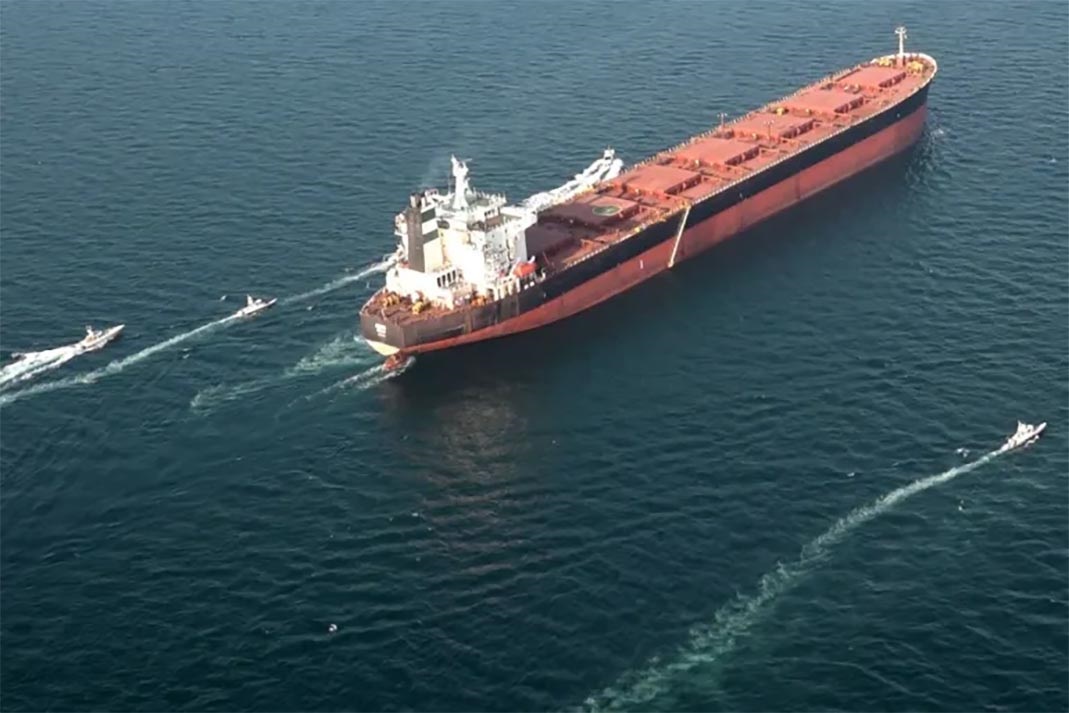
Iran has hinted at shutting down the waterway, and reports indicate that at least three oil tankers sailing near the strait came under fire on Sunday. European officials told Reuters that vessels have received threatening radio transmissions from Iran’s Islamic Revolutionary Guard Corps warning that “no ship is allowed to pass the Strait of Hormuz.”
Though Tehran has not formally declared the strait closed, several tanker operators have already suspended shipments. Greece has advised its vessels to avoid transiting the waterway, and major trading houses are reportedly holding ships in place until security conditions improve.
“Disruption in the Strait of Hormuz could reach ten million barrels per day,” Leon warned. “That’s 10 percent of consumption. This really highlights the importance of the current crisis.”
Gas Markets Feel the Shock
The impact is not limited to oil. The strait is also a vital artery for liquefied natural gas (LNG). Qatar, one of the world’s largest LNG exporters, suspended production on Monday after attacks on facilities in Ras Laffan and Mesaieed industrial cities operated by QatarEnergy.
European natural gas prices soared more than 50 percent in response. While the European Commission said it does not expect immediate supply shortages, the spike reflects the continent’s continuing vulnerability after reducing dependence on Russian pipeline gas.
The United States remains the European Union’s largest LNG supplier, providing 58 percent of imports last year, but Qatar accounted for 6 percent in the last quarter — volumes that could now face disruption.
Energy analysts caution that a prolonged closure of the Strait of Hormuz would have cascading consequences. Roughly a fifth of global LNG shipments move through the corridor, most destined for Asian markets. China, India, Japan and South Korea collectively account for nearly 70 percent of crude and condensate flows through the strait. Their manufacturing sectors, power grids and transport systems depend heavily on uninterrupted Gulf energy supplies.
Economic Fallout Beyond Energy
The conflict’s economic impact is already extending beyond energy markets. Travel disruption has stranded tourists and business travelers across the region, with airports in Dubai, Abu Dhabi and Doha temporarily shut following strikes. Dubai International Airport, one of the world’s busiest transit hubs, plays a critical role in connecting Europe, Africa and Asia.
Airline stocks have tumbled. Shares of major U.S. carriers fell between 5 and 6 percent, while cruise operators suffered even steeper losses. Global hotel chains also declined as investors priced in lower tourism flows.
Stock exchanges in the United Arab Emirates — including the Abu Dhabi Securities Exchange and Dubai Financial Market — were closed at the start of the trading week as regional uncertainty intensified.
The ripple effects could soon reach supermarket shelves. Gulf countries such as the UAE, Qatar and Kuwait import the majority of their food and consumer goods via shipping routes that pass through the Strait of Hormuz. Any prolonged shipping blockade could delay deliveries of essential supplies, pushing up prices and straining domestic economies.
A Deliberate Strategy
Analysts believe Iran’s decision to target energy infrastructure is designed to impose economic pain beyond the battlefield. Tehran’s goal is to “cause global backlash and impose costs” on U.S. leadership.
By targeting oil refineries and threatening tanker routes, Iran appears to be leveraging the global economy as a pressure point. However, a full closure of the Strait of Hormuz would also harm Iran itself. All of its roughly 1.6 million barrels per day of oil exports pass through the waterway, much of it bound for China.
The Broader Global Risk
Rising oil prices act as a tax on consumers and businesses. Higher fuel costs feed into transportation, manufacturing and food prices, potentially reigniting inflationary pressures just as many economies were beginning to stabilize. Central banks, already navigating fragile recoveries, could face renewed pressure to tighten monetary policy.
For emerging economies heavily dependent on imported energy — particularly in Asia and Southeast Asia — sustained high oil prices could widen trade deficits, weaken currencies and strain public finances.
While the immediate physical damage to infrastructure remains limited, the psychological impact on markets has been profound. Traders are pricing in the possibility of further escalation, especially if Gulf militaries retaliate against Iranian strikes or if shipping disruptions intensify.
So far, Gulf states have not launched direct counterstrikes, but a source close to the Saudi government warned that a “concerted” Iranian assault on oil facilities could trigger military retaliation.
A Precarious Balance
Despite the volatility, energy markets have not yet reached panic levels seen in past crises. Strategic reserves held by major economies could offset temporary supply disruptions. However, the narrowness of the Strait of Hormuz — and its centrality to global energy trade — means that even minor incidents can have outsized effects.
As the war expands across multiple fronts, energy has become both a weapon and a casualty. Whether oil and gas prices continue their upward march will depend on the next moves by Tehran, Washington and regional actors.
For now, the message from markets is clear: the world’s economic stability is increasingly hostage to events unfolding along a 33-kilometer stretch of water in the Gulf.