
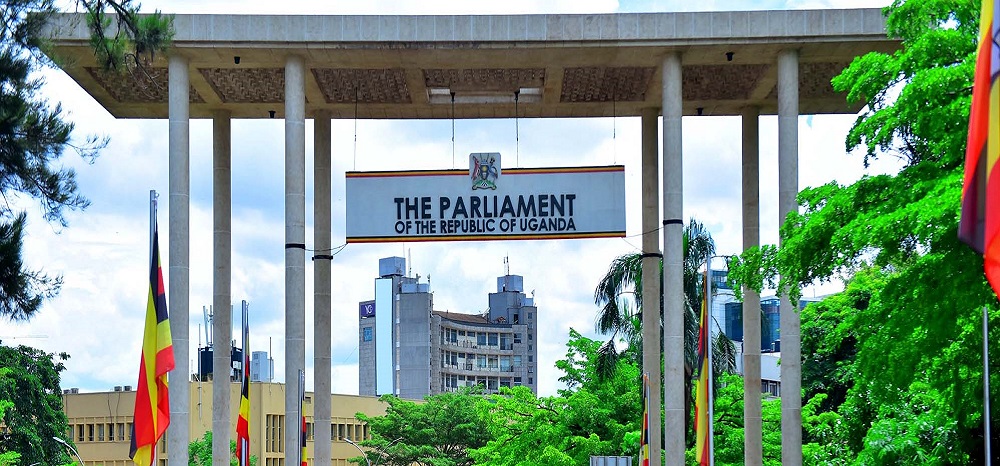
The parliament of the Republic of Uganda
HABARI DAILY I Kampala, Uganda I The ruling National Resistance Movement (NRM) has cemented its dominance in Uganda’s 12th Parliament, commanding an overwhelming majority of Members of Parliament set to be sworn in on May 15–16, 2026.
According to the official gazetted list released by the Electoral Commission, the NRM secured 372 out of 529 seats, representing 70.3% of the House. This commanding lead places the ruling party firmly in control of the legislative agenda, far ahead of its closest competitors.
Independent legislators emerge as the second-largest grouping with 68 seats (12.9%), while the main opposition, the National Unity Platform (NUP), trails with 49 seats, accounting for 9.3%. Other parties, including the Uganda People’s Congress, Forum for Democratic Change, and Democratic Party, hold significantly smaller shares of the House, underscoring the NRM’s continued political supremacy.
Political analyst James Leon Ssebagala noted that such a numerical advantage gives the ruling party substantial leverage. “This kind of majority for NRM means the ruling party can comfortably pass legislation with minimal resistance. However, it also raises questions about the strength of oversight and the vibrancy of debate in the House,” he said.
Beyond numbers, the NRM also leads in gender representation. Of its 372 MPs, 137 are women, representing 36.8% of its caucus. Across the entire House, 186 MPs are female (35.2%), compared to 343 male legislators (64.8%), marking a slight drop in women’s representation from the previous Parliament.
Within the opposition, NUP has 14 female MPs out of its 49 representatives, translating to 28.6%, highlighting disparities in gender inclusion across parties.
Gender activist Sarah Nakato expressed concern over the figures, saying they reflect persistent challenges. “We cannot ignore the structural barriers that still limit women’s participation in elective politics,” she said, adding that affirmative action alone is insufficient.
As the new Parliament prepares to convene, the NRM’s commanding majority is expected to shape legislative priorities, while raising broader questions about inclusivity, accountability, and democratic balance.