
AU Ministers Push AfCFTA Momentum, Climate Action At 48th Executive Council Meeting
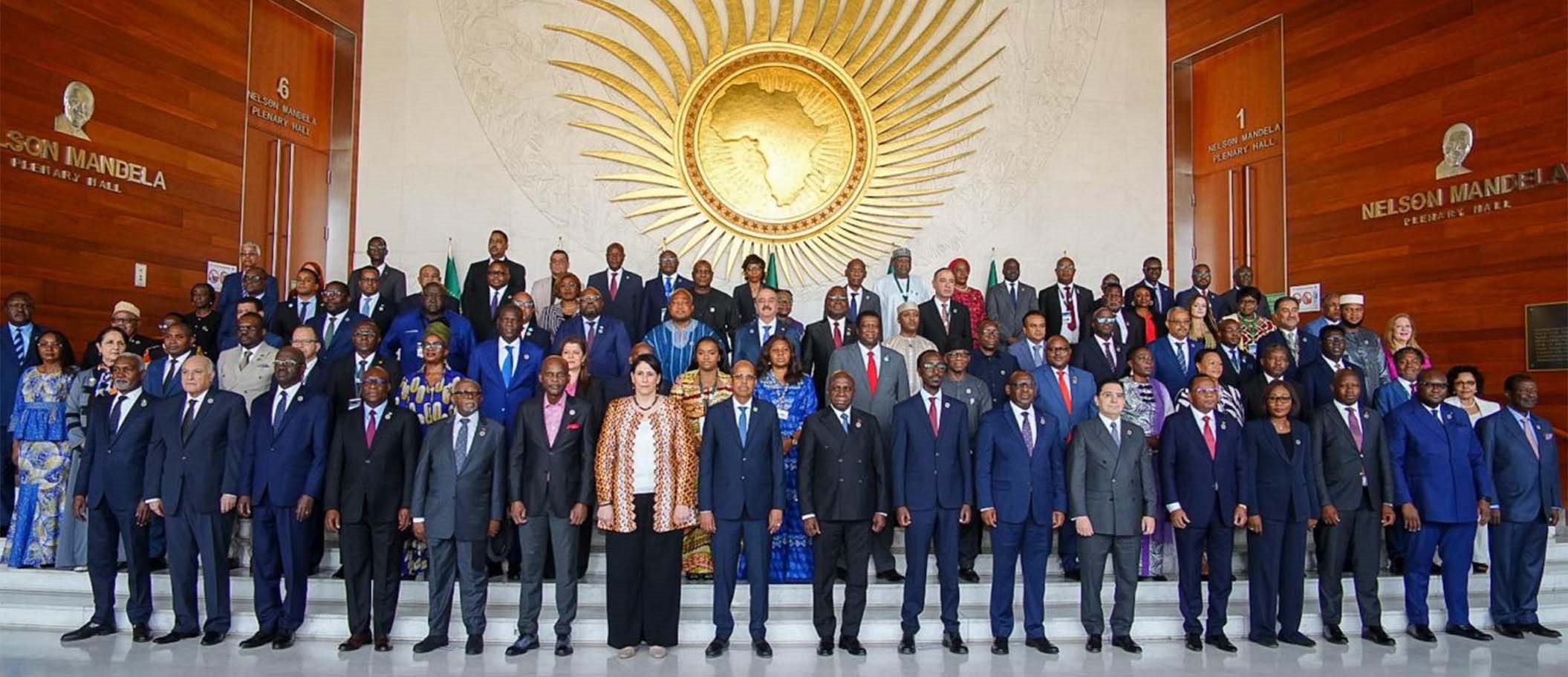
Ministers and delegates attending the African Union (AU) 48th Ordinary Session of the Executive Council in Addis Ababa on February 11th 2026
HABARI DAILY I Kampala, Uganda I African foreign ministers meeting at the 48th Ordinary Session of the Executive Council of the African Union (AU) have renewed their commitment to accelerating the African Continental Free Trade Area (AfCFTA) and intensifying collective action to mitigate the growing impacts of climate change, s the continent seeks sustainable and inclusive development.
The two-day meeting, which opened on Wednesday at the AU headquarters in Addis Ababa, is being held under the 2026 AU theme, “Assuring Sustainable Water Availability and Safe Sanitation Systems to Achieve the Goals of Agenda 2063.” The theme places climate resilience, water security and environmental sustainability at the center of Africa’s development agenda, while reinforcing the need for deeper economic integration through AfCFTA.
Addressing ministers, Chairperson of the AU Commission, H.E. Mahmoud Ali Youssouf, underscored the urgency of safeguarding water resources in the face of escalating climate disruptions, describing water as a collective continental asset and a foundation for peace, cooperation and sustainable growth.
“In the face of observed climate disruptions, the prudent use of water in all aspects of daily life is a major imperative. This vital resource must be perceived as a collective good to be preserved at all costs and as a vector for bringing our states closer together and for peace,” Youssouf said.
He stressed that climate change is no longer a distant threat but a daily reality undermining agriculture, food security, public health and infrastructure across Africa. As a result, he urged member states to integrate climate adaptation and mitigation strategies into national development plans and regional initiatives, particularly those linked to water management and sanitation systems.
On economic development, Youssouf pointed to tangible progress under the African Continental Free Trade Area, which he described as the continent’s most ambitious instrument for boosting intra-African trade, industrialization and job creation. He called for renewed efforts to fully operationalize AfCFTA by removing non-tariff barriers, improving cross-border infrastructure, and mobilizing innovative financing.
“More than ever, the continent needs to capitalize on its instruments to boost the momentum of development and integration, reflecting on innovative sources of financing and involving all actors, including the private sector, civil society and philanthropic foundations,” he said.
The AfCFTA, which brings together 54 African countries into a single market of more than 1.4 billion people, is widely seen as a game-changer capable of transforming Africa’s economic structure away from raw commodity exports towards value addition, manufacturing and regional value chains.
Executive Secretary of the United Nations Economic Commission for Africa, Mr. Claver Gatete, reinforced this view, noting that Africa faces a pivotal economic transition as traditional development models reliant on commodity exports and external financing become increasingly unsustainable. Against a backdrop of global economic fragmentation, fiscal pressures and climate challenges, Gatete said AfCFTA must serve as the backbone of Africa’s new development paradigm.
“Africa’s development must be organized around its own continental economic system, with the AfCFTA as a central platform,” Gatete said, emphasizing that deeper integration will strengthen resilience to external shocks while unlocking economies of scale.
Climate change and climate justice also featured prominently in the deliberations. Ethiopia’s Minister of Foreign Affairs, H.E. Gedion Timothewos (PhD), highlighted Africa’s collective stance on climate justice and the need for fair global partnerships that support adaptation, mitigation and green industrialization. As Ethiopia prepares to host COP 32, he urged member states to present a united front in demanding adequate climate finance and technology transfer.
He also cited progress on Agenda 2063, AfCFTA implementation and Africa’s coordinated positions on United Nations Security Council reform, noting that unity remains Africa’s strongest asset in defending its interests on the global stage.
Chairperson of the Executive Council and Angola’s Minister of External Relations, H.E. Amb. Téte António, said Angola’s AU presidency had laid strong foundations for enhanced continental cooperation, including on peace, security, development and climate action. He noted that intensified diplomatic engagement and high-level consultations had strengthened joint African responses to shared challenges, including economic integration and environmental sustainability.
Beyond AfCFTA and climate issues, the Executive Council is reviewing reports on AU participation in the G20, progress on institutional reforms, and updates on Agenda 2063 implementation. Ministers are also considering key legal instruments and conducting elections to major AU organs, including the Peace and Security Council.
As Africa confronts climate shocks, geopolitical competition and economic uncertainty, the Addis Ababa meeting underscores the AU’s determination to harness the momentum of AfCFTA and coordinated climate action to drive sustainable development. By aligning economic integration with environmental stewardship, African leaders aim to lay the groundwork for resilient growth and shared prosperity across the continent.
About the Author