
Uganda’s oil production is in high gear
HABARI DAILY I Kampala, Uganda I As Uganda prepares to pump its first commercial oil, stakeholders say aligning oil-sector opportunities with tax reforms and enterprise development.
These, they say, will transform livelihoods, grow domestic industries, and ensure that prosperity reaches ordinary Ugandans, especially those operating in the informal economy.
John Walugembe, the managing director, Federation of Small and Medium Sized Enterprises (FSME), said optimism is growing that the sector will deliver a major boost to the national economy while unlocking new opportunities for small and medium-sized enterprises (SMEs).
“Since SME form the backbone of Uganda’s economy, alongside oil revenues, streamlined taxation and targeted policy reforms are critical to ensuring inclusive growth,” he said.
He said that the sector is now entering a decisive phase that demands urgent preparedness by Ugandan businesses.
“The oil and gas sector has different phases. We had the exploration phase, where companies were finding out whether we had viable oil deposits. Then we moved into the construction phase — constructing the pipeline, refinery, roads, and airports,” Walugembe explained.
He noted that the current oil production phase is where we need the most SMEs to benefit, particularly through the provision of skills.
“Thousands of Ugandans have already benefited from construction-related activities such as welding, logistics, catering, accommodation, transport, and other support services,” he said.
He added that construction workers, welders, logistics companies, food suppliers, hotel services, entertainment providers — all these have benefited, while the Government has also reserved certain goods and services for local companies, and very many businesses have gained both directly and indirectly.
Intermediary role
Contrary to what many experts advise, Walugembe emphasized that participation in the oil economy does not require direct engagement with oil companies.
“You need not be in the Albertine region to benefit. You can supply to intermediaries who ultimately sell to oil and gas companies. That is how many firms have tapped into these opportunities,” he added.
However, he cautioned that timing and readiness are critical. “For personal benefit from the production phase, you must be ready now. You cannot say you will be ready in 2027 — you will be late. Those who prepared during the construction phase benefited because they trained technicians and invested in equipment.”
Beyond oil, Walugembe called for urgent reforms in Uganda’s taxation framework to empower SMEs, especially those in the informal sector.
He argued that simplified tax systems, fair rates, and better education would encourage compliance and business growth.
More SMES to formalise
“Streamlining taxation will enable more SMEs to formalize, expand, and contribute meaningfully to national development,” he said, noting that heavy tax burdens often discourage small businesses from registering.
He also pointed to economic recovery and political cycles as drivers of SME resilience. “The economy has largely recovered from the losses of 2020 and 2021. The election period in 2025 and 2026 has boosted SMEs — many supplied T-shirts, transported campaigners, provided tents, and delivered logistics. That optimism should continue.”
Value of oil and gas
Charles Ocici, the Director General, Enterprise Uganda, said that the true value of oil and gas lies less in the raw commodity itself, and more in its potential to act as a catalyst for long-term, diversified economic transformation, infrastructure development, and national capacity building.
He noted that while the 1.4 to 1.7 billion barrels of economically recoverable oil promise significant revenue (estimated at over $2 billion annually at peak), the true, lasting value is seen as the creation of a “modern and prosperous country.”
“This should be achieved through strategic reinvestment. in job creation across the value chain, development of local suppliers, skills transfer, and the building of long-term national capability,” he said.
Uganda’s oil production journey
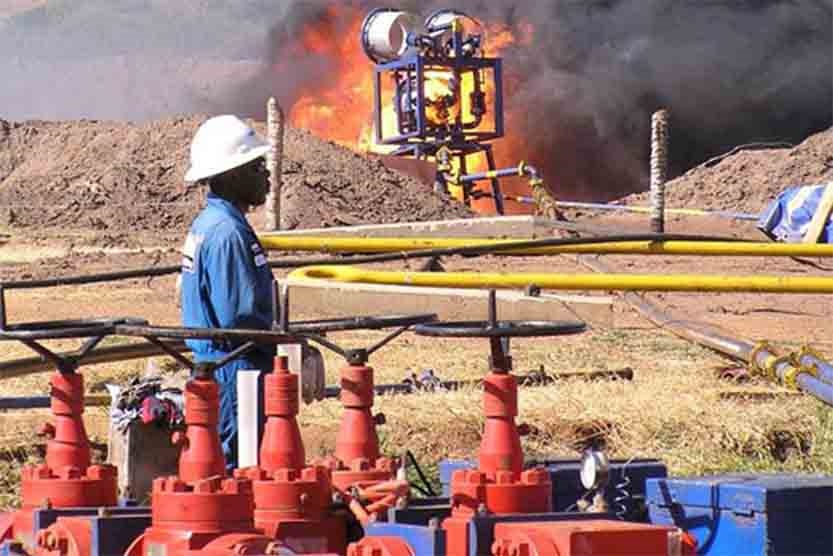
The country’s oil production is in the final development phase, with “First Oil” targeted for mid-2026 to early 2027 from the Tilenga and Kingfisher fields. The 1,443 km East African Crude Oil Pipeline (EACOP) is over 64% complete, with drilling of production wells advancing to facilitate 2026, 2027, production.
While 2026 is the target, officials have indicated that actual commercial production, and thus revenue, may materialize in 2027.
Over 175 wells have been drilled for the Kingfisher and Tilenga projects, with Central Processing Facilities (CPFs) in advanced stages of construction.
When it comes to the East Africa Crude Oil Pipeline (EACOP), one of the key factors in oil production, officials have disclosed that the $5 billion, 1,443 km pipeline—the world’s longest heated pipeline—is over 85% complete and will move crude from Lake Albert to Tanzania’s Tanga port.
Concerning the oil refinery, a deal with Alpha MBM Investments for a $4 billion refinery in Hoima was penned and is progressing.
Concerning the production goal, the oil production project will produce up to 246,000 barrels of crude oil per day.
The sector has shifted from exploration to development, focusing on training and local content involvement as the country prepares to become a net oil exporter.







About the Author