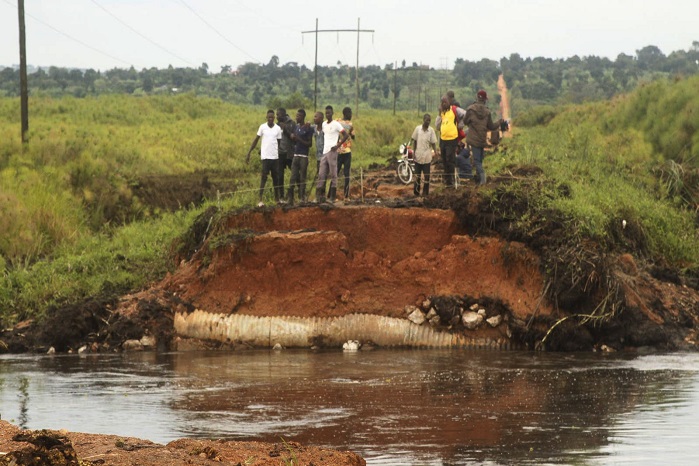

Flood And Disaster Threat: Kampala, Kigezi, Bugisu Lead List Of Epicenters
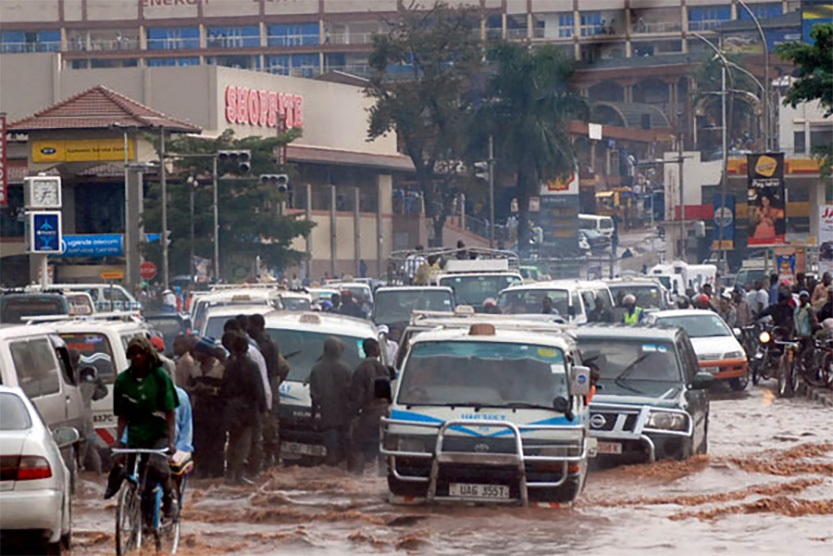
Kampala city roads will not be spared either
HABARI DAILY I Kampala, Uganda I Uganda’s disaster preparedness authorities have warned of a heightened flood threat in Kampala and other urban centres as the country heads into the March–April–May (MAM) 2026 rainy season.
Addressing journalists during a press briefing following the release of the MAM 2026 Seasonal Rainfall Outlook by the Ministry of Water and Environment, the Minister for Relief, Disaster Preparedness and Refugees in the Office of the Prime Minister, Hillary Onek, said while most parts of the country are expected to receive near-average rainfall, several regions—including areas around Lake Victoria—are likely to experience near-average to above-average rainfall.
“The Government of Uganda wishes to inform the public that most parts of the country are expected to receive near-average rainfall,” Onek said. “However, the Northwestern region, areas around Lake Victoria, and parts of the Eastern region are likely to experience near-average to above-average rainfall. We must not take this lightly, especially in our urban centres.”
Inadequate drainage blamed
Kampala, which sits near Lake Victoria and has long struggled with inadequate drainage infrastructure, is among the areas facing a significant risk of flash floods. Onek cautioned that heavy downpours, combined with generally warmer-than-normal temperatures forecast for the season, could intensify storm activity.
“Flash floods in Kampala and other cities and urban authorities are a real possibility,” he warned. “These floods may disrupt transport, damage property, and paralyse business activities. We are particularly concerned about low-lying areas and informal settlements where drainage systems are either blocked or insufficient.”
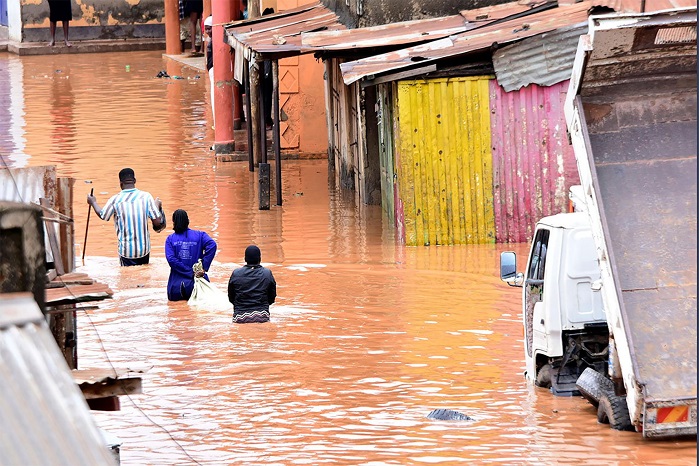
City floods
According to the seasonal outlook, near- to above-average rainfall is expected in parts of West Nile, Lango, Rwenzori, Kigezi, Acholi, Bugisu, Bukedi, Teso and Buganda. Meanwhile, other regions such as Ankole, Karamoja and parts of Busoga and Bunyoro are projected to receive near-average rainfall.
Onek emphasized that the anticipated rains could trigger flooding and waterlogging in low-lying areas, landslides in highland regions, and increased incidences of water-borne diseases.
“In Kampala, we are urging city authorities to urgently improve stormwater drainage systems and clear urban drainage channels, especially in flood-prone areas,” he said. “Cities and urban authorities must ensure that manholes are properly covered. Pedestrians have often fallen into open manholes during floods, leading to injuries and even fatalities.”
Disaster risk management
The minister noted that government has already undertaken several preparedness measures. These include disseminating the seasonal forecast at regional levels, strengthening community-level disaster risk management capacities in partnership with the Uganda Red Cross Society, procuring relief food for vulnerable communities, and registering households at high risk of disasters such as landslides.
“We are not waiting for disaster to strike,” Onek said. “We have disseminated early warning information through the media and are working closely with district disaster management committees to activate contingency plans for hotspot locations.”
He urged residents of Kampala to play their part in reducing flood risks. “Drivers, cyclists and pedestrians are advised to avoid crossing flooded road sections. Motorists must strictly observe speed limits during rainy weather because reduced visibility and slippery roads significantly decrease braking effectiveness,” he cautioned.
Cholera, typhoid, dysentery and malaria spike
Public health concerns are also high on the government’s agenda. “We expect a higher risk of water-related diseases such as cholera, typhoid, dysentery and malaria,” Onek said. “Communities must promote good sanitation and hygiene practices, clear bushes around homesteads to prevent mosquito breeding, and sleep under insecticide-treated mosquito nets.”
He also warned of increased lightning strikes and severe storms at the onset of the rains. “Due to the increased risk of lightning, communities are urged to stay away from open areas and avoid sheltering under tall trees during storms,” he added.
Despite the looming threats, Onek encouraged Ugandans to view the rains as an opportunity as well. “Communities in sub-regions expected to receive above-normal rainfall should take full advantage of the rains by maximising water harvesting and increasing food production as coping mechanisms during the dry season,” he said.
As government agencies continue to monitor rainfall patterns, Onek called for vigilance and collective responsibility. “Disaster preparedness is everyone’s responsibility. With timely action, early warning, and community cooperation, we can protect lives, livelihoods and critical infrastructure in Kampala and across the country.”
About the Author