
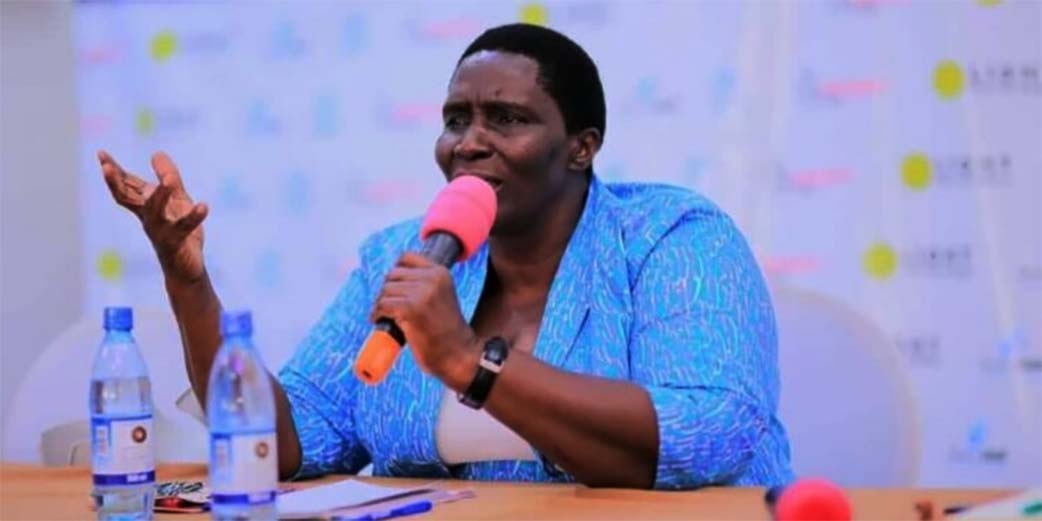
Helen Asamo, Minister of State for Disability Affairs
HABARI DAILY I Kampala, Uganda I Government programmes designed to support Persons with Disabilities (PWDs) continue to make a significant impact across the country, with billions of shillings invested in economic empowerment, skills development and rehabilitation services.
Asamo revealed that since the 2019/2020 financial year, government has disbursed Shs 42.5 billion to 8,739 groups, directly benefiting 65,272 households of Persons with Disabilities. She noted that the support has enabled thousands to venture into income-generating projects.
“Many beneficiaries have invested in enterprises such as poultry, goat rearing, tailoring, small scale agriculture and trade, and notably, 83% of beneficiaries can now meet basic needs including health care, food security and school fees,” she said.
Under the Parish Development Model (PDM), government has also strengthened inclusion for PWDs by earmarking 10% of the PDM revolving fund in every parish specifically for them.
The Minister emphasized that the additional support was deliberate and essential. “Each PWD beneficiary receives a UGX 500,000 top-up to cater for reasonable accommodation needs when undertaking enterprise activities,” she explained, adding that this provision is meant to eliminate barriers that limit economic participation.
Government has also invested heavily in skills development to improve employability among youth with disabilities. Hon. Asamo said that five Vocational Rehabilitation Centres and a Sheltered Workshop continue to provide specialized training.
“Since 2022, 780 learners have been certified by the Uganda Vocational and Technical Assessment Board, and graduates receive start-up kits to commence income-generating activities,” she stated.
She said that financial inclusion remains a priority, and recent data shows encouraging progress.
According to the Minister, “45.1% of Persons with Disabilities were able to save money, a positive reflection of increasing participation in the money economy.”
She further highlighted ongoing efforts to standardize Uganda Sign Language, the development of a National Rehabilitation and Assistive Technology Strategic Plan (2025–2030), and the expansion of surgical and rehabilitative services to regional hospitals in Jinja and Mbarara, in addition to CURE Hospital in Mbale.
However, despite these achievements, Asamo acknowledged persistent challenges in mainstream programmes. “Research shows that participation of Persons with Disabilities in mainstream livelihood programmes remains extremely low,” she said.
Only 0.4% of youth with disabilities have benefited from the Youth Livelihood Programme, 0.9% from NAADS, 0.4% from Operation Wealth Creation and EMYOOGA, and 0.5% of women with disabilities from UWEP. She attributed these gaps to “negative perceptions, limited financial literacy, inadequate outreach, inaccessible banking and programme facilities, and insufficient disability-responsive communication.”
Asamo revealed that the National Household Population Census Report, (UBOS 2024) indicated that disability prevalence in Uganda stands at 13.6%, representing approximately 6.9 million persons with disabilities. This demographic underscores the importance of disability responsive policies, inclusive services, and targeted interventions.
“Across the globe, Persons with Disabilities continue to make significant contributions as workers, innovators, parents, leaders, and entrepreneurs. However, many continue to face barriers including stigma, discrimination, inaccessibility, limited education and employment opportunities, and inadequate access to financial services.”







About the Author