
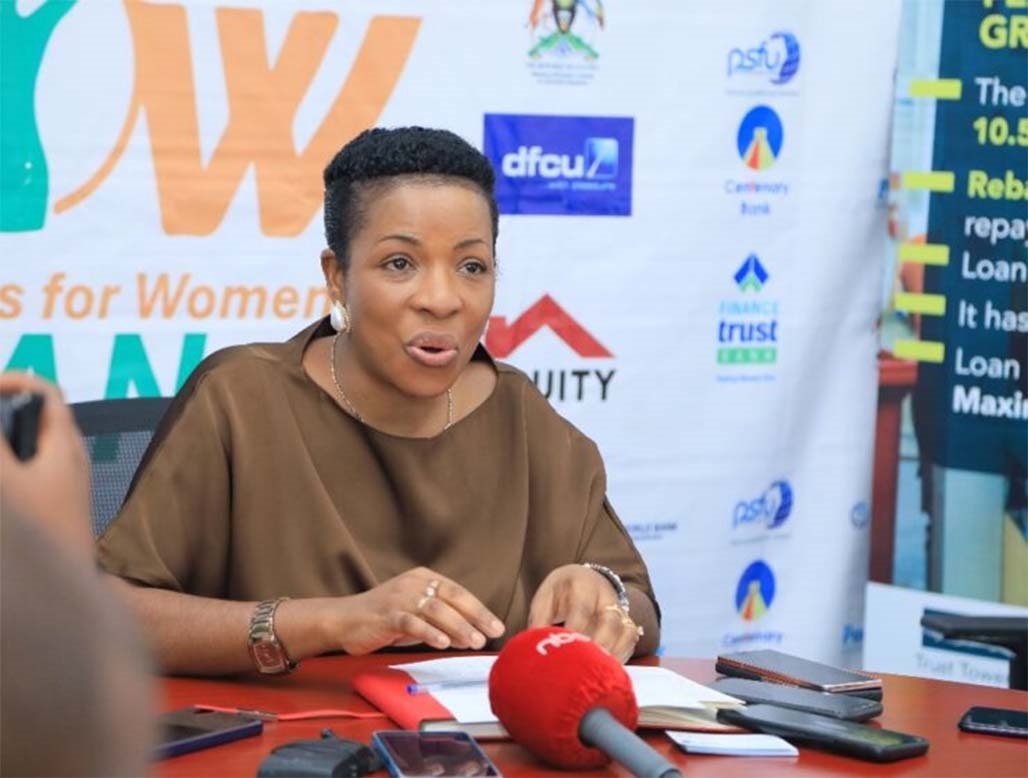
Dr Ruth Biyinzika Kasolo, the project coordinator at PSFU
HABARI DAILY I Kampala, Uganda I The Generating Growth Opportunities and Productivity for Women Enterprises (GROW) project secretariat has announced that the six participating Financial Institutions (PFI) should not charge more than 10% interest on loans.
The World Bank-funded GROW project, is designed to increase access to entrepreneurial services that enable female entrepreneurs to grow their enterprises in targeted locations including refugees host districts.
The $217 million (Shs 802 billion) financed by International Development Agency (IDA) under a grant financing arrangement is a five-years project, implemented by the Ministry of Gender, Labor and Social Development (MGLSD) and the Private Sector Foundation Uganda (PSFU).
Dr Ruth Biyinzika Kasolo, the project coordinator at PSFU, said that althouth they had previously allowed the banks to set the standard and charge an interest of between 10% and 10.5%, they have decided to lower it down to 10% for all the beneficiaries and all the PFI
“The bank are giving out this money according to their own procedures. The only thing we are dictating is the interest rate, which is now supposed to be 10% per year, with no any other bank charges,” she said.
Loan amount lowered
The GROW secretariat in consultation with development partners have also decided to lower the minimum loan amount to Shs2 million, from the previous Shs4 million.
“Loans are now between sh2m to sh200m.This is paid back within a duration to be decided by each participating bank, but ideally 2 years,” she said.
On whether there are limitations to accessing these loans, Biyinzika said they have strived to make the process easier.
“What has been barring women from accessing loans are the high interest rates and lack of collateral. We’ve told the banks to allow women to have group guarantees where they don’t have collateral. This will smoothen the process, and no one will be left out,” she said.
Stephen Asiimwe, the PSFU executive director said the 5-year project will be deemed successful if it enables women entrepreneurs to transition from micro to small, and from small to medium enterprises.
“This would mean that they will be supported to become fully commercial and international, with the ability to send there products across the borders,” he said.
He said the GROW project is aligned to Government development programs which are bent on promoting women’s economic empowerment.
The GROW project aims to address the structural barriers that hinder the growth of women-owned businesses. These barriers include financial inclusion, access to business development services, infrastructure improvements, and the promotion of women’s effective participation in the development process.







About the Author