
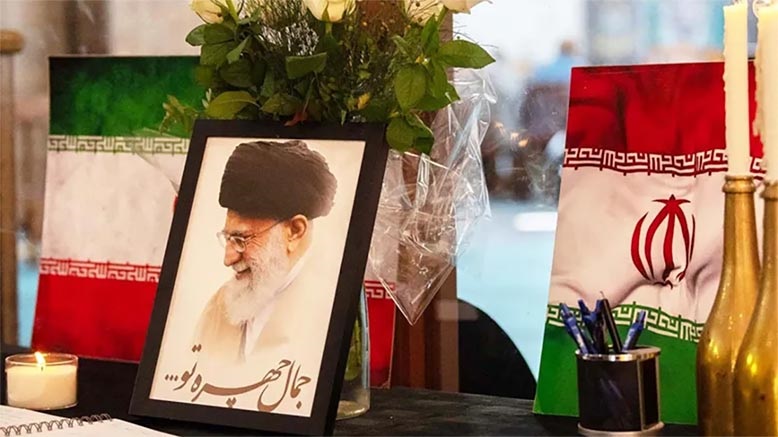
The late Ayatollah Ali Khamenei is being mourned all around the world
HABARI DAILY I Kampala, Uganda I The missile strike that killed Iran’s Supreme Leader, Ayatollah Ali Khamenei, was the result of months of painstaking intelligence work, rapid operational decision-making, and a rare convergence of opportunity and military readiness.
Far from a random act of war, the attack was a carefully calibrated operation that unfolded in broad daylight, underscoring both the depth of Western intelligence penetration and the vulnerabilities at the very heart of Iran’s security apparatus.
The fatal strike took place late Saturday morning at a heavily guarded compound in central Tehran, shattering long-held assumptions that Iran’s top leader would only be targeted under the cover of darkness. Instead, the timing reflected a moment of extraordinary intelligence clarity — and urgency.
Months of Surveillance
For months, U.S. and Israeli intelligence agencies had been tracking Khamenei’s movements, seeking a window when he might appear alongside other senior figures of Iran’s military and intelligence establishment. The surveillance combined advanced technical tracking, long-term analysis of behavioral patterns, and possibly human intelligence sources embedded within Iran’s vast bureaucracy.
Though precise methods remain classified, U.S. President Donald Trump hinted at their sophistication in a social media post shortly after the attack. “He was unable to avoid our intelligence and highly sophisticated tracking systems,” Trump wrote, signaling that the operation relied on capabilities beyond conventional satellite observation.
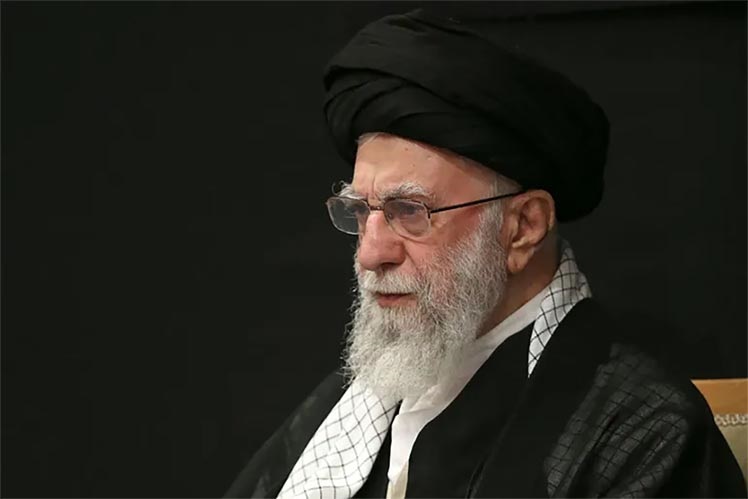
The late Ayatollah Ali Khamenei
Experts suggest that Israeli intelligence, building on techniques used during the brief but intense 12-day conflict last June, may have exploited vulnerabilities in Iran’s telecommunications networks.
By tracking the movements of bodyguards and key aides, analysts can reconstruct a detailed “pattern of life,” enabling them to predict where high-value individuals are likely to be at specific times.
This layered intelligence approach eventually revealed a crucial opportunity: Khamenei was scheduled to attend a rare in-person meeting of senior Iranian officials at a compound in central Tehran on Saturday morning. Other top military and intelligence commanders were expected to be present.
A Window of Opportunity
The intelligence, gathered primarily by the CIA and swiftly shared with Israeli counterparts, accelerated the timeline for a strike. Officials familiar with the operation said the early warning allowed planners to design a complex, multi-target attack rather than a single decapitation strike.
Rather than waiting for a potentially safer night-time window, decision-makers opted for speed. The logic was simple: opportunities to target a figure as heavily protected as Khamenei are vanishingly rare, and any delay risked losing the chance altogether.
It is believed that the CIA provided the location data, while Israel was tasked with executing the strike — reflecting what analysts describe as a division of labor in the U.S.-Israeli military partnership. Israel focuses on precision strikes against leadership and symbolic targets, while the United States concentrates on broader military infrastructure.
The Strike
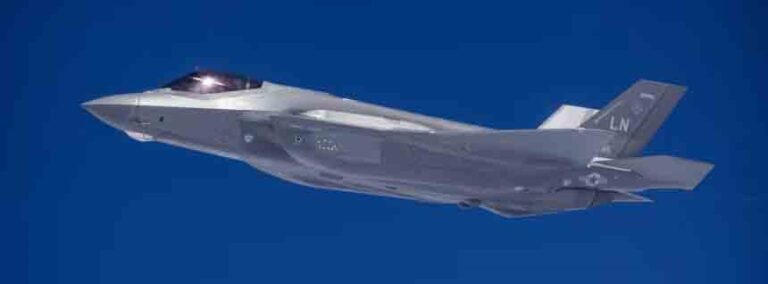
At approximately 9:40 a.m. local time, Israeli jets unleashed a barrage of about 30 bombs and missiles on the compound. The heavy use of munitions suggests that Khamenei was sheltering in a reinforced underground bunker, though not one of the deepest and most fortified shelters believed to exist beneath Tehran.
Multiple strikes were likely needed to penetrate layers of concrete and earth, ensuring the destruction of subterranean chambers. Satellite imagery later showed thick black smoke billowing from the site and extensive structural damage.
Simultaneously, other strategic locations across Tehran were targeted, including the office of President Masoud Pezeshkian, who later confirmed he had survived. The synchronized attacks aimed to cripple Iran’s leadership structure and signal the launch of a wider military campaign.
Three senior defense officials were confirmed dead: Ali Shamkhani, secretary of Iran’s Defence Council; Brig. Gen. Aziz Nasirzadeh, the defence minister; and Gen. Mohammad Pakpour, commander of the Islamic Revolutionary Guard Corps. Their deaths represented one of the most devastating blows to Iran’s military leadership in decades.
A Decision Watched From Florida
As Israeli jets crossed into Iranian airspace, senior U.S. officials gathered at Trump’s Mar-a-Lago residence in Florida, where it was the middle of the night. From there, they monitored the operation in real time. Yet confirmation of Khamenei’s death would take hours, as intelligence analysts sought to verify the outcome.
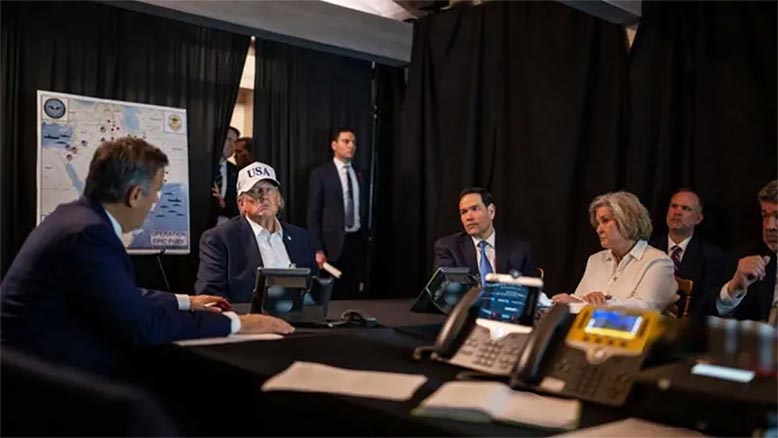
President Trump together with his team watched the operation unfold at his Mar-a-Lago residence in Florida
Iranian state media announced the supreme leader’s death early Sunday, ending speculation and sending shockwaves across the Middle East and beyond.
Intelligence and Denials
Despite the close coordination, U.S. officials have maintained that Washington did not directly target Khamenei. GOP Congressman Mike Turner, citing Secretary of State Marco Rubio, said the United States had not sought to assassinate Iranian leadership. Yet multiple intelligence sources confirmed that the CIA’s tracking played a decisive role in enabling the strike.
The American media first reported the CIA’s involvement, later corroborated by U.S. lawmakers. Senator Tom Cotton, chairman of the Senate Intelligence Committee, described the operation as a testament to “exquisite intelligence collection methods.”
“The location and intentions of the supreme leader are among the highest priorities of our intelligence community,” Cotton said. “This operation proves once again that our nations possess capabilities no other country on Earth has.”
A Colossal Security Failure
For Iran, the killing represents not only a strategic disaster but also a profound failure of internal security and counterintelligence. Tehran was well aware that Khamenei was a prime target, particularly after last year’s conflict. Yet the inability to detect surveillance, protect communications, or anticipate daylight vulnerability raises troubling questions about the regime’s defensive capabilities.
Some analysts believe Iranian officials assumed that a daytime strike in central Tehran would be too risky for Israel, given civilian presence and international scrutiny. That assumption proved fatal.
End of an Era
Khamenei, 86, had ruled Iran since 1989, succeeding revolutionary leader Ruhollah Khomeini. Over nearly four decades, he consolidated unparalleled authority, commanding the armed forces, dominating political institutions, and shaping Iran’s ideological direction.
Under his leadership, Iran became both a regional power and a global antagonist, supporting militant groups across the Middle East and pursuing nuclear ambitions that triggered years of sanctions and confrontation.
His death leaves a vacuum at the pinnacle of Iranian power. While officials say a successor could be appointed within days, no clear heir has emerged. Trump, speaking to CBS News, hinted that he knew who might assume control but declined to elaborate.
Uncertain Consequences
Iran had reportedly prepared contingency plans for leadership succession, anticipating the possibility of such a strike. Yet the broader implications remain unclear. The killing of Khamenei may embolden Iran’s adversaries, destabilize its internal politics, and provoke retaliatory actions across the region.
What is certain is that the operation has redefined the boundaries of modern warfare. The strike demonstrated how long-term intelligence gathering, advanced surveillance, and precision weaponry can converge to eliminate even the most heavily protected leaders.
In the end, Ayatollah Ali Khamenei was undone not by battlefield defeat, but by invisible networks of data, surveillance, and strategic calculation — a reminder that in the 21st century, wars are increasingly won long before the first missile is fired.







About the Author