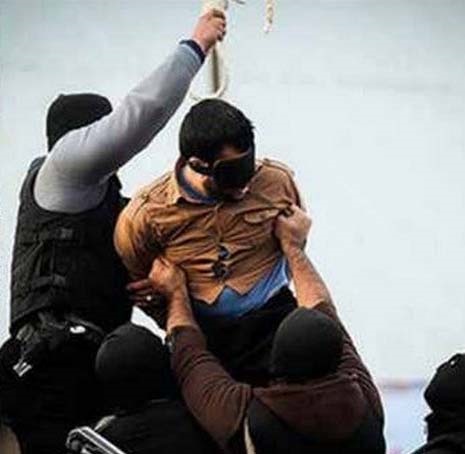
HABARI DAILY I Kampala, Uganda I Rights groups have sharply criticised a recent surge in executions in Iran, warning that authorities are using the death penalty as a tool to crush dissent amid ongoing conflict with the United States and Israel.
Activists have long accused Amnesty International of ranking Iran as the world’s second most prolific executioner after China, and recent developments appear to reinforce those concerns. Since the outbreak of war on February 28, Tehran has carried out a string of hangings, many linked to allegations of espionage or participation in anti-government protests.
Among those executed was Kouroush Keyvani, a dual Iranian-Swedish national convicted of spying for Israel, a case that sparked outrage in Stockholm and across the European Union. Another man accused of collaborating with both Israel and the United States during protests was also put to death on Thursday.
Earlier, on March 19, authorities executed four individuals—Saleh Mohammadi, Mehdi Ghasemi, and Saeed Davoudi—who had been arrested in connection with a recent uprising. Rights groups say such executions are part of a broader crackdown on dissent.
Concerns have also intensified over the fate of other detainees. Amnesty International has warned that at least five young protesters previously sentenced to death could face imminent execution after being transferred from Ghezel Hesar prison to an undisclosed location.
In the latest developments, Iran executed two men accused of belonging to the banned People’s Mojahedin Organization of Iran (PMOI/MEK). Identified as Abolhassan Montazer and Vahid Baniamerian, the pair were hanged after the Supreme Court upheld convictions for membership in the group and involvement in what authorities described as “armed rebellion” and terrorist activities.
The PMOI/MEK, which initially supported the 1979 Islamic Revolution but later fell out with Iran’s leadership, has operated in exile for decades and is designated a terrorist organisation by Tehran. Four other alleged members—Mohammad Taghavi, Akbar Daneshvarkar, Babak Alipour and Pouya Ghobadi—were executed on March 30 and 31.
The group condemned the executions, describing them as a “futile” attempt to silence opposition. It argued that such actions would instead strengthen resistance among young Iranians.
Amnesty International has also accused Iranian authorities of torturing detainees prior to execution and carrying out sudden transfers to undisclosed locations shortly before their deaths. The organisation warned that more executions could follow, particularly targeting protesters arrested during mass demonstrations earlier this year.
“It is unconscionable,” said Diana Eltahawy, Amnesty’s deputy regional director for the Middle East and North Africa, “that even as the population is reeling from conflict and mass bereavement… authorities continue to weaponize the death penalty to eradicate dissenting voices.”
Rights groups say the ongoing wave of executions underscores a deepening human rights crisis in Iran, raising fears that the use of capital punishment will escalate further as tensions persist.