
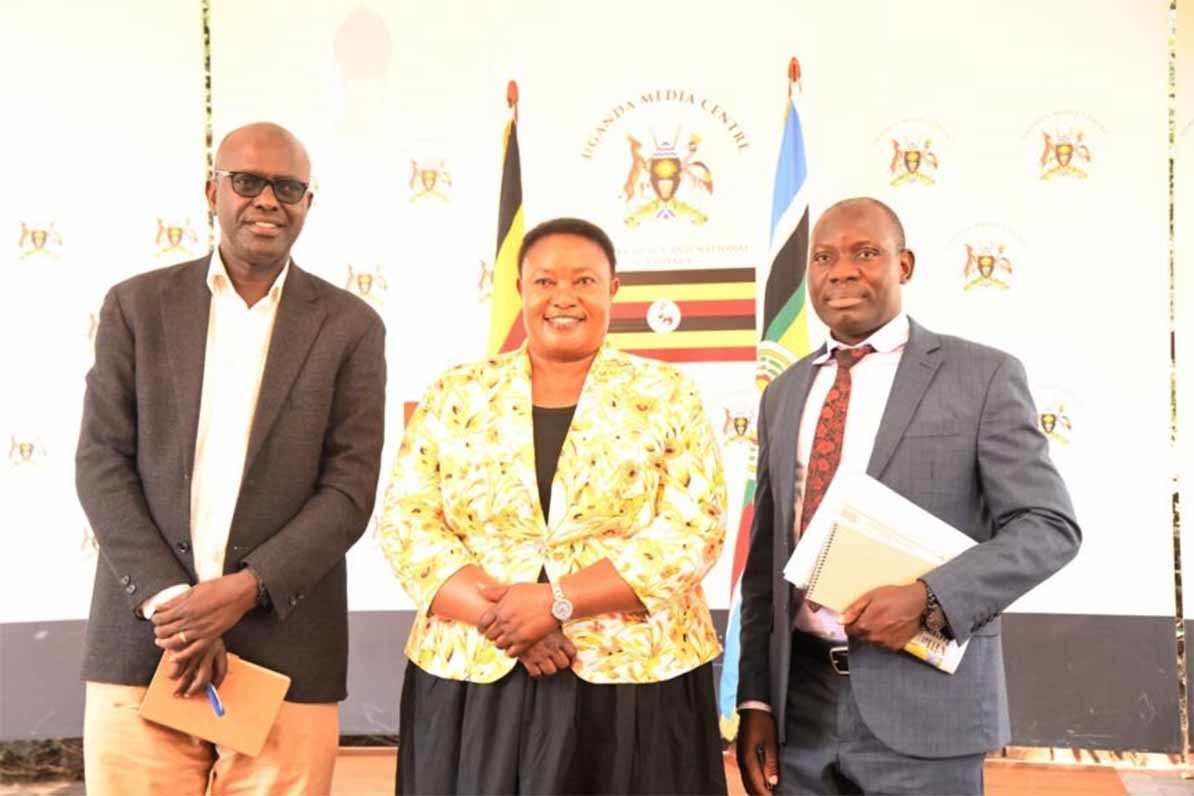
Babalanda (C) with other officials during the Press Conference held today, Friday 23rd January 2026 at the Uganda Media Center
HABARI DAILY I Kampala, Uganda I Uganda will on January 26, 2026, mark forty years since the National Resistance Movement took power, an event government officials say laid the foundation for political stability, economic recovery, and long-term national development.
The Liberation Day celebrations will be held at Kololo Ceremonial Grounds, with President Yoweri Museveni presiding as chief guest. According to the Minister for the Presidency, Milly Babirye Babalanda, they are set to honor patriots and heroes who supported government in the liberation struggles.
Addressing the press at the Uganda Media Center today, she said that the anniversary comes at a significant time following Museveni’s recent re-election.
“These celebrations are taking place at a moment when President Museveni has just received a renewed mandate from the people of Uganda,” Babalanda said. “It is a strong endorsement of the leadership and direction the country has taken.”
She noted that January 26 marks the capture of Kampala by NRA forces in 1986, which brought an end to years of political instability and military rule. Museveni was later sworn in as president and pledged to change the way the country was governed.
Babalanda quoted Museveni’s inaugural message, in which he said, “No one should think that what is happening today is a mere change of guards: it is a fundamental change in the politics of our country.”
She explained that before 1986, Uganda had experienced multiple violent changes of government that weakened state institutions, destroyed the economy, and forced many citizens into exile. According to the minister, the country has since registered steady progress in restoring peace and rebuilding public institutions.
“The general security situation in the country is now calm, and our borders remain largely secure,” Babalanda said, while acknowledging challenges linked to instability in parts of the region.
On the economy, she pointed to sustained growth, improved electricity generation, and increased investment in infrastructure as key milestones achieved under NRM leadership. Uganda’s power generation capacity has expanded significantly compared to the situation in the mid-1980s, supporting industrial growth and service delivery.
Babalanda also highlighted advances in health and education, citing expanded access to primary and secondary education, the growth of public universities, and investments in specialized health facilities across the country.
“Government has deliberately invested in sectors that directly affect the welfare of citizens,” she said.
She added that agriculture remains the backbone of the economy, employing the majority of Ugandans and driving export earnings, especially through coffee exports.
The Liberation Day event will include a military parade featuring the UPDF, Uganda Police Force, Uganda Prisons Service, and Uganda Wildlife Authority. President Museveni is also expected to award medals to several Ugandans in recognition of their contribution to the country.
Babalanda said the 40-year milestone is a moment to reflect on the past while focusing on the future.
“The gains made over the years must be protected and strengthened as Uganda continues on its path of transformation,” she said.







About the Author