

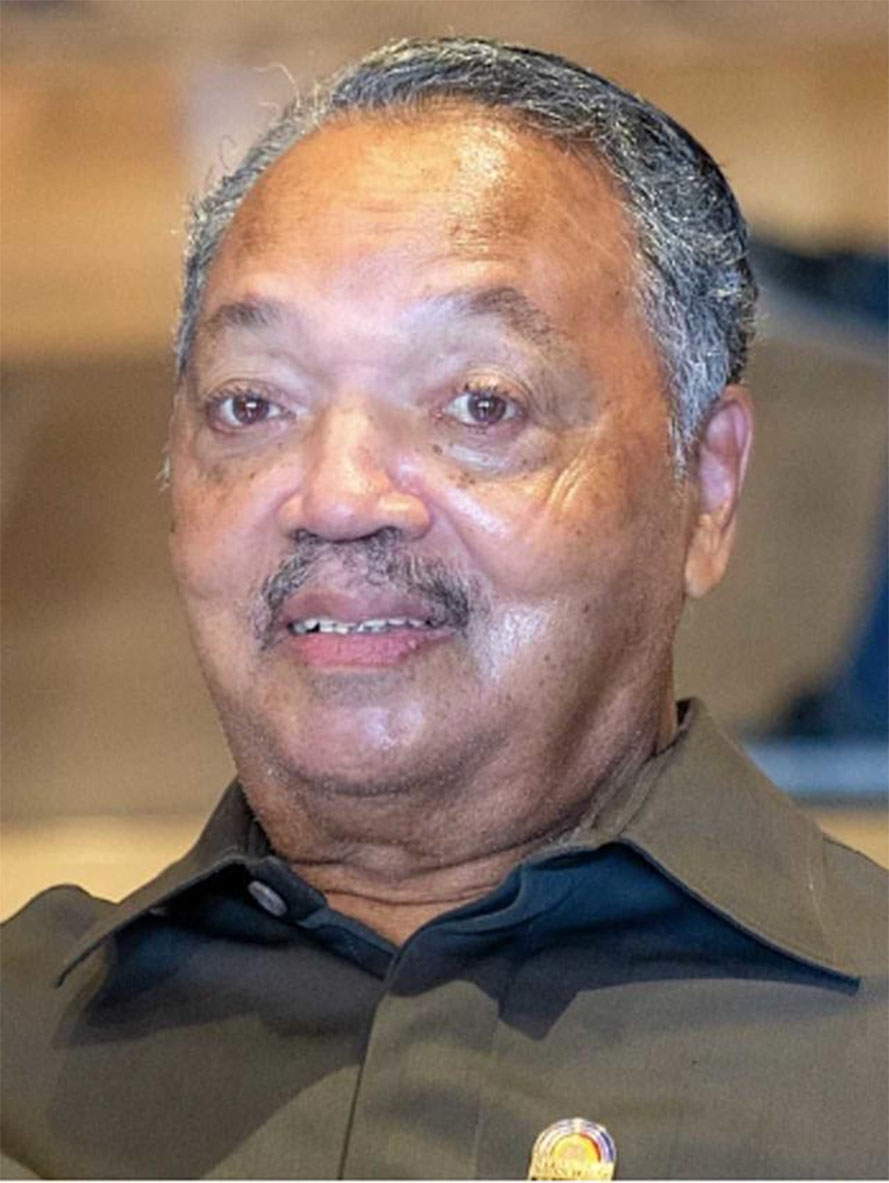
Reverend Jesse Jackson
HABARI DAILY I Kampala, Uganda I Reverend Jesse Jackson, a towering figure in the global civil rights movement, lost his long and courageous battle with Progressive Supranuclear Palsy (PSP), a rare and debilitating neurological disorder, his family has confirmed. The veteran activist, ordained minister and two-time United States presidential candidate died peacefully on Tuesday at the age of 84, surrounded by loved ones.
Although the family did not disclose an official cause of death, they said Jackson had been battling both Progressive Supranuclear Palsy and Parkinson’s disease for several years. His health had steadily declined, and he was admitted to hospital in November before being discharged to continue treatment and care at home.
Progressive Supranuclear Palsy is a degenerative brain disease that affects balance, movement, vision, speech and swallowing. It progressively robs patients of mobility and independence, often leading to severe disability. In Jackson’s case, the illness significantly reduced his public appearances in recent years, forcing him to withdraw from active leadership while continuing to inspire through his legacy.
Born in Greenville, South Carolina, in 1941, Jackson rose from humble beginnings to become one of the most influential voices for social justice in American history. A gifted student and athlete, he earned a football scholarship to the University of Illinois before transferring to North Carolina A&T State University, where his passion for civil rights was ignited.
At North Carolina A&T, Jackson was elected student body president and immersed himself in the growing civil rights movement in Greensboro. He graduated with a Bachelor of Science degree in sociology, laying the academic foundation for a lifetime of advocacy. He later attended Chicago Theological Seminary and was ordained as a minister in 1968, a role that deepened his commitment to social justice.
Jackson’s activism was profoundly shaped by his mentorship under Martin Luther King Jr., whose philosophy of nonviolence and equality became central to Jackson’s own mission. Following King’s assassination, Jackson emerged as one of the most prominent leaders of the movement, dedicating his life to advancing civil rights, economic empowerment and political inclusion for African-Americans and other marginalised communities.
His tireless efforts culminated in two historic campaigns for the presidency in 1984 and 1988, making him the first African-American to mount a serious national bid for the White House. Though unsuccessful, the campaigns reshaped American politics by mobilising minority voters and expanding the national conversation on racial and economic justice.
In a heartfelt statement, the Jackson family described him as “a servant leader — not only to our family, but to the oppressed, the voiceless, and the overlooked around the world.” They added: “His unwavering belief in justice, equality, and love uplifted millions, and we ask you to honor his memory by continuing the fight for the values he lived by.”
Jackson is survived by his wife, Jacqueline, and their six children. As tributes pour in from across the world, his death marks the end of an extraordinary life defined by courage, compassion and unyielding dedication to justice.
Even as Progressive Supranuclear Palsy gradually silenced his once-powerful voice, Jesse Jackson’s legacy remains a clarion call for equality, dignity and human rights for generations to come.







About the Author