
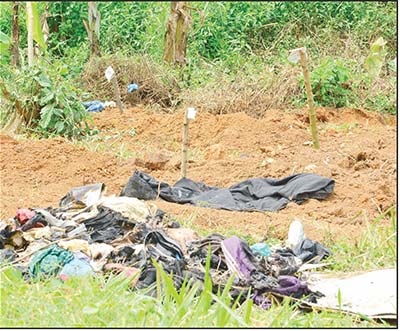
Labelled sites of bodies buried in the KCCA cemetery in Wakiso, where the bodies of 509 people who were accident victims or whose relatives are not known were buried last year
HABARI DAILY I Kampala, Uganda I A growing wave of violent and unexplained deaths in Uganda has been laid bare by a new police report revealing that more than 500 unidentified bodies were buried at Kampala Capital City Authority (KCCA) cemetery in Bukasa last year alone.
According to the Police Health Services Performance Report for 2025, a total of 723 bodies were recovered across the country without identification. Of these, only 214 were eventually identified and claimed by relatives, leaving 509 unclaimed bodies that were buried at Bukasa Public Cemetery in Kira Municipality, Wakiso District.
The figures point to a disturbing rise in deaths linked to violent crime, mob justice, hit-and-run road accidents and other unresolved causes, underscoring persistent weaknesses in crime prevention, road safety enforcement and community justice mechanisms.
Police say many of the deceased showed signs of violent death, with some believed to be murder victims while others died at the hands of mobs or were killed in traffic accidents where perpetrators fled the scene. In 2024 alone, 250 unclaimed bodies were buried at Bukasa cemetery, meaning the number more than doubled within a year.
To establish the identities of the deceased and preserve evidence, police forensic experts subjected the bodies to extensive scientific examination. These included DNA profiling, toxicology screening, ballistic analysis, fingerprinting and 3D forensic photography.
Most of the forensic work was conducted at the Mulago City Mortuary, the country’s largest forensic pathology centre jointly managed by the Uganda Police Force and KCCA. During 2025, the facility carried out 4,632 post-mortem examinations and 10 exhumations, producing detailed medico-legal reports to support investigations and criminal prosecutions nationwide.
Beyond Kampala, police surgeons across the country performed 1,228 post-mortem examinations and seven exhumations, highlighting a growing demand for forensic services in both urban and rural areas as violent deaths increase.
The report paints a grim picture of communities where disputes frequently escalate into lethal violence and where mob justice continues to claim lives. Police note that many victims of mob action die without identification, particularly in informal settlements and rural trading centres where residents may fear cooperating with authorities.
The rise in violent deaths is occurring alongside alarming levels of interpersonal violence. Police health units handled 12,932 physical assault cases last year, affecting 9,384 males and 5,548 females. In addition, 4,203 sexual and gender-based violence (SGBV) cases were recorded, involving 3,942 women and girls and 261 men and boys.
Health officials say these services are critical in documenting injuries, collecting forensic evidence and producing impartial medical reports that strengthen prosecutions while safeguarding the rights of both victims and suspects.
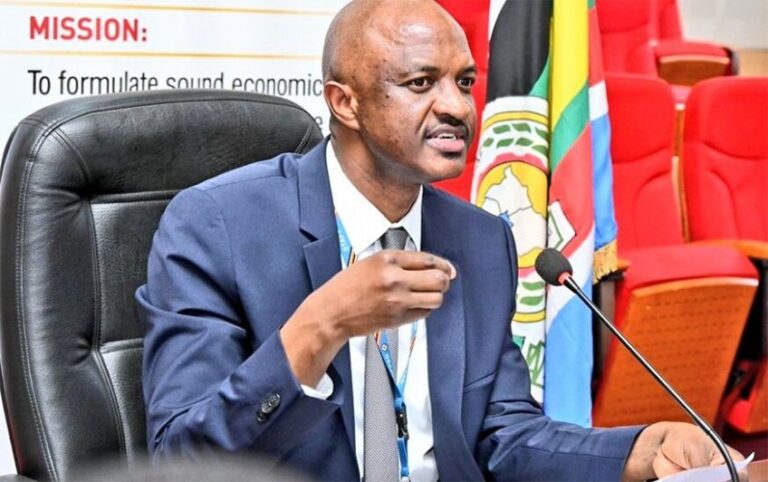
Assistant Inspector General of Police Dr Moses Byaruhanga, the director of Police Health Services, said the report is anchored on data drawn from multiple digital and administrative sources, including routine reports from police health facilities under the Health Management Information System, the District Health Information System and Open Data Kit platforms.
Coverage estimates, he said, were computed using the Uganda Bureau of Statistics’ 2025 mid-year population projection of 51.3 million to ensure accuracy in measuring service performance.
Despite registering progress across preventive, curative and medico-legal services, Byaruhanga acknowledged that Police Health Services continue to operate under difficult conditions marked by staffing gaps, weak infrastructure, shortages of medical supplies, limited diagnostic equipment, inadequate emergency transport and funding constraints.
As the country awaits the release of the general annual crime report for 2025, the growing number of unidentified and violently killed Ugandans has raised fresh concerns among human rights advocates, who warn that without urgent reforms in policing, road safety and community justice, the silent toll of violent death is likely to continue rising.







About the Author