
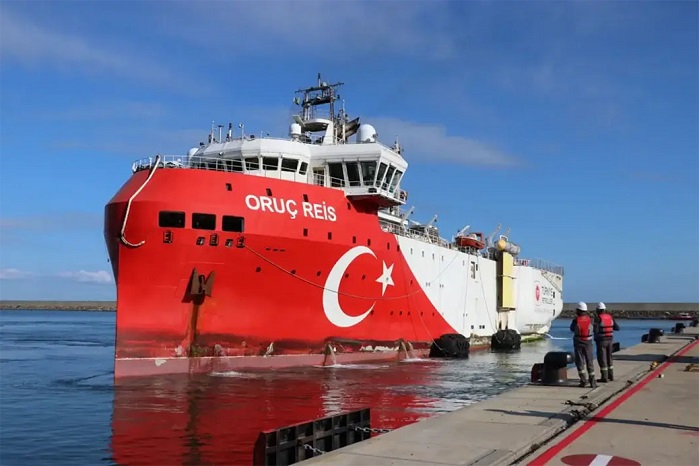
Turkish oil exploration ship in Somali waters
HABARI DAILY I Kampala, Uganda I A controversial oil exploration deal between Turkey and Somalia is drawing growing criticism, with analysts and observers warning that it risks handing Ankara disproportionate control over Somalia’s untapped energy wealth.
Somalia’s offshore oil reserves are estimated to contain roughly 30 billion barrels of oil and gas equivalent based on recent seismic surveys, with some estimates suggesting up to 110 billion barrels in potential untapped resources. These figures, primarily located in offshore basins, position the country as a major emerging energy frontier in Africa.
At the centre of the debate is a 2024 agreement granting the Turkish Petroleum Corporation (TPAO) exclusive rights to explore and develop oil and gas resources across both offshore and onshore blocks in Somalia. Under the deal, TPAO is expected to begin offshore drilling operations in 2025, marking the first major attempt to tap into the country’s long-dormant petroleum reserves.
Historic breakthrough
While Somali officials have hailed the agreement as a historic breakthrough, critics argue that its scope heavily favours Turkey, raising questions about fairness, sovereignty, and long-term economic benefit for the Somali people.
The partnership includes a large-scale seismic survey covering approximately 15,000 square kilometres of offshore territory, aimed at determining hydrocarbon potential. Turkey is providing technical expertise, financing, and operational support—roles that significantly expand its influence over Somalia’s emerging energy sector.
“This is being presented as a win-win partnership, but in reality, it risks placing Somalia’s most valuable natural resources under foreign control,” said one regional energy analyst familiar with the deal. He added that the exclusivity and breadth of rights granted to Turkey are unusually extensive.
The concerns stem largely from the agreement’s structure, which reportedly gives TPAO sweeping authority from exploration through to production. Such vertically integrated control could limit Somalia’s bargaining power in future negotiations and reduce its share of potential revenues.
Defence cooperation pact
The deal also builds on an already deepening relationship between the two countries. Turkey has, over the past decade, become one of Somalia’s most prominent partners, with Turkish firms managing key infrastructure including Mogadishu’s international airport and seaport. A prior defence cooperation agreement has further cemented Ankara’s strategic footprint in the Horn of Africa.
For critics, this growing presence—now extending into the oil sector—raises fears of economic dependency.
“Somalia is effectively outsourcing control of its critical sectors to one foreign partner,” another observer noted. “That creates an imbalance that could be difficult to reverse.”
Somalia’s oil and gas reserves are believed to be substantial but have remained largely unexplored due to decades of conflict, political instability, and lack of investment. The government argues that partnering with a technically capable and financially strong country like Turkey is necessary to unlock these resources.
However, questions persist about whether the terms of engagement are equitable. Civil society groups and some policymakers have called for greater transparency, warning that without clear safeguards, the country risks repeating patterns seen elsewhere in Africa, where resource wealth has disproportionately benefited foreign entities.
Bad timing
The timing of the agreement has also drawn scrutiny, coming as Somalia seeks to rebuild its economy and institutions. Critics argue that such a far-reaching deal should have been subjected to broader consultation and parliamentary oversight.
As drilling preparations advance, the controversy underscores a larger dilemma facing resource-rich but fragile states: how to attract investment without compromising national interests.
For Somalia, the stakes are particularly high. Its oil reserves could transform the economy—but only if managed in a way that ensures fair returns and preserves sovereignty. Whether the current deal achieves that balance remains a matter of intense debate.







About the Author