
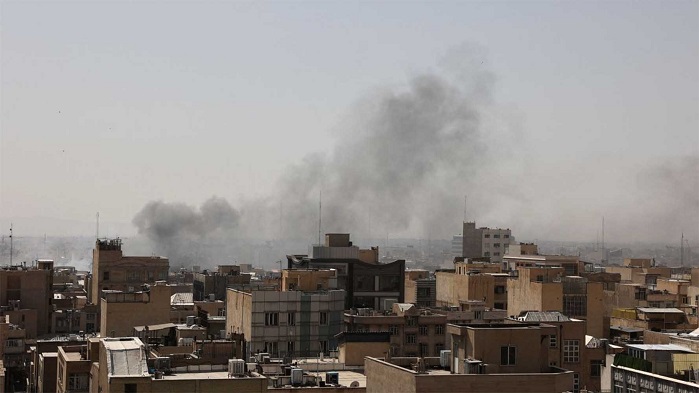
Tehran, the Iranian capital is already reeling in war damage
HABARI DAILY I Kampala, Uganda I The Middle East has been thrust into one of its most dangerous confrontations in decades following a dramatic escalation of hostilities between the United States, Israel and Iran, a conflict that now threatens global stability, energy security and international peace.
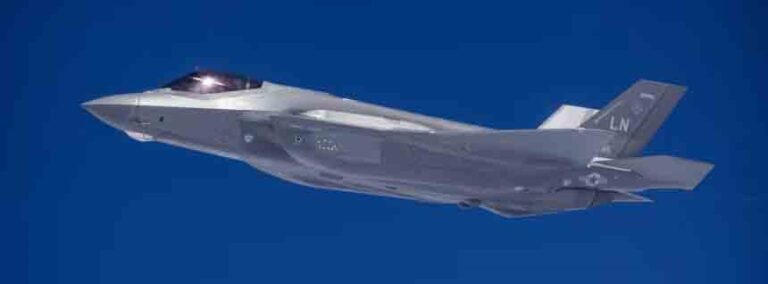
In a sweeping military campaign, the United States and Israel launched coordinated strikes deep inside Iranian territory, targeting what Israeli officials described as critical military installations, missile infrastructure, and senior leadership. Israel said its operations aimed at Iran’s supreme leader, president and head of the armed forces, while US sources said that Washington is preparing for several days of sustained attacks. The assault marks the most direct and consequential confrontation yet between the long-standing adversaries, dramatically raising the stakes for the entire region and beyond.
US President Donald Trump described the operation as “massive and ongoing,” warning Americans that casualties could not be ruled out. In unusually blunt language, Trump also openly called for regime change, urging Iranians to “take over your government,” a statement that has further inflamed tensions and sparked controversy both domestically and internationally.
Israel hits targets
Israel, for its part, framed the strikes as a preemptive act of self-defense. In a televised address, Israeli Defense Minister Israel Katz said intelligence had revealed “clear and actionable” evidence of an imminent Iranian threat against Israeli population centers.
“After receiving clear and actionable intelligence indicating an imminent threat to the State of Israel, the government determined that decisive preemptive action was necessary to protect our citizens,” Katz said.
The Israeli Defense Forces (IDF) launched coordinated air and long-range strikes in the pre-dawn hours, prompting an immediate nationwide state of emergency. Sirens blared across Tel Aviv, Haifa and Jerusalem as residents were ordered into shelters, large gatherings were banned, and schools and non-essential workplaces were shut down. The Home Front Command warned that further retaliation was likely, urging citizens to remain close to protected spaces.
Iran’s response was massive, supreme leader is alive
Within hours, Iran responded with unprecedented force, launching a wave of missile and drone strikes toward Israeli and US targets across the Middle East. Explosions were reported in the United Arab Emirates, Qatar, Dubai and Bahrain, with dramatic video footage showing a missile striking a US Navy base. Saudi Arabia later confirmed that its capital, Riyadh, and the Eastern Province had also been hit, marking the first public acknowledgment by the kingdom that it had been directly targeted.
The Saudi government condemned the attacks as “cowardly,” stressing that it had not permitted its airspace or territory to be used for operations against Iran. “In light of this unjustified aggression, the Kingdom affirms that it will take all necessary measures to defend its security and protect its territory, citizens, and residents, including the option of responding to the aggression,” a statement said.
Iranian Foreign Minister Abbas Araghchi sought to downplay reports of catastrophic leadership losses, telling the press that Supreme Leader Ayatollah Seyyed Ali Khamenei was alive “as far as I know.”
“Almost all officials are safe and sound and alive,” Araghchi said, speaking live from Tehran. “We may have lost one or two commanders, but that is not a big problem.”
Israeli sources told the media that while there was optimism about the effectiveness of the strikes, there was no confirmation that Khamenei had been killed. Araghchi added that Iran had informed Persian Gulf states that it had no intention of attacking them and that strikes on US bases were acts of self-defense.
He sharply criticized Washington for negotiating with Tehran and then launching attacks. The United States and Iran had concluded their third round of talks in Geneva just days earlier. Despite the escalation, Araghchi said Iran remained open to de-escalation. “There is no communication right now, but if America wants to talk to us, they know how they can contact me,” he said.
Iran’s military capability
At the core of the conflict lies Iran’s formidable military capability. Analysts believe Tehran still possesses thousands of missiles and drones capable of striking across the Middle East, despite suffering significant depletion during earlier clashes with Israel since 2024. Israeli estimates suggest Iran had between 1,000 and 1,500 missiles remaining after the 12-day war in June 2025, down from about 2,500 previously, but that it has since been rebuilding its arsenal. Systems such as the Shahed-129 drone, which can theoretically reach up to 1,700 kilometers, underscore Iran’s capacity to project power across the region.
The conflict has triggered urgent international reactions. The United Arab Emirates described the unfolding war as a “historic moment” in the Middle East, blaming global leaders for failing to ensure long-term regional stability. Several US allies expressed alarm, while some Arab states condemned Iran’s retaliation, fearing a wider regional conflagration.
Britain might join the war, as UN sound opposition
British Prime Minister Keir Starmer confirmed that British aircraft were active in the region as part of coordinated defensive operations but insisted the UK played no role in the joint US-Israeli strikes.
“British planes are in the sky today as part of coordinated regional defensive operations to protect our people, our interests, and our allies,” Starmer said, calling on Iran to refrain from further attacks and to abandon its weapons programs.
At the United Nations, Secretary-General António Guterres condemned the military escalation, warning that continued fighting could plunge the region into chaos.
“The use of force by the United States and Israel against Iran, and the subsequent retaliation by Iran across the region, undermine international peace and security,” Guterres said. “Failing to do so risks a wider regional conflict with grave consequences for civilians and regional stability.”
Senate, House of Representative divided on war effort
In Washington, the strikes have exposed sharp political divisions. Republican Senator John Thune, the Senate Majority Leader, praised Trump for confronting what he called Iran’s “relentless nuclear ambitions” and support for militant groups. Thune argued that Tehran had rejected diplomatic solutions, leaving military action as the only viable option.
By contrast, Republican Representative Thomas Massie denounced the campaign as contrary to the “America First” doctrine, warning against entangling the United States in another prolonged foreign war. He, alongside Democratic Representative Ro Khanna, called for congressional authorization, arguing that the Constitution requires lawmakers to approve any war.
The stakes of the conflict extend far beyond the battlefield. The Middle East remains the world’s most critical energy-producing region, and any sustained war threatens global oil supplies, potentially triggering price spikes, inflationary pressures, and economic instability worldwide. Shipping routes through the Strait of Hormuz and the Red Sea—vital arteries for global trade—are increasingly vulnerable, raising fears of supply chain disruptions.
What is at stake?
Strategically, the war risks drawing in multiple regional powers, including Saudi Arabia, the UAE, and possibly Turkey, while also intensifying proxy conflicts in Lebanon, Syria, Iraq, and Yemen. Iran’s network of allied militias, from Hezbollah in Lebanon to Houthi forces in Yemen, could open multiple fronts, vastly expanding the scale of hostilities.
Diplomatically, the conflict has shattered fragile efforts to revive nuclear negotiations and reduce tensions. Western powers now face the challenge of preventing a spiral into full-scale regional war while balancing support for Israel, protecting their military assets, and containing Iran’s influence.
Humanitarian concerns are also mounting. Civilian populations across Israel, Iran and neighboring states are bracing for prolonged violence, displacement and economic hardship. Already, emergency alerts, shelter orders and travel advisories have become part of daily life for millions.
As missiles fly and diplomacy stalls, the world watches anxiously. The confrontation between Washington, Jerusalem and Tehran is no longer a distant geopolitical contest—it is an unfolding crisis with the potential to reshape the Middle East and reverberate across global politics, economics and security. Whether leaders can still pull the region back from the brink remains one of the most pressing questions of our time.







About the Author