
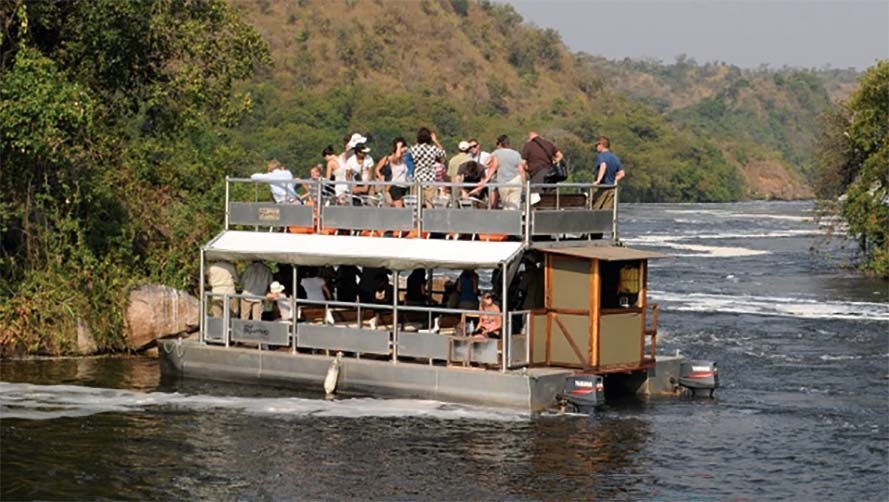
Tourists having a good time at the Queen Elizabeth National Park
HABARI DAILY I Kampala, Uganda I The United Kingdom’s decision to lift its warning against all but essential travel to Queen Elizabeth National Park, the area south-west of Kasese town, and Semuliki National Park has been celebrated across Uganda’s tourism sector.
But beyond the excitement, a larger and more pressing conversation emerges: What does this moment really mean for the future of Uganda’s tourism industry?
For more than two years, the UK’s travel advisory hung over Uganda’s parks like a dark cloud, cutting off one of the country’s most reliable long-haul visitor markets. Now that the cloud has finally lifted, questions arise about whether this relief will translate into meaningful and sustained recovery.
Will the lifting of the advisory be the turning point that many in the sector hope for — or merely a temporary boost?
Industry leaders such as Amos Wekesa, founder and chief executive of Great Lakes Safaris, have hailed the move as a “Christmas miracle.” But even as he celebrates, one must ask: can miracles alone transform a sector that has struggled through crisis after crisis? Wekesa says the policy shift followed months of advocacy involving meetings with President Museveni, British High Commissioner Lisa Chesney, and the Uganda Mission in the UK led by Patricia Kabuleta.
If such diplomacy was required to unlock a single advisory, how much more engagement is needed to secure long-term stability and market trust?
Uganda’s tourism industry contributed about $1.28 billion to the economy in 2024 and supported over 800,000 jobs. But how quickly can the sector reclaim these gains?
Tour operators reported up to a 70% drop in UK tourist bookings when the advisory was active. Will travellers from the UK — a critical source market — return with enough confidence and numbers to close this gap?
The UK’s restrictions were issued in October 2023, after a deadly attack near Queen Elizabeth National Park in which a British tourist, a South African tourist, and their Ugandan guide were killed by suspected ADF rebels.
As the advisory shaped global perceptions of Uganda’s security for more than two years, the question now becomes unavoidable: Has Uganda done enough to guarantee long-term safety in its parks?
And what of the broader implications? With the advisory lifted, hotels, lodges, safari camps, and tour companies anticipate higher occupancy and renewed bookings. But is the sector prepared to manage and sustain a potential surge in arrivals? Can infrastructure, service quality, and marketing efforts keep pace with renewed global interest?
With experts predicting spill-over effects from regional tourism and a possible quicker-than-expected rebound in international arrivals, Uganda faces both opportunity and obligation. The government has been rolling out initiatives aimed at diversifying tourism products and improving services — but will these reforms be implemented fast enough to solidify Uganda’s reputation in a relentless global tourism market?
Ultimately, as Uganda celebrates this diplomatic and economic victory, one overriding question lingers: Will this moment mark the beginning of a resilient, competitive, future-ready tourism sector — or will the industry slide back into vulnerability at the next crisis?
The lifting of the advisory signals hope. Whether it becomes a long-term breakthrough is now up to Uganda’s ability to secure, innovate, and consistently deliver a world-class tourism experience.







About the Author