
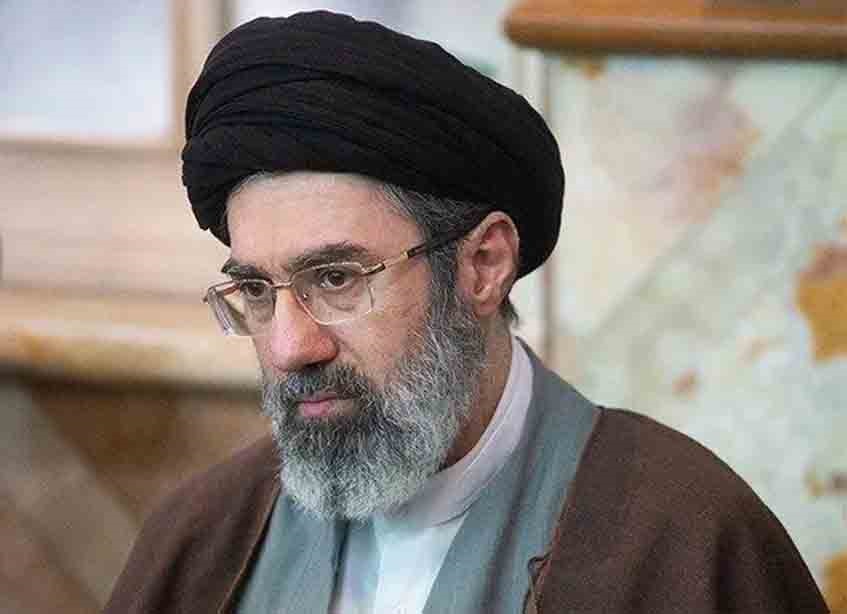
Mojtaba Khamenei, the new Ayatollah
HABARI DAILY I Kampala, Uganda I Iran has entered a new and uncertain political era following the appointment of Mojtaba Khamenei as the country’s new supreme leader after the death of his father, Ali Khamenei, in a devastating strike during the escalating war involving Iran, the United States and Israel.
Iranian state media reported that the 56-year-old cleric was chosen by the powerful Assembly of Experts, the 88-member body responsible for selecting the country’s supreme leader. The decision reportedly followed a “decisive vote,” with the assembly urging Iranians to maintain unity and pledge allegiance to the new leader amid one of the most volatile periods in the country’s history.
A quiet but powerful figure
Unlike his father, who dominated Iranian politics for more than three decades, Mojtaba Khamenei has spent most of his public life out of the spotlight. Despite rarely appearing in public or giving speeches, he has long been viewed by insiders as one of the most influential figures within Iran’s political establishment.
Born on September 8, 1969 in the north-eastern Iranian city of Mashhad, Mojtaba is the second of six children of Ali Khamenei. He received his early education in Tehran and later pursued religious studies in the holy city of Qom, a global centre of Shia Islamic scholarship.
He currently holds the rank of hojatoleslam, a mid-level clerical title that has raised debate among scholars about whether he possesses the religious credentials traditionally required to serve as Iran’s supreme leader. However, precedent exists: his father was also not an ayatollah when he assumed power in 1989, and the system was adjusted to accommodate him.
Despite his relatively modest clerical rank, Mojtaba built extensive political influence behind the scenes. Western diplomatic cables published by WikiLeaks once described him as “the power behind the robes,” suggesting he exercised considerable authority within the ruling elite.
Deep ties to Iran’s security establishment
A key source of Mojtaba Khamenei’s influence is his long-standing relationship with the Islamic Revolutionary Guard Corps (IRGC), the powerful military and political force that protects Iran’s Islamic system.
As a young man, he reportedly served in the IRGC’s Habib Battalion during the Iran-Iraq War in the 1980s. Those wartime experiences helped him build enduring relationships with commanders who later rose to senior positions in Iran’s military and intelligence apparatus.
Over the years he has also been associated with the Basij militia, a paramilitary force linked to the IRGC that has been central to suppressing dissent inside Iran.
His name first gained public prominence during the controversial 2005 presidential election that brought hardline politician Mahmoud Ahmadinejad to power. Reformist figures accused Mojtaba of interfering in the election through the Basij and IRGC networks.
Similar accusations resurfaced in 2009 during the mass protests known as the Green Movement, which erupted after Ahmadinejad’s disputed re-election. Demonstrators alleged that Mojtaba helped orchestrate the crackdown on protesters through security forces.
Economic influence and controversy
Beyond politics, Mojtaba Khamenei has also been linked by Western media reports to a vast economic network connected to figures within the Iranian establishment. While his name rarely appears directly in transactions, analysts believe he has influence over business networks controlling billions of dollars in assets.
One widely discussed controversy involved links to Iranian financier Ali Ansari and the now-defunct Bank Ayandeh, whose collapse intensified inflation and economic hardship in Iran.
Khamenei himself has never publicly addressed these allegations.
Why the US and Israel see him as a target
Mojtaba Khamenei’s rise to power comes at a moment of intense military confrontation. His father, Ali Khamenei, was killed in a strike on his compound in Tehran during the ongoing conflict between Iran and its adversaries.
Following the appointment of the new leader, Israeli officials signalled that Iran’s leadership remains a legitimate military target. Israel’s defence minister warned that whoever succeeded Ali Khamenei would be “an unequivocal target for elimination,” underscoring the high-stakes nature of the conflict.
Several factors explain why Washington and Tel Aviv view Mojtaba as a threat.
First, he is widely regarded as a hardliner likely to continue the confrontational policies pursued by his father toward the United States and Israel.
Second, his close relationship with the IRGC—an organization designated as a terrorist group by the US—means he could strengthen Iran’s military posture and support for regional allies such as Hezbollah.
Third, the personal losses he reportedly suffered during the strike that killed his father—including the deaths of his mother, wife and one of his sisters—may further harden his stance against Western powers.
A controversial succession
His appointment has also reignited debate inside Iran about the nature of the Islamic Republic’s leadership. Critics argue that selecting the son of the previous leader risks turning the republic into a hereditary system reminiscent of the monarchy overthrown during the Iranian Revolution of 1979.
Supporters, however, see him as a figure capable of preserving stability in a time of crisis.
A nation under siege
For now, Iran remains under heavy bombardment and strict information controls, including internet blackouts and restrictions on communication.
As Mojtaba Khamenei assumes the country’s most powerful position, he faces the daunting task of maintaining the Islamic Republic while navigating a war with two of the world’s most powerful military forces.
Whether he can consolidate power and lead Iran through the current crisis remains uncertain. But one thing is clear: the once little-known cleric who operated quietly behind the scenes has suddenly become one of the most consequential—and most targeted—leaders in the world.







About the Author