

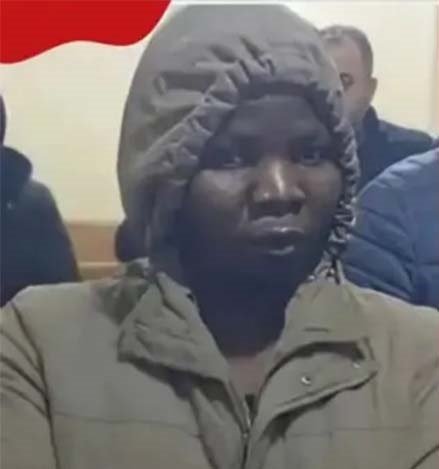
Vikie Ajok, a Ugandan domestic worker
HABARI DAILY I Kampala, Uganda I Fears are mounting in Uganda that Vikie Ajok, a Ugandan domestic worker detained in Syria, could face execution following the killing of her elderly employer, veteran Syrian actress Huda Shaarawi, even as Syrian authorities insist no death sentence has yet been passed.
The Syrian Embassy in Uganda has moved to calm growing public anxiety, clarifying that Ajok has not been sentenced to death and that legal proceedings are still ongoing. Speaking in Kampala, Syrian Ambassador Dr. Tamouh Moustafa stressed that reports circulating on social media about an imminent execution are false.
“The legal process is ongoing. This was a case concerning a specific event. There are no hidden motives or political implications,” Dr. Moustafa said, adding that the embassy is closely monitoring the case and remains committed to safeguarding Ajok’s rights.
Ajok was arrested on January 29, 2026, in Damascus, following the death of her 87-year-old employer. Syrian authorities later announced that Ajok had confessed to the killing in an official statement. According to preliminary investigations, Shaarawi was found dead in her apartment after suffering a violent assault with a blunt object, leading to severe bleeding. Security sources said the attack occurred between 5 and 6 a.m.

The late Huda Shaarawi
Local media reported that Ajok fled the scene shortly after the incident but was later apprehended. The case has attracted intense public attention, largely due to Shaarawi’s stature in Syrian society. She was best known for her role in the popular television drama Bab Al Hara, and her death triggered widespread grief across the Arab world.
The Syrian Artists’ Syndicate, along with prominent actors and directors, issued emotional tributes, describing the killing as brutal and heartbreaking.
Under Syrian law, murder can carry the death penalty, particularly in cases involving aggravated circumstances. This has fueled concern among Ugandans, who fear that Ajok could ultimately be sentenced to death if found guilty. Human rights groups have also warned that migrant domestic workers in the Middle East often face legal vulnerabilities, limited access to legal representation, and language barriers.
Dr. Moustafa, however, urged restraint, emphasizing that Ajok’s case will proceed according to due process. “The trial will be conducted under Syrian law, and all legal safeguards will be respected,” he said, calling on the public to avoid spreading misinformation that could heighten panic.
In Uganda, the case has reignited debate about the safety of migrant workers abroad, particularly domestic workers. Labour activists and government officials have renewed calls for stronger bilateral labour agreements, better pre-departure training, and enhanced consular protection to prevent similar tragedies and safeguard Ugandan workers in foreign countries.
As the trial unfolds, the fate of Vikie Ajok remains uncertain, with her prospects hinging on the outcome of the court process and the interpretation of Syrian criminal law.







About the Author