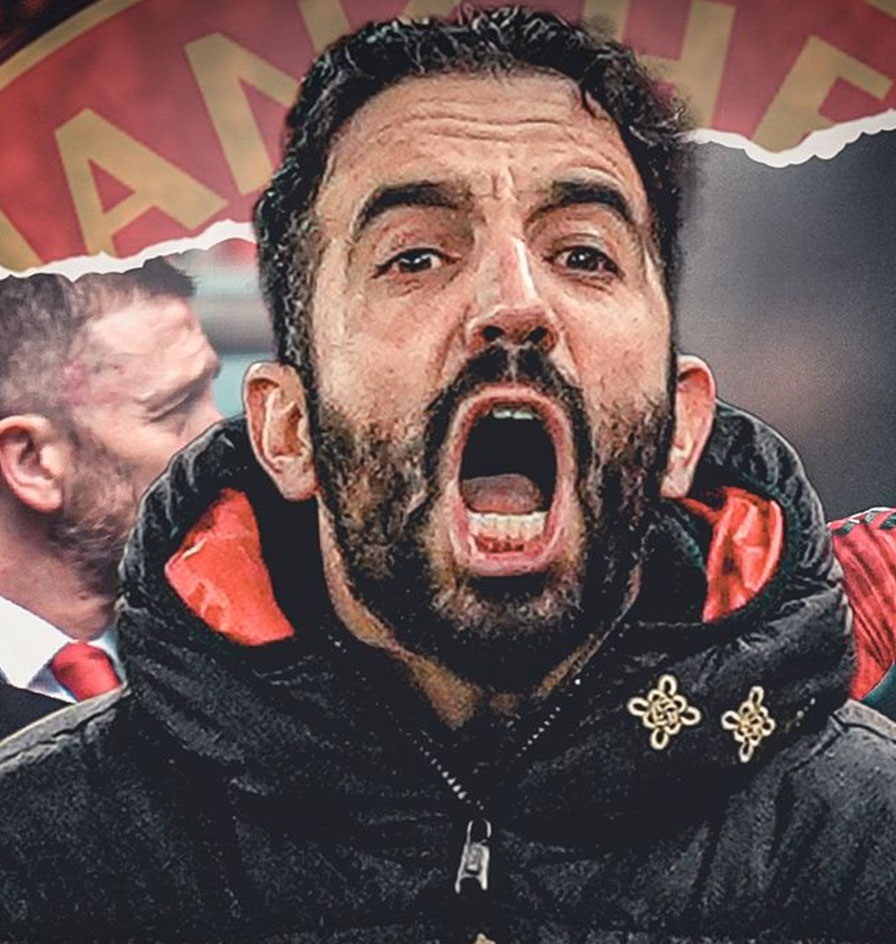
Former Manchester United head coach, Rúben Amorim
HABARI DAILY I Kampala, Uganda I Manchester United’s decision to dismiss head coach Rúben Amorim was the culmination of growing internal tensions, tactical disagreements and concerns over leadership style that club executives felt had become unsustainable at Old Trafford.
Although the Portuguese coach has insisted that the role was not too big for him, Amorim privately admitted he was taken aback by how political and complex the Manchester United job proved to be. He is understood to have told close associates that the position is almost impossible to prepare for, arguing that the unique pressures of Old Trafford only become clear once a manager is in the post.
As his tenure progressed, Amorim felt his influence over footballing decisions steadily diminished. While he believed he remained true to his principles, the club hierarchy became increasingly uneasy with what they described as emotional and inconsistent behaviour, particularly in media engagements.
United sources indicate that these public outbursts, coupled with a perceived refusal to adapt his favoured 3-4-3 system, played a central role in the breakdown of confidence between the board and the head coach.
United’s struggles on the pitch amplified those concerns. Performances failed to improve, and the back-three system continued to expose defensive weaknesses. Internally, doubts grew over whether the squad was suited to Amorim’s tactical demands and whether the manager was willing to evolve his approach.
The situation came to a head following a scheduled meeting last Friday between Amorim and United’s director of football, Jason Wilcox, during which the team’s tactical direction was discussed at length. In his final press conference, held after a 1-1 draw away to Leeds, Amorim repeatedly stressed that he had joined Manchester United to be a “manager, not a coach”, a remark widely interpreted as frustration with his perceived lack of autonomy.
On Monday morning, Amorim was dismissed following a meeting with Wilcox and chief executive Omar Berrada. No decision has yet been announced on an interim appointment for the remainder of the season, with the club expected to pursue a permanent replacement in the summer.
Former United captain Gary Neville said he was surprised by the timing of the dismissal, though not by the decision itself. “I thought they’d get through another couple of weeks,” he said, adding: “Obviously it has become that challenging internally that they decided to do it very quickly. It was a shock when I heard the news.”
Neville was particularly critical of United’s continued struggles under Amorim’s system, saying that it’s a failing upon the manager, the players and the club in terms of not recruiting properly for it. He called on United to abandon further experimentation and return to a style aligned with the club’s traditions.
He said that the experiments have got to stop. “Manchester United have got to appoint a manager that fits the DNA of their club. They need someone experienced, willing to play fast, entertaining, attacking, aggressive football.”
From Amorim’s perspective, he felt increasingly micromanaged by senior figures, including Wilcox, and believed he lacked the freedom to make key tactical decisions. He has also expressed frustration at what he saw as insufficient backing from the hierarchy, despite publicly insisting he had no desire to leave the club.
Amorim accepts that results were below expectations and acknowledges that his win rate was the worst of any United manager since Sir Alex Ferguson. However, he remained confident that Champions League qualification was achievable, particularly with players returning from Africa Cup of Nations duty.
Differences over January transfer strategy further strained relations. Amorim pushed for one or two experienced signings, especially a proven Premier League striker, believing short-term investment would deliver long-term financial returns. United’s leadership rejected that approach, unwilling to repeat what they view as costly short-term fixes.
Ultimately, overwhelmed by external pressure and internal resistance, Amorim’s tenure came to an abrupt end.