
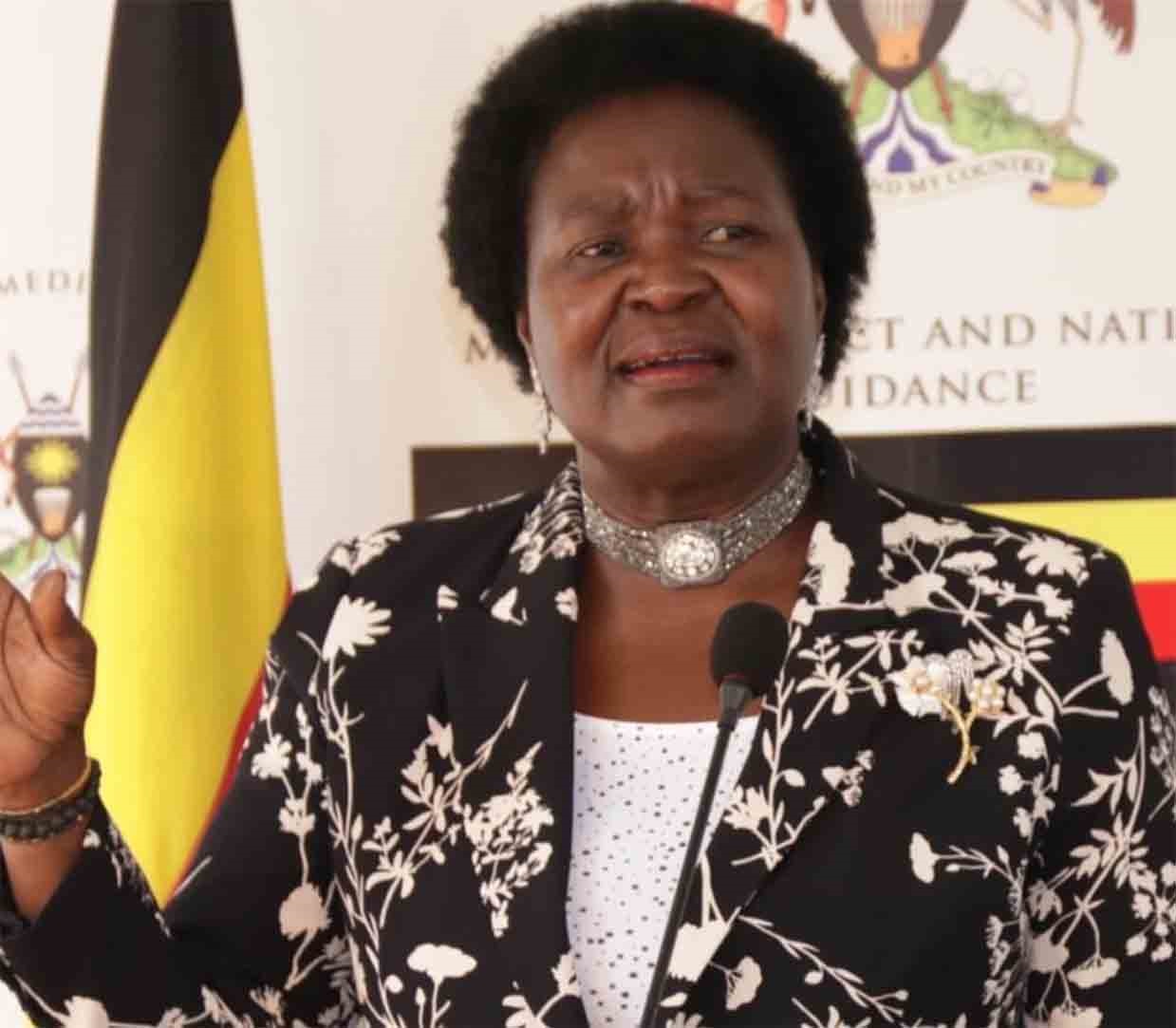
Dr Ruth Nankabirwa addressing the press at the Uganda Media Center today, 24 February 2026
HABARI DAILY I Kampala, Uganda I Uganda’s decision to acquire a 20.15 percent stake in the Kenya Pipeline Company (KPC) marks one of the most strategic energy sector investments in the country’s recent history, driven by the need to secure fuel supply, stabilize costs, and protect national economic interests amid changing regional dynamics.
Announcing the Cabinet decision, the Minister of Energy and Mineral Development, Dr Ruth Nankabirwa Sentamu, said the acquisition was approved on Monday, February 23, 2026, and implemented through the Uganda National Oil Company (UNOC).
“I am glad to inform you that yesterday, Monday 23rd February 2026, Cabinet approved the Government of Uganda’s participation in the Initial Public Offering of the Kenya Pipeline Company through UNOC, securing a 20.15 percent strategic shareholding in the company,” Dr Nankabirwa said.
She explained that the move follows the Kenyan government’s decision to partially privatize KPC by listing it on the Nairobi Securities Exchange (NSE), where 65 percent of its ordinary shares are being sold to private investors, with the Kenyan government retaining only 35 percent ownership.
This shift in ownership structure raised critical concerns for Uganda, which depends heavily on KPC infrastructure to meet its petroleum needs. “As you are all aware, UNOC, through the amendment of the Petroleum Products Supply Act 2023, is the sole importer and supplier of bulk petroleum products destined for the Ugandan market,” Dr Nankabirwa said.
2.96 billion litres annual fuel imports
In May 2024, UNOC signed a Transportation and Storage Agreement with KPC to use its pipeline systems and storage facilities to import fuel through Mombasa Port and transport it to depots in western Kenya, from where Ugandan oil marketing companies collect their consignments.
“The Uganda market is currently supplied by imports through the port of Mombasa in Kenya, accounting for over 95 percent of our monthly demand, amounting to about 2.96 billion litres annually,” she explained. “The remaining five percent comes through Tanzania.”
Dr Nankabirwa further revealed that 65 percent of all transit volumes through the Kenya Pipeline system are destined for Uganda, meaning Uganda contributes approximately 35 percent of KPC’s total revenues.
“It was therefore important for the Government of Uganda, through UNOC, to maximize its shareholding in the Kenya Pipeline Company, due to the company’s criticality,” she said.
The partial privatization of KPC fundamentally changed the risk environment for Uganda. Previously, when KPC was fully owned by the Kenyan government, Uganda relied on diplomatic goodwill and bilateral relations to guarantee uninterrupted fuel supply. However, privatization introduces profit-driven motivations, which could affect tariffs, investment priorities and supply decisions.
“Privatisation and divestiture are likely to shift KPC’s governance to focus on the profit-driven interests of private-sector investors, with the expectation of annual dividend payments,” Dr Nankabirwa warned. “This created an inherent conflict that required additional guarantees and protections.”
To mitigate these risks, Uganda negotiated robust concessions, giving it significant influence over KPC’s strategic decisions. “Through our engagements, the Government of Kenya offered Uganda key concessions, including veto power on any changes to the pipeline tariff, appointment of at least two directors to the board, veto power on dividend policy, business plan changes, share capital adjustments, and alterations to the company’s memorandum and articles of association,” she said.
“These voting rights and concessions provide satisfactory guarantees and protections for Uganda’s strategic interests of security of supply, affordability, and accessibility,” Dr Nankabirwa emphasized.
Shield against potential fuel price shocks
Energy analysts say these safeguards are crucial for shielding Uganda from potential fuel price shocks, especially given the country’s reliance on imported petroleum products. Pipeline tariff increases or operational disruptions would have immediate ripple effects across transport, manufacturing, electricity generation, and food production.
“Therefore, the decision to purchase shares is strategic, and the concessions outlined above provide assurances for the security of supply, accessibility, and affordability of petroleum products in Uganda,” Dr Nankabirwa said.
The acquisition also ensures Uganda has direct representation in KPC’s governance, allowing it to influence infrastructure investments, maintenance planning, and long-term operational strategies.
Dr Nankabirwa credited President Yoweri Museveni’s leadership and coordinated government action for the successful outcome. “Under the guidance of His Excellency the President, and with the support of the Minister of Finance and the Attorney General, my ministry, alongside UNOC officials, successfully engaged the Government of Kenya to reach this milestone,” she said.
Commercial returns through dividends
Beyond immediate supply security, the investment is also expected to yield commercial returns through dividends, helping UNOC strengthen its balance sheet and reinvest in domestic energy infrastructure, including storage facilities and future petroleum development projects.
Economists say the move positions Uganda as a serious regional energy player and strengthens its negotiating leverage within East Africa’s energy logistics ecosystem.
Dr Nankabirwa concluded by appealing for national support. “I call upon members of the media and the Ugandan public to support this initiative for the betterment of our country and the wellbeing of our citizens.”
As Uganda prepares for oil production and rising industrial energy demand, the acquisition of a strategic stake in KPC is widely viewed as a forward-looking investment designed to protect national interests, stabilize fuel supply chains, and anchor long-term economic growth.







About the Author