
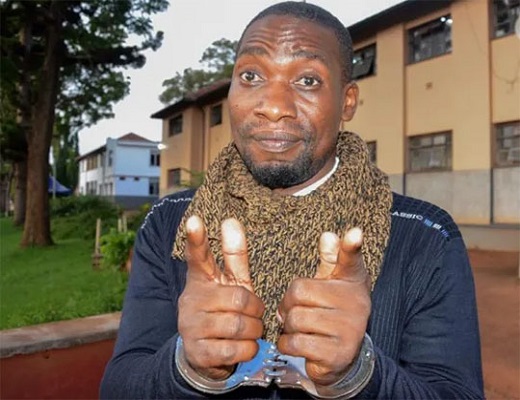
HABARI DAILY I Kampala, Uganda I The cost of being a journalist and social commentator have come to light after court ordered journalist and content creator Dean Lubowa Saava to pay Shs100 million in damages for defaming Deputy Inspector General of Government (IGG) Anne Twinomugisha Muhairwe.
Being a journalist in Uganda comes with profound professional, financial, and personal costs, including low wages, systemic harassment and many legal dilemmas, Habari Daily can reveal.
The High Court in Kampala found that Saava published false and malicious allegations against the anti-corruption official on his TikTok platform, causing serious damage to her reputation and subjecting her to public ridicule and emotional distress.
In a judgment delivered on June 24, 2026, by Justice Joyce Kavuma, the court ruled that statements broadcast on Saava’s TikTok channel, TV10 Gano Mazima, were defamatory and lacked any factual basis. The ruling marked a significant victory for Muhairwe, who had sought legal redress after being portrayed as corrupt and unfit to hold public office.
Video evidence
The dispute stemmed from a series of Luganda-language video broadcasts published around July 2025. In the videos, Saava alleged that Muhairwe had extorted money from engineers involved in a public infrastructure project, sent a personal assistant to collect the money on her behalf, and misappropriated public funds earmarked for wetlands management. He further described her as corrupt, dishonest and incapable of leading anti-corruption efforts in Uganda.
However, during court proceedings, Muhairwe firmly denied the allegations and presented evidence showing that the claims were entirely fabricated. She testified that she had never interacted with the engineers mentioned in the broadcasts and had never visited the district where the alleged activities were said to have taken place.
In addition, the individual identified by Saava as her supposed aide appeared before the court and denied any connection to the Deputy IGG or involvement in the alleged transactions.
One of the key reasons behind the court’s decision was Saava’s failure to defend himself. Despite being formally served with court documents, he neither entered an appearance nor filed a defence. As a result, the case proceeded ex parte, meaning the court heard only the evidence presented by Muhairwe. Justice Kavuma noted that the evidence remained unchallenged and was therefore accepted by the court.
Recklessness and malice
The judge also found evidence of malice in Saava’s conduct. According to the ruling, he continued publishing the allegations despite receiving warnings, demonstrating recklessness and disregard for the truth. The court further considered the wide reach of the defamatory statements, noting that Saava’s TikTok account had more than 300,000 followers, significantly amplifying the damage caused to Muhairwe’s reputation.
Another factor that weighed heavily against Saava was his previous admission that the allegations were false. The court observed that he had already acknowledged during an earlier criminal plea bargain that the information he published about the Deputy IGG had been fabricated.
In assessing damages, Justice Kavuma considered the injury caused to Muhairwe’s professional standing, the distress she suffered and Saava’s refusal to apologise or retract the claims. While Muhairwe had sought Shs300 million in exemplary damages, the court declined that request, finding no evidence that Saava had financially benefited from the publications.
Public apology awaited
Besides awarding Shs100 million in general damages, the court ordered Saava to publish a public apology on the same TikTok platform where the defamatory statements were made. He was also permanently barred from making or publishing any further defamatory statements against Muhairwe and directed to pay the costs of the lawsuit together with interest on the damages until payment is made in full.
The civil judgment follows a separate criminal case earlier this year in which Saava was convicted and fined Shs4 million for operating an unlicensed broadcasting service through the same platform. The ruling serves as a warning that social media content creators and journalists can be held legally accountable for publishing false and defamatory information.
Journalists fall victim
Several local jouralists have fallen victim to laws hampering press freedom.
Among the most recent cases are Dickson Mubiru and Alirabaki Sengooba, the managing editor and reporter of The Grapevine, who were charged in June 2024 before the Buganda Road Chief Magistrates Court with publishing information without a valid broadcasting licence. The two journalists were remanded to Luzira Prison while awaiting trial, drawing criticism from media rights advocates.
In March 2022, Norman Tumuhimbise, Executive Director of Alternative Digital TV, and television host Faridah Bikobere were arrested during a police raid on their media offices. They were charged with cyberstalking President Yoweri Museveni under the Computer Misuse Act, a law that has frequently been used against journalists, bloggers, and online commentators.
The Computer Misuse Act has also been invoked against Frank Bwekumbule, a Masaka-based journalist who was prosecuted following an offline dispute, highlighting concerns about the broad application of the legislation beyond genuine cybercrime.
Meanwhile, Arnold Anthony Mukose, a senior journalist with DigiTalk Media, was arrested by plain-clothed security operatives shortly after appearing on a political talk show. Although the specific charges were not immediately disclosed, his arrest raised fresh concerns about intimidation of journalists covering politically sensitive issues.
Online journalists Pidson Kareire and Magara Darious, working with Drone Media and East African Watch respectively, also faced prosecution on charges of criminal libel and offensive communication before the Director of Public Prosecutions eventually withdrew the case.
Legal defence organisations, including the Human Rights Network for Journalists-Uganda (HRNJ-U) and the Uganda Journalists Association (UJA), continue to provide legal assistance and advocate for media freedom.
In a significant development, Uganda’s Constitutional Court in 2026 struck down several restrictive provisions of the Computer Misuse Act, offering renewed hope for greater protection of digital journalists and freedom of expression.







About the Author