
Uganda Breaks Into Global Top 25 Outsourcing Destinations, Ranks 24th Worldwide

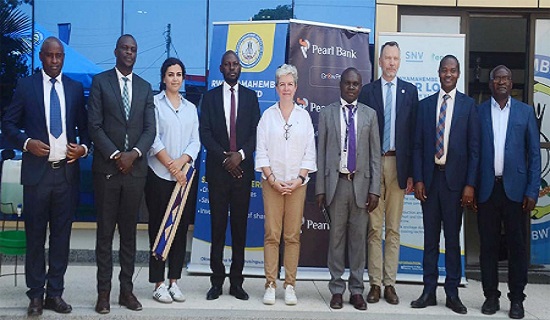
Officials from the ministry of ICT and National Guidance are charged with promoting Uganda as an outsourcing destination
HABARI DAILY I Kampala, Uganda I Uganda has been ranked the 24th most competitive outsourcing destination in the world, marking a major milestone for the country’s growing business process outsourcing (BPO) industry and positioning it among the world’s top-performing markets for international service delivery.
The ranking is contained in the 2026 Global Outsourcing Talent Index published by international staffing firm Ataraxis, which assessed 193 countries using five key indicators: labour cost, English proficiency, talent availability, digital infrastructure and political stability.
Uganda’s position places it within the top 13 percent of global outsourcing destinations and makes it one of only seven African countries to feature in the global top 25.
The report ranks the Philippines as the world’s leading outsourcing destination with a score of 90.65, followed by Malaysia and India. Within Africa, South Africa and Nigeria occupy fifth and sixth positions globally, while Kenya ranks 11th, Egypt 15th, Ghana 17th, Ethiopia 23rd and Uganda 24th.
The ranking also underscores Africa’s growing influence in the global outsourcing market. For the first time, African countries account for 28 percent of the world’s top 25 outsourcing destinations, matching Asia’s representation among the leading BPO hubs.
Uganda emerged as the second most competitive outsourcing destination in the East African Community, trailing only Kenya, while comfortably outperforming Rwanda, South Sudan and Burundi.
The country’s strongest competitive advantage lies in its affordable labour force.
Uganda scored 98 out of 100 on labour-cost competitiveness, making it the 12th most cost-effective outsourcing destination globally. The report notes that this level of affordability is one of the principal reasons multinational companies are increasingly considering Uganda for outsourced services.
The country also performed strongly on English proficiency, scoring 80 out of 100, placing it ahead of several established African outsourcing markets, including Egypt, Ethiopia, Morocco and Algeria.
According to the report, Uganda and Nigeria are the only two African countries that combine a labour-cost score of 98 with English proficiency of at least 80—a combination Ataraxis describes as the foundation of a globally competitive outsourcing industry.
The report further shows that Uganda narrowly edged Morocco, Africa’s traditional North African outsourcing hub, after posting an overall competitiveness score of 77.95 compared to Morocco’s 77.85.
Globally, Uganda’s ranking places it ahead of several advanced economies traditionally associated with technology and business services. These include the United Kingdom, ranked 29th, China at 37th, Canada at 79th, Germany at 84th, the United States at 86th and Japan at 144th.
The report attributes the lower rankings of many developed countries to their significantly higher labour costs despite possessing strong digital infrastructure and abundant skilled labour.
Uganda also outperformed 42 of the 49 African countries assessed, reinforcing its position as one of the continent’s fastest-rising outsourcing destinations.
However, the report identifies digital infrastructure as Uganda’s weakest area.
The country scored only 30 out of 100 on digital infrastructure, indicating that while Uganda has succeeded through affordable labour, English-speaking talent and favourable business fundamentals, significant investment will be required to improve internet connectivity, digital systems and technology infrastructure.
The report notes that this weakness aligns with Uganda’s own Digital Transformation Roadmap, under which the Ministry of ICT has prioritised expanding digital infrastructure to support the country’s digital economy.
Kenya, which remains East Africa’s highest-ranked outsourcing destination, posted the region’s strongest infrastructure score of 50 out of 100, although even that ranked only at the global median.
The findings come as the global business process outsourcing market continues to expand rapidly.
According to Grand View Research and Deloitte, the global BPO market was valued at approximately US$328.37 billion in 2025 and is projected to grow to nearly US$696 billion by 2033, representing an annual growth rate of almost 10 percent.
The expansion is being driven by increasing demand for specialised services in sectors such as information technology, healthcare, financial services and customer support.
The report also indicates that 56 percent of organisations worldwide now outsource front-office functions, while 46 percent outsource research and development activities as businesses increasingly seek skilled yet affordable talent across global markets.
For Uganda, the latest ranking signals growing international recognition of its workforce and business environment.
Although improvements in digital infrastructure remain necessary, the report suggests Uganda’s combination of competitive labour costs, strong English-language capability and expanding talent pool positions the country to attract greater foreign investment and secure a larger share of the rapidly growing global outsourcing industry.
About the Author