Owek. Robert Waggwa Nsibirwa
HABARI DAILY I Kampala, Uganda I Buganda Kingdom has unveiled a Shs409.315 billion budget for the 2026/2027 financial year, marking a significant 34 percent increase from last year’s Shs320.508 billion and underscoring the Kingdom’s growing financial ambition to accelerate socio-economic transformation across its counties.
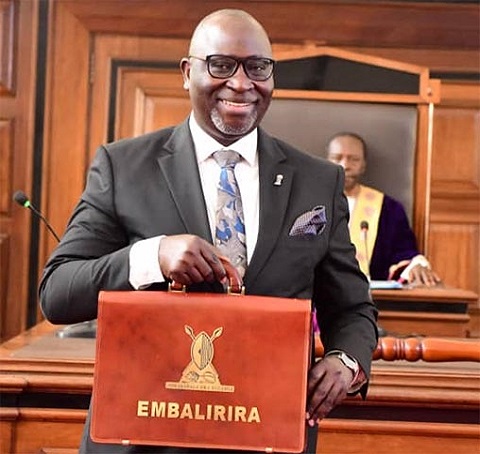
The expansive financial plan, presented before the Buganda Lukiiko at Bulange, Mengo, by the Kingdom’s Minister for Finance, Planning and Economic Development, Owek. Robert Waggwa Nsibirwa, reflects growing confidence in Buganda’s revenue-generating capacity and an ambitious development agenda anchored on agriculture, education, health, infrastructure and cultural preservation.
The budget is guided by the theme, “Raising Standards: Enhancing Quality and Professionalism in the Effort to Restore Buganda to Greater Heights,” a slogan that encapsulates the Kingdom’s vision of strengthening institutions while improving the livelihoods of its people.
The Shs409.315 billion budget represents one of the largest financial plans in the Kingdom’s recent history and builds on a trend of steady revenue growth over the past several years.
Improved financial performance
Last year’s budget stood at Shs320.508 billion, meaning the Kingdom has increased planned expenditure by nearly Shs89 billion in a single financial year.
The increase comes against the backdrop of improved financial performance. During the 2024/2025 financial year, the Kingdom collected Shs264 billion in revenue, surpassing its projected collections and demonstrating the growing effectiveness of its revenue mobilisation strategies.
Presenting the budget, Nsibirwa said the increased resource envelope would enable the Kingdom to improve service delivery, strengthen institutional efficiency and invest in programmes aimed at uplifting household incomes.
“This budget focuses on improving agriculture, tourism, healthcare, education and decent housing as key drivers of socio-economic transformation,” he said.
The Kingdom expects to finance the larger budget through a combination of internally generated revenue, agricultural production, traditional cultural levies and anticipated payments from the central government.
Coffee remains the Kingdom’s single biggest economic driver through the flagship Mmwanyi Terimba campaign, which has become the centrepiece of Buganda’s household wealth creation strategy.
Agricultural productivity rises
The initiative encourages every household to grow coffee as a dependable source of income, with Kingdom leaders crediting the programme for improving agricultural productivity and boosting rural earnings.
Besides coffee, Buganda will continue collecting revenue through traditional sources such as busuulu (land rent paid on Kabaka’s land), envujjo (ground rent paid by tenants), kanzu, a traditional cultural levy, and luwalo, voluntary community contributions that support Kingdom programmes.
Nsibirwa also disclosed that Buganda expects to recover more than Shs200 billion owed by the central government, funds that could significantly strengthen implementation of planned development programmes.
He nevertheless commended the government for releasing Shs38 billion to the Kingdom during the previous financial year, describing the support as an important contribution to ongoing development initiatives.
The expanded budget places agriculture at the heart of the Kingdom’s development strategy.
Additional funding has been earmarked to expand the Mmwanyi Terimba programme, increase agricultural extension services and promote modern farming practices aimed at improving food security and increasing household incomes.
Bursaries on offer
Education has equally received significant attention, with the Kingdom planning to strengthen the Kabaka Education Fund, which provides bursaries to learners in primary, secondary and tertiary institutions.
Resources have also been allocated to support regional learning centres and improve access to quality education, particularly for vulnerable children.
Healthcare remains another priority area.
The Kingdom plans to improve services at its health facilities while intensifying campaigns against preventable diseases across Buganda.
The budget also provides resources for improving healthcare infrastructure and expanding community health outreach programmes.
Cultural preservation and infrastructure development feature prominently in the financial plan.
Funds have been allocated for the continued renovation and maintenance of the Kabaka’s palaces, strengthening the administration of Ssaza and Gombolola offices and supporting clan leadership structures that play an important role in preserving Buganda’s cultural heritage.
Boosting revenue collection
The Kingdom will also continue investing in strategic projects designed to modernise its operations and diversify revenue sources.
Among these is the Nvubo Project, a digital payment platform intended to improve financial transactions for Kingdom programmes by promoting electronic payments, transparency and accountability.
Nsibirwa also revealed that construction has commenced on the Kingdom’s industrial park as well as the agricultural training institute at Jeza, projects expected to create employment opportunities while promoting value addition and skills development.
Another key beneficiary is the Nnamulanda Programme, which focuses on vocational training and skills development for artisans and other technical workers to enhance productivity and employment.
The budget was unanimously approved by members of the Buganda Lukiiko following extensive deliberations chaired by Speaker Patrick Luwaga Mugumbule and Deputy Speaker Ahamed Lwasa.
The sitting attracted a broad cross-section of leaders, including Katikkiro Charles Peter Mayiga, Cabinet ministers, county chiefs, religious leaders led by Kampala Archbishop Paul Ssemogerere and Supreme Mufti Muhammad Galabuzi, Leader of the Opposition Joel Ssenyonyi, Members of Parliament and other invited guests.
While welcoming the larger budget, Katikkiro Mayiga cautioned that its successful implementation would depend on maintaining a stable economic environment.
Insecurity to derail gains
He warned that rising insecurity, particularly incidents of kidnapping and organised crime, could undermine investor confidence and slow economic growth if left unchecked.
Mayiga stressed that the rule of law, peace and security remain fundamental ingredients for achieving the Kingdom’s ambitious development agenda.
With a budget now exceeding Shs409 billion, Buganda has signalled its determination to accelerate socio-economic transformation through strategic investments, stronger financial management and expanded revenue mobilisation. The substantial increase over last year’s budget reflects growing confidence in the Kingdom’s financial capacity and its commitment to restoring Buganda to greater economic and social prosperity.