Dr. Kizza Besigye
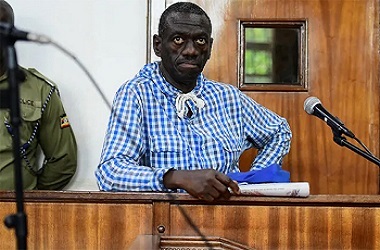
HABARI DAILY I Kampala, Uganda I Government’s determination to prosecute veteran Ugandan opposition leader Dr. Kizza Besigye has left the four-time presidential candidate with increasingly limited legal and political options as his treason trial resumes before the High Court in Kampala on Wednesday.
The case, which has attracted intense domestic and international attention, is entering a crucial phase after a series of court rulings that rejected attempts by Besigye’s legal team to halt the proceedings. The veteran opposition figure now faces difficult choices that could shape both the pace of the trial and its eventual outcome.
One of the most immediate options available to Besigye is selecting a lawyer from a list of advocates approved by the court under the state brief system. The High Court recently directed Besigye and his co-accused, Hajj Obeid Lutale and Capt. Denis Oola, to choose legal representation from a court-provided register after the lawyers who had previously represented them were no longer available to continue with the case.
The judges gave the accused a limited period within which to make that choice, warning that the trial would not be delayed indefinitely.
Should Besigye decline to nominate a lawyer, the court has made it clear that the registrar will appoint one on his behalf. Such an appointment would allow the prosecution to proceed without further delays, ensuring that the trial moves forward regardless of whether the accused accepts the arrangement.
However, accepting a court-appointed lawyer presents a dilemma for Besigye.
Throughout the proceedings, he has consistently argued that the state deliberately dismantled his preferred legal team, thereby undermining his constitutional right to legal representation of his own choosing. He has maintained that accepting government-funded counsel would legitimise a process he believes is fundamentally unfair.
That position explains another option that remains available to him—boycotting the proceedings.
Besigye has previously refused to participate in hearings and declined to cooperate with court-appointed lawyers, insisting that the trial cannot be fair under the prevailing circumstances. While such a boycott could reinforce his political message that the case is politically motivated, it carries significant legal risks because the court may continue with proceedings through assigned counsel.
The veteran opposition leader also retains the possibility of pursuing further appeals.
Although both the High Court and the Constitutional Court have dismissed earlier applications seeking to terminate the charges or stop the trial, his defence team could still seek intervention from the Court of Appeal or ultimately the Supreme Court on constitutional and procedural questions arising during the trial.
Legal analysts, however, say such appeals are unlikely to automatically suspend the criminal proceedings unless a higher court specifically orders a stay.
Beyond the courtroom, Besigye’s greatest leverage may lie in the court of public opinion. His prosecution has drawn criticism from sections of Uganda’s opposition, civil society organisations and international human rights groups, who argue that the case raises broader questions about due process, judicial independence and political freedoms.
Yet from a purely legal standpoint, his room for manoeuvre has narrowed considerably.
With the prosecution determined to proceed, the courts unwilling to grant further delays, and the prospect of state-appointed lawyers becoming increasingly likely, Wednesday’s hearing could mark the beginning of a trial that Besigye has long sought to postpone but now appears increasingly unable to avoid.