
HABARI DAILY I Kampala, Uganda I As consolation to their new born child whom the last a few minutes later, the High Court of Uganda has ordered Kibuli Muslim Hospital and one of its doctors, Dr. Dickens Aturwanaho, to pay more than Shs147.4 million in damages after finding that a series of medical failures materially contributed to the death of Baby Jibreal Jumah Sewankambo.
In a landmark judgment delivered on July 15, Acting High Court Judge Bonny Isaac Teko concluded that the hospital and the treating doctor breached the duty of care owed to the newborn through delayed medical intervention, inadequate investigations and serious shortcomings in the conduct of an emergency blood transfusion.
The court held that while the exact medical cause of the baby’s death could not be conclusively established, the cumulative negligence significantly reduced his chances of survival.
Delayed medical review
“The defendants breached that duty through delayed medical review, failure to secure timely specialist assessment, inadequate investigation, and deficiencies in the conduct of the emergency blood transfusion,” Justice Teko ruled.
The judgment stems from a lawsuit filed in 2019 by the baby’s mother, Kyofuna Jaridah, following the death of her son four days after he was delivered by caesarean section at Kibuli Muslim Hospital in October 2018.
According to court records, Jaridah had attended antenatal care at the hospital beginning in August 2018 under the supervision of Dr. Aturwanaho and other obstetric specialists.
Her pregnancy progressed normally, with no significant complications recorded, leading doctors to schedule an elective caesarean section.
On October 5, 2018, she successfully delivered a healthy baby boy. Both mother and child were initially returned to the ward in satisfactory condition, and the infant started breastfeeding normally.
However, events took a tragic turn the following night when the baby developed severe respiratory distress.
One of the major reasons the High Court found the hospital liable was the unexplained delay in responding to the baby’s rapidly deteriorating condition.
Jaridah told the court she was forced to send an attendant to search for a doctor after noticing that her baby was struggling to breathe.
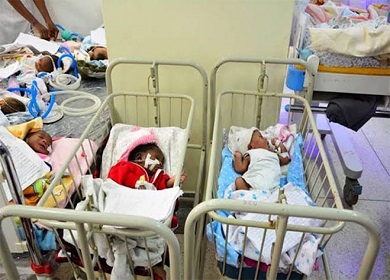
Despite the emergency, no medical practitioner reviewed the infant until the following morning, when he was finally admitted to the neonatal nursery.
“The evidence establishes an unexplained delay of some eight hours between the onset of the baby’s respiratory distress and his first meaningful medical review,” Justice Teko observed.
“In neonatal medicine, deterioration may occur within minutes rather than hours, and I agree with the Council that this delay was a serious departure from accepted practice.”
Lack of essential medical investigations
The court further found that the hospital failed to carry out essential medical investigations needed to accurately diagnose and manage the newborn’s condition.
Medical experts discovered that the baby was anaemic and suffering from thrombocytopenia before provisionally diagnosing him with haemorrhagic disease of the newborn.
However, several crucial investigations expected in such a critically ill infant were either never conducted or inadequately documented.
These included oxygen saturation monitoring, clotting studies, blood chemistry analysis, brain imaging and screening for infections and bleeding disorders.
The findings were supported by an investigation conducted by the Uganda Medical and Dental Practitioners’ Council after the High Court referred the matter because of its complex medical issues.
The Council also faulted the failure by an experienced consultant neonatologist to physically assess the baby despite his worsening condition.
Justice Teko agreed with those findings. “A critically ill newborn with worsening respiratory complications required direct assessment by the most experienced clinician reasonably available,” the judge said.
“Telephone consultation, while occasionally unavoidable, cannot ordinarily substitute for direct clinical review where a patient is rapidly deteriorating.”
The emergency blood transfusion also featured prominently in the court’s decision.
Inappropriate transfusion equipment
When compatible blood could not be obtained from Kibuli Muslim Hospital or neighbouring health facilities, consultant neonatologist Dr. Margaret Nakakeeto Kijjambu recommended that blood be transferred directly from the baby’s mother.
Although the judge accepted that deciding to transfuse the infant was reasonable because he was critically ill, he ruled that the procedure itself fell far below accepted medical standards.
The court found no documented evidence of ABO and Rh compatibility testing before the transfusion, no documented screening for transfusion-transmissible infections and inadequate records showing that informed consent had been properly obtained.
The Medical Council also questioned the use of inappropriate transfusion equipment and found that the procedure was conducted by a nurse whose training and supervision were inadequate.
“The absence of documented compatibility testing, the absence of proper transfusion equipment and a closed collection system, the absence of documented infection screening, the uncertainty over informed consent, and the fact that the procedure was performed by a nurse whose training and supervision the Council itself found wanting, are not minor irregularities,” Justice Teko ruled.
“Blood transfusion is among the highest-risk procedures in clinical medicine.”
Although the judge rejected the argument that the transfusion alone directly caused the baby’s death, he concluded that the cumulative failures throughout the baby’s treatment materially contributed to the fatal outcome.
Fatal deterioration of the deceased child
“The law does not require a plaintiff to prove that proper treatment would certainly have averted death; it is enough that the negligence materially contributed to the outcome,” Justice Teko stated.
“I am satisfied that the defendants’ cumulative failures materially contributed to the fatal deterioration of the deceased child.”
The court further held Kibuli Muslim Hospital vicariously liable for the actions and omissions of Dr. Aturwanaho, nursing staff and other medical personnel involved in the child’s treatment.
“It is not necessary for the plaintiff to identify a single culpable individual where, as here, the negligence lies substantially in the institution’s collective management of the child,” the judge said.
Justice Teko awarded Jaridah Shs17.37 million in special damages, Shs100 million in general damages and Shs30 million for loss of expectation of life, bringing the total compensation to Shs147,368,600.
Dr. Aturwanaho culpable
The hospital and Dr. Aturwanaho were also ordered to pay interest at 8 percent per annum on the special damages from the date the suit was filed, 6 percent per annum on the general damages from the date of judgment, as well as the costs of the suit.
However, the court declined to award exemplary or punitive damages, ruling that there was no evidence the medical team intentionally harmed the child.
“The medical personnel were attempting, albeit negligently, to save his life,” Justice Teko concluded.







About the Author