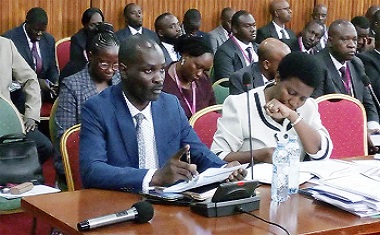

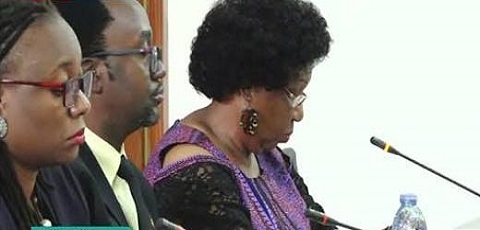
Mariam Wangadya, together with other commissioners make submissions at Parliament today, July 23rd 2026
HABARI DAILY I Kampala, Uganda I Uganda Human Rights Commission (UHRC) Chairperson Mariam Wangadya broke down in tears before Parliament on Tuesday after recounting months of what she described as relentless bullying, humiliation and emotional torment arising from deep divisions within the country’s premier human rights institution.
Appearing before Parliament’s Legal and Parliamentary Affairs Committee, an emotional Wangadya struggled to read her prepared statement as she explained the personal and professional anguish that compelled her to submit her resignation on July 6, 2026.
Her emotional testimony marked the climax of a bitter leadership crisis that has engulfed the commission in recent months, exposing sharp disagreements among commissioners and raising concerns about the institution’s ability to fulfil its constitutional mandate.
Wangadya told legislators that she never imagined a head of a constitutional commission could endure the level of harassment, taunting and disrespect she had experienced from fellow commissioners and subordinates.
The emotional weight of those experiences became too much to bear as she recalled the hostile work environment that had steadily eroded her confidence and ability to lead.
Political rejects
At the centre of the fallout was a public dispute sparked by Wangadya’s earlier remarks accusing President Yoweri Museveni of turning the Uganda Human Rights Commission into what she described as a “dumping ground” for political rejects, the poor and the terminally ill.
The comments ignited fierce criticism from within the commission itself.
Fellow commissioners, including Simeo Nsubuga and Col. (Rtd) Stephen Basaliza, publicly rejected her assertions while appearing before the same parliamentary committee. They accused their chairperson of embarrassing the commission and damaging the reputation of its members, demanding that she issue a public apology for what they said had caused humiliation not only to them but also to their families.
The unprecedented public exchange laid bare the deep mistrust and fractured relationships among the commissioners, further undermining public confidence in the institution.
As she addressed lawmakers, Wangadya admitted that writing her resignation letter had been one of the most difficult decisions of her life.
Unbearable emotional pain
She explained that, as a single mother and the sole breadwinner for her family, walking away from her position was not a choice she made lightly. Instead, she said it was born out of unbearable emotional pain created by what she described as a toxic institutional environment.
The resignation, she said, represented the culmination of months of psychological strain and professional isolation.
In one of the most emotional moments of her appearance, Wangadya apologized to Parliament, President Museveni and the people of Uganda, acknowledging that the commission’s leadership had failed to meet public expectations.
She conceded that the internal wrangles had crippled the institution, preventing it from effectively carrying out its constitutional responsibilities.
Impasse among commissioners
The leadership crisis has had far-reaching consequences. Parliament heard that the Uganda Human Rights Commission has not held a single formal statutory governance meeting since March 2026 because of the prolonged impasse among commissioners.
The paralysis has raised serious questions about the commission’s ability to investigate human rights violations, make policy decisions and provide effective oversight at a time when the protection of fundamental rights remains a national priority.
Wangadya’s emotional breakdown underscored not only her personal suffering but also the extent of the institutional collapse within one of Uganda’s key constitutional bodies. Her tearful appearance served as a stark reminder of how unresolved leadership conflicts can cripple public institutions, damage morale and ultimately deny citizens the effective services they are mandated to receive.







About the Author