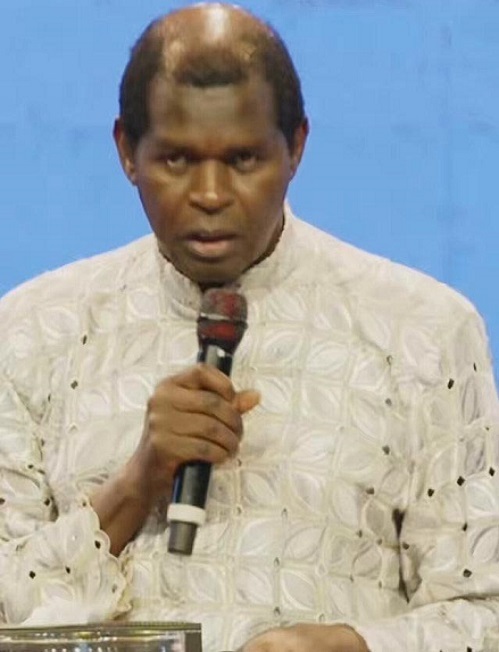

Robert Kiyosaki, The Bestselling Author Sinks In $1.2 Billion Real Estate Debt

Robert Kiyosaki
HABARI DAILY I Kampala, Uganda I Robert Kiyosaki, the bestselling author behind the personal finance phenomenon Rich Dad Poor Dad is in deep trouble due to a spiraling debt.
The popular real estate investor has long made headlines for preaching unconventional money wisdom, seemingly lacks the ability nor courage to free himself from the embodiment.
Kiyosaki has henceforth found himself at the centre of a debate over debt after revealing that he is carrying a staggering $1.2 billion in debt, a figure that has left financial experts divided over whether his borrowing strategy represents sophisticated wealth creation or a potentially dangerous financial gamble.
The 79-year-old financial educator and real estate investor made the startling disclosure while appearing on the Get Rich Education podcast, where he confirmed the scale of his liabilities.
“So, I’m a billion two in debt,” Kiyosaki said, before immediately warning his audience: “You should not do what I do, right?”
The eye-catching admission, however, does not mean Kiyosaki has personally borrowed $1.2 billion to fund his lifestyle or that he is facing conventional personal financial distress.
The debt is reportedly tied largely to a sprawling real estate portfolio consisting of apartment properties held with business partners. His former wife and business partner, Kim Kiyosaki, explained in a recent media interview that the figure represents debt associated with their shared investments.
“We have a lot of apartment houses with our partners,” Kim said, putting the portfolio at approximately 1,500 units.
“So technically, yes, we have all this debt,” she added, while clarifying that Kiyosaki’s personal exposure to the liabilities is considerably smaller.
Estimates suggest his individual share of the debt could be between $30 million and $60 million, based partly on his reported annual income of about $3 million.
Kim also suggested that Kiyosaki deliberately highlights the billion-dollar figure because of its shock value.
“He loves to say things that shock,” she said, explaining that the eye-catching number helps him attract attention before making his broader argument about using debt as an investment tool.
And therein lies the controversy.
Kiyosaki has long challenged conventional personal-finance advice that encourages people to avoid debt. Instead, he distinguishes between what he considers “good debt” and “bad debt”, arguing that borrowing can create wealth when the money is used to acquire income-producing assets.
His real estate strategy involves borrowing against properties as their values rise. Rather than selling the assets, he can access additional capital through loans, allowing him to retain ownership while using the borrowed money for further investments.
Because loan proceeds are generally not treated as income in the same way as proceeds from selling an asset, the strategy can also offer tax advantages, although the loans themselves still have to be serviced and repaid.
Kiyosaki further structures individual investments through separate limited liability companies, creating legal and financial separation between properties.
“If it all comes to hell, you can talk to my attorney,” he said, describing the arrangement as a series of “firewalls”.
“That’s the way the rich play the game.”
For some real estate investors, there is nothing particularly extraordinary about carrying large amounts of property-backed debt.
David A. Perez, founder of Tax Maverick AI and a multifamily real estate investor who employs a similar approach, described the strategy as “a great strategy”, arguing that significant debt against income-generating properties is relatively normal among sophisticated investors.
But even supporters acknowledge that leverage carries risks.
Borrowing more against properties increases the cost of mortgages and can squeeze cash flow, particularly when interest rates rise, rental income weakens or property values fall.
That is where critics of Kiyosaki’s philosophy see a potential financial trap.
John Poole, founder of JPTD Partners in Scottsdale, Arizona, offered a much more cautious assessment of the strategy.
“I think there’s good debt and there’s bad debt, and then there’s $1.2 billion of debt, which you better know exactly what in the world you’re doing,” Poole warned.
His concern is centred on leverage—the use of borrowed money to amplify investment returns.
“Leverage works beautifully on the way up, and if it’s not continuing on that way up, then it’s like a chainsaw financially coming down,” he said.
For ordinary investors, the distinction is crucial. A professional investor with diversified properties, substantial cash flow, experienced advisers and carefully structured companies may be able to withstand large liabilities. An individual borrowing heavily against a single property may have far less room to absorb a downturn.
Poole therefore offered a blunt warning to followers who might attempt to replicate Kiyosaki’s approach.
“Kiyosaki may call this the ‘Rich Dad debt,’ but for the average investor, it could turn out to be ‘Poor Dad bankruptcy’ really quickly.”
The debate is particularly significant because Kiyosaki’s financial philosophy has influenced millions of people worldwide. Rich Dad Poor Dad, first self-published in 1997, has sold more than 44 million copies and turned its author into a global financial-education brand.
His latest revelation therefore presents a paradox at the heart of his investment philosophy: debt can be a powerful engine for building wealth, but the same leverage can magnify losses when markets turn against an investor.
For Kiyosaki, $1.2 billion in debt is evidence of how wealthy investors use financial leverage. For ordinary investors, experts warn, attempting to copy the strategy without the assets, cash flow and risk-management structures behind it could transform a wealth-building lesson into a financial disaster.
About the Author