

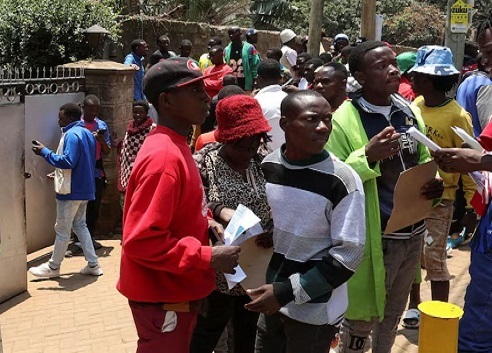
Burundians in Kenya are in a panicky mood, looking for means to flee the country
HABARI DAILY I Kampala, Uganda I Kenyan President William Ruto has ordered a government crackdown on foreign nationals operating small-scale businesses without valid work permits, setting off anxiety among migrant traders and prompting hundreds of Burundians to prepare to leave the country.
The directive, which sets Monday as the deadline for foreigners engaged in small-scale trade to stop working unless they possess the required permits, follows growing complaints from Kenyan traders over competition from foreign nationals in the informal economy.
The move has also raised concerns about the implications for East Africa’s common market, where citizens of member states have traditionally crossed borders in search of employment and business opportunities.
Pressure from local traders
The crackdown follows protests and complaints by Kenyan traders who have accused foreigners of taking over small retail businesses, hawking and other informal activities that provide livelihoods for local people.
Tensions have particularly been reported in Nairobi, where some Kenyan traders have confronted foreign vendors, including Burundians selling coffee, street food and other products.
The complaints have emerged alongside wider protests over tax reforms and the rising cost of doing business in Kenya.
For affected traders, the presence of foreigners in small-scale businesses has become another source of economic pressure at a time when many Kenyans say they are struggling to find jobs and maintain their businesses.
The Government has now moved to turn those complaints into formal enforcement policy.
Government cites visa abuse
Kenya’s Trade Ministry has said the directive is aimed at foreigners conducting business without the appropriate legal permits.
Officials have accused some visitors of deliberately misusing visa applications by entering Kenya as tourists or investors before engaging in commercial activities that breach the conditions of their entry.
The ministry says foreigners wishing to engage in business must obtain the appropriate work and business permits rather than relying on visitor visas.
The Government’s position is that the crackdown is therefore an enforcement of existing immigration and labour requirements rather than a blanket ban on foreign traders.
However, the decision has generated uncertainty among thousands of migrants who depend on informal businesses for their livelihoods.
Kenya hosts hundreds of thousands of migrants from across East Africa, making the enforcement campaign particularly sensitive within the regional integration framework.
Burundians scramble to leave
The immediate effects of the crackdown have been most visible among Burundian nationals in Nairobi.
Hundreds have reportedly queued outside the Burundian Embassy seeking travel documents after the embassy announced that it would issue free emergency documents to citizens wishing to return home.
Some Burundians have also been rushing to secure bus tickets, while others have been seen carrying their belongings—including suitcases and mattresses—as they prepare to leave Kenya.
The rush to depart is being driven largely by fears of arrest or other enforcement measures against people unable to demonstrate that they have the necessary permits.
Some affected Burundians say they cannot afford the cost of returning home and have appealed to the Kenyan Government to extend the deadline.
Burundi raises concerns
The Burundi Government has raised concerns over the treatment of its citizens and called on Kenyan authorities to ensure their safety during the enforcement exercise.
It remains unclear how many Burundians are involved in small-scale trading and therefore how many could be directly affected.
According to the United Nations refugee agency, Kenya hosts about 16,000 Burundian refugees and asylum seekers, although that figure does not indicate how many participate in informal businesses.
The crackdown could therefore become a test of Kenya’s commitment to enforcing domestic immigration laws while balancing the principles of regional integration.
For now, migrant traders face a stark choice: regularise their activities and obtain the necessary permits, or leave the Kenyan market as the Government moves to reclaim small-scale trading opportunities for its citizens.