
BoU Moves To Stabilise Shilling As Currency Slides Towards Shs4,000
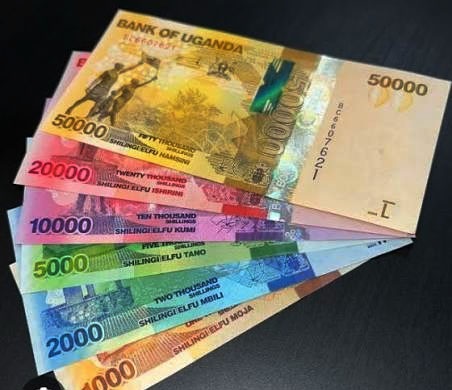
Uganda Shillings
Bank of Uganda (BoU) Governor Michael Atingi-Ego has moved to reassure Ugandans that the Central Bank has the tools to halt the sharp depreciation of the Uganda Shilling, as the local currency edges towards the psychologically significant Shs4,000 to the US dollar mark.
The Shilling was trading at about Shs3,930 against the dollar on Friday, September 18, extending a decline that has accelerated since the end of August. The currency traded around Shs3,740 in August before weakening to about Shs3,920 by mid-September.
Speaking at the ninth Uganda Bankers Conference at the Kampala Marriott Hotel in Kampala on Friday, Atingi-Ego said the current pressure should not be interpreted as evidence that the Central Bank had lost control of the foreign exchange market.
“Let me say something that is on the minds of most Ugandans right now. You recall that towards the end of last week, the currency began to depreciate quite significantly and a number of concerns have been raised. It would be unfair if I don’t give a comment,” Atingi-Ego said.
He later delivered a stronger assurance, saying: “I am bringing all this to tell you; the Bank of Uganda has what it takes to stabilise this exchange rate. Be still, all will be fine.”
BoU prepares to smooth volatility
Atingi-Ego explained that BoU’s approach is not to defend a particular exchange-rate level at all costs, but to intervene when movements in the Shilling become excessive or disorderly.
Earlier on Friday, he said the recent depreciation had been relatively smooth rather than erratic, meaning it had not yet reached the threshold requiring direct intervention.
“Intervention is based on smoothing out excessive volatility in the shilling exchange movements,” he said.
Asked whether the current depreciation warranted intervention, Atingi-Ego said: “Not to the best of my knowledge. If it has depreciated, it has depreciated in a smooth way; it’s not been erratic, it’s not been very volatile. So, I think it has not warranted my intervention.”
When BoU intervenes in the foreign-exchange market, it can use its foreign-currency reserves to supply dollars while absorbing excess Shillings from the market. Such action can ease pressure on the local currency, although sustained intervention would reduce foreign-exchange reserves.
The IMF has similarly said BoU should remain prepared to tighten monetary policy if the combination of higher oil prices and Shilling depreciation begins to create significant inflationary pressure.
Oil shock drives dollar demand
The latest depreciation is being driven partly by rising demand for dollars from fuel importers, manufacturers and energy companies.
Uganda imports most of its petroleum products, meaning an increase in global oil prices requires importers to obtain more dollars to pay for fuel. Oil prices have risen above $100 a barrel amid heightened tensions in the Middle East and disruptions to oil infrastructure, increasing pressure on oil-importing economies such as Uganda.
The pressure has also been amplified by uncertainty surrounding the Iran conflict. Bank of Uganda Executive Director for Research and Policy Adam Mugume told Reuters that some market participants had responded by buying dollars forward to lock in exchange rates.
A trader cited by Reuters said the Shilling could test Shs4,000 to the dollar if the pressure persisted.
Governor points to previous recoveries
Atingi-Ego sought to put the current depreciation in historical context, recalling previous occasions when the Shilling approached the Shs4,000 mark before recovering.
He cited the foreign-exchange pressure of 2022, when aggressive interest-rate increases in advanced economies triggered capital outflows from emerging and frontier markets. The Shilling weakened from around Shs3,650 to nearly Shs3,900 before stabilising.
He also recalled the pressure following the World Bank’s 2023 decision to suspend new financing to Uganda, as well as turbulence in February 2024 when Kenya raised billions of dollars from international investors to refinance a maturing Eurobond.
In both instances, he said, the Shilling approached Shs4,000 before recovering.
“In September 2026, because of the global oil developments, the currency is trading at about 3,930 right now,” Atingi-Ego said.
New dollar inflows expected
The governor’s strategy therefore appears to rely on a combination of containing excessive volatility, maintaining monetary stability and allowing additional foreign-exchange inflows to strengthen the market.
Uganda is expected to receive increased foreign-exchange earnings as oil production and exports come on stream. The country is also looking to tourism, exports and other foreign-exchange-generating sectors to increase dollar supply.
BoU’s position is that the current weakness does not necessarily signal a fundamental collapse of the currency, but reflects temporary external pressures in a market-determined exchange-rate system.
The Shilling’s performance represents a sharp reversal from 2025, when strong coffee exports, remittances and foreign investment inflows supported its appreciation. The currency ended that year at about Shs3,620 to the dollar.
About the Author