
Antonio Guterres
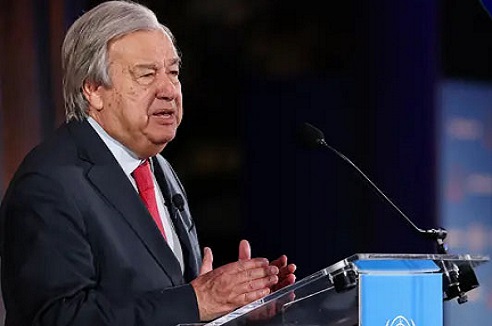
The United Nations (UN) Secretary-General Antonio Guterres’ final address to the UN Paves way for the ascendance of Ugandan Dr Olara Otunnu to the helm of the body, as the Portuguese diplomat delivered his last General Debate speech before world leaders at the 81st Session of the UN General Assembly in New York.
Guterres’ appearance marked the beginning of the final months of his tenure at the head of the world body, bringing his decade-long leadership into its closing phase as member states prepare for a new secretary-general.
Addressing the gathering of presidents, prime ministers and senior government officials, Guterres used his final appearance to renew his call for international cooperation and stronger multilateral institutions at a time of deepening geopolitical divisions.
His tenure has been dominated by a succession of global crises, including wars, the COVID-19 pandemic and growing tensions among major powers.
The Portuguese national has repeatedly warned that the challenges facing the world cannot be resolved by individual countries acting alone, while also acknowledging the limitations imposed on the UN by disagreements among its most powerful member states.
Power without cooperation
Guterres said the changing global order had demonstrated that even the world’s most powerful nations faced limits to what they could achieve through military or economic strength alone.
“Building a networked future begins with a recognition by especially superpowers that is so super, that their power has limits and the events of recent years have made that unmistakably clear,” he said.
“Military power alone cannot secure peace; economic power alone cannot command stability.”
The remarks reflected a central theme of Guterres’ leadership: the need to strengthen international institutions so that they can respond more effectively to global challenges.
Throughout his tenure, he has advocated reforms aimed at making the UN and other international institutions more representative of the world they serve.
However, the secretary-general’s ability to act has often been constrained by disagreements among powerful member states, particularly within the Security Council.
Uganda pushes for UN reforms
Uganda is among the countries participating in the high-level General Assembly gathering in New York, with its delegation led by Vice President Jennifer Alupo.
The country is using the 81st General Assembly to advocate for a more representative and effective multilateral system, including greater African representation on the UN Security Council.
Africa has long called for permanent representation on the Security Council, arguing that the continent remains underrepresented in the body responsible for addressing some of the world’s most consequential security issues.
Uganda’s position comes amid wider calls for reforms to the international system to reflect changes in global political and economic power.
Leadership transition approaches
Guterres’ final General Debate address comes as attention increasingly turns to the future leadership of the United Nations.
His departure will close a decade in which the organisation has been called upon to respond to conflicts, humanitarian emergencies, global health crises and growing divisions between major powers.
The transition will also provide an opportunity for member states to debate the direction of the organisation and the qualities required of its next leader.
For African countries, questions of representation and influence are likely to remain central to that debate, particularly as calls continue for reforms to the Security Council and other multilateral institutions.
Guterres leaves office after repeatedly making the case for cooperation at a time when international consensus has become increasingly difficult to achieve.
His final address therefore served both as a reflection on the challenges of his tenure and a renewed appeal for countries to rebuild trust in multilateralism as the UN approaches a leadership transition.







About the Author