
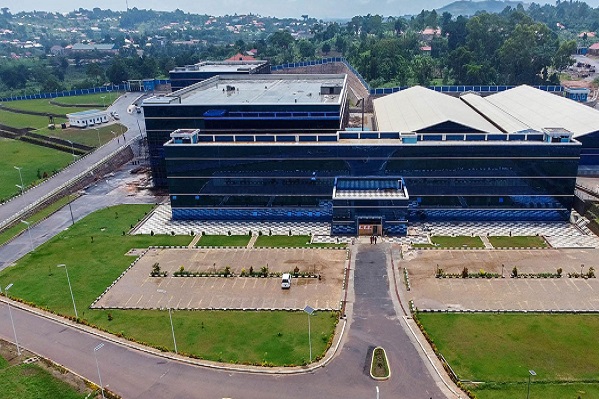
Dei Industries International Limited headquarters located at Matugga
HABARI DAILY I Kampala, Uganda I Dr Mathias Magoola, the founder and managing director of Dei BioPharma and Dei Industries International Limited, is facing the prospect of losing his multi-billion-shilling business empire through a public auction over unpaid commercial bank loans estimated at Shs147.7 billion.
The looming auction threatens to dismantle an industrial enterprise that has attracted unprecedented government financial support, with the State reportedly investing approximately Shs723.4 billion in Dei BioPharma in a bid to establish Uganda as a regional centre for pharmaceutical manufacturing.
According to media reports, the debt, estimated at about US$39.9 million, is owed to Equity Bank Uganda and Equity Bank Kenya. The financial dispute has now escalated into a recovery process targeting some of Magoola’s most valuable industrial, commercial and residential properties.
A public notice issued by debt collection and bailiff firm Jald (U) Limited, acting on instructions from a financial institution linked to the dispute, announced an intended sale of the properties by public auction or private treaty.
The notice gives the affected companies, including Dei Industries International Limited and Dei Natural Products International Limited, 30 days to settle their outstanding loan balances, accumulated interest and recovery costs.
Failure to meet the deadline could pave the way for the disposal of the properties to recover the outstanding money.
Industrial heart of Dei empire under threat
Among the most significant properties listed for disposal is the pharmaceutical manufacturing complex in Matugga, Wakiso District, which houses the flagship operations of Dei BioPharma and Dei Industries.
The facility occupies approximately 20.673 acres, comprising Kyadondo Block 82, Plots 988, 3325 and 3326.
The Matugga complex represents the centrepiece of Magoola’s ambitious pharmaceutical manufacturing venture, which was established with the stated ambition of producing essential medicines locally and reducing Uganda’s dependence on imported pharmaceutical products.
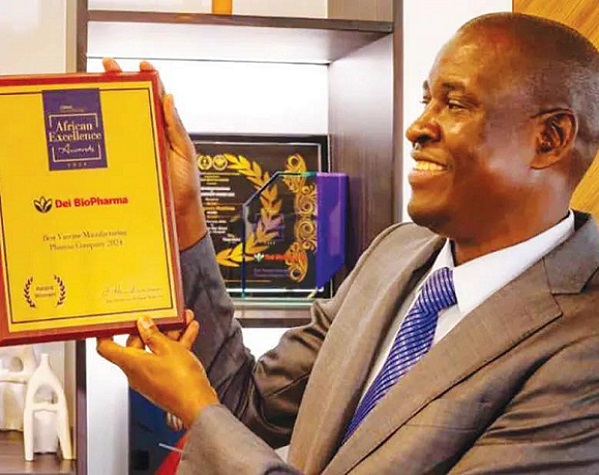
Dr Mathias Magoola
Another major asset facing possible auction is the fully integrated wheat milling facility located along Sixth Link Road in Luzira, Kampala.
The auction notice also identifies several other properties, including establishments in Kyamuli-Kungu and Katwe, a residential property in Muyenga, a hospital in Kitende and commercial premises in Seguku.
The breadth of the properties targeted suggests that the debt recovery exercise extends beyond the pharmaceutical manufacturing business to a wider network of industrial, commercial and residential investments associated with Magoola’s companies.
Daily Monitor also reported that occupants and managers of the affected properties had been given a 14-day ultimatum to vacate the premises to facilitate inspection by prospective buyers.
The development places the companies under mounting pressure, as they face the possibility of losing critical operational infrastructure while attempting to resolve their financial obligations.
Court battle fails to stop debt recovery
The impending auction comes against the background of legal disputes between Magoola’s companies and the financial institutions over the loan audit and recovery processes.
In September 2026, the companies secured a temporary stay of proceedings from the Court of Appeal, following challenges to aspects of the loan audit process.
However, the temporary judicial intervention did not extinguish the underlying debt obligations.
Consequently, the latest recovery notice signals that the lenders’ efforts to recover the outstanding money remain a significant threat to the companies’ continued ownership of the properties.
Unless the affected companies reach an agreement with the lenders or settle the outstanding obligations within the stipulated period, the properties could ultimately change hands through an auction.
Shs723bn government investment
Perhaps the most controversial aspect of the unfolding financial crisis is that it is happening despite the enormous financial support Dei BioPharma has received from the Ugandan government.
Government investments in the pharmaceutical venture are estimated to have cumulatively reached approximately Shs723.4 billion, making it one of the country’s most heavily supported private-sector industrial undertakings.
The public investment was intended to support the establishment of a large-scale pharmaceutical manufacturing facility capable of producing medicines locally, creating employment and strengthening Uganda’s health security.
However, the company’s financial difficulties have raised questions about the management of the public resources injected into the enterprise and the relationship between government financing and its private commercial borrowing.
Parliamentary committees, including the Committee on Presidential Affairs, have previously raised concerns about inadequate documentation concerning the government’s shareholding in the enterprise.
Legislators have also questioned the slow pace of commercial production, particularly given the substantial public investment.
Reports indicate that Dei produced only six generic medicines during the 2024/25 financial year, raising questions about whether the company has delivered production levels commensurate with the resources committed to it.
The accumulation of substantial commercial bank debt alongside hundreds of billions of shillings in government investment has further intensified scrutiny of the project’s financial sustainability.
Questions have consequently emerged about how the company accumulated such significant liabilities, how the borrowed funds were utilised and whether adequate financial controls were in place to protect both public and private investments.
Defining moment for Uganda’s industry
The threatened auction of Magoola’s property represents a potentially devastating setback to an industrial empire built around pharmaceutical manufacturing, food processing, healthcare and property investments.
For government, the controversy presents an equally difficult dilemma: how to protect public investments while ensuring accountability and commercial discipline in an enterprise that was expected to contribute to Uganda’s industrial transformation.
The potential loss of the Matugga pharmaceutical complex would be particularly consequential because of its strategic importance to the country’s ambitions of developing domestic pharmaceutical production capacity.







About the Author