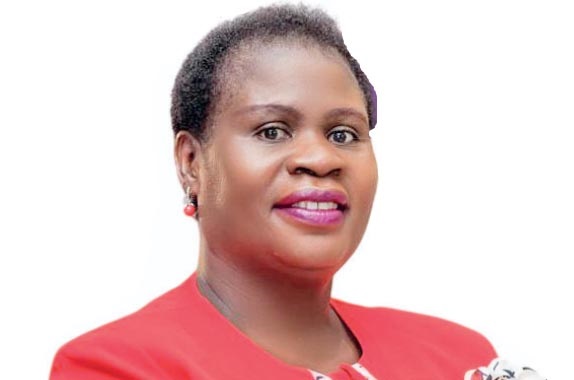


HABARI DAILY I Kampala, Uganda I She is widely known for her expeditious steps in turning a modest educational initiative into one of Uganda’s growing networks of schools, but behind Dr Barbara Ofwono’s entrepreneurial journey is a story of faith, determination, resilience and an unwavering belief in the power of a dream.
In 1999, Ofwono started Victorious Schools with just 30 pupils and three members of staff. Today, what began as a small school has grown into Victorious Education Services Limited, a network of schools serving more than 4,000 pupils and employing over 500 people.
Her journey was, however, not a straightforward one. Like many entrepreneurs who venture into business with big ambitions but limited financial resources, Ofwono faced the daunting challenge of raising capital to turn her vision into reality.
She took the most pragmatic step any entrepreneur would when faced with a capital-injection quagmire. She went to borrow from a bank in Kampala.
Initially, she did not have the necessary requirements, particularly collateral, and her loan application was rejected. For many aspiring entrepreneurs, such a setback would have marked the end of the dream. But Ofwono was not prepared to surrender.
She approached another bank, which looked beyond her immediate financial circumstances and recognised the potential of the business idea she was pursuing. The bank agreed to partner with her, providing the financial support that helped propel her dream towards what Victorious Education Services has become today.
To Ofwono, that partnership was what every entrepreneur hopes for: the defining moment when a business finally takes off and there is no turning back.
It was her “The It Moment”.
Her experience illustrates an important lesson for aspiring businesspeople: rejection does not necessarily mean that a business idea lacks merit. Sometimes, entrepreneurs need to keep knocking on doors until they find a financial institution or partner willing to believe in their vision.
Faith, passion and resilience
Ofwono’s entrepreneurial journey is deeply rooted in faith. She traces the beginning of Victorious Schools to a Sunday in 1999, when she received what she considers a calling from God during a break in a Sunday School service.
Rather than dismissing the experience as an ordinary religious moment, she took practical steps to turn the conviction into an institution that would serve children and families.
That decision required more than faith. It demanded the courage to venture into an uncertain business environment, the patience to overcome financial limitations and the resilience to keep going when circumstances were unfavourable.
For many people, entrepreneurship is an attractive proposition because of the promise of financial independence and wealth creation. However, the reality of building a sustainable enterprise is often characterised by financial pressures, operational challenges and moments when the temptation to abandon the dream becomes overwhelming.
Ofwono’s experience demonstrates how determination can make the difference between an idea that remains on paper and one that develops into a functioning enterprise.
The numbers tell much of her story. From 30 pupils at inception, Victorious Schools now has more than 4,000 pupils. The three employees who supported the institution in its formative years have grown into a workforce of over 500.
This expansion has also meant creating employment opportunities, supporting families and contributing to Uganda’s education sector.
Her story is particularly relevant to women entrepreneurs who often have to navigate financial constraints, family responsibilities and societal expectations while pursuing their business ambitions.
But Ofwono’s success is not simply measured by the number of pupils enrolled or employees on the payroll. She believes the purpose of an enterprise should go beyond making money.
Building more than an education business
To Ofwono, Victorious Education Services is more than a commercial venture. It is an institution built around values, faith and character formation.
She believes that schools should not only impart academic knowledge but also prepare children to become responsible citizens who can contribute meaningfully to society.
This philosophy has influenced the identity of Victorious Schools, where the objective is to develop the whole child by combining academic education with spiritual growth and character development.
Her approach offers an important perspective on entrepreneurship: businesses can pursue profitability while remaining committed to a social purpose.
For Ofwono, the calling that inspired her to establish the school in 1999 continues to inform the institution’s direction. The business has grown, but the values behind its establishment remain central to her vision.
It is also a reminder that successful enterprises are often built around a clear purpose that goes beyond the immediate desire to generate revenue.
Why family remains central to her success
Away from the demands of managing a growing education enterprise, Ofwono is equally passionate about family, marriage and responsible financial management.
Unlike entrepreneurs who focus almost exclusively on business expansion and wealth accumulation, she frequently reminds audiences that financial success should not come at the expense of family relationships and personal values.
During the 2024 Bride and Groom Expo at Lugogo Showgrounds, she shared her views on financial planning in marriage, urging couples to approach money as a joint responsibility rather than an individual possession.
“Plan together because it is not your money, but our money. You have to sit down with your husband and plan, which is why I managed to back to school,” she told the audience.
Her remarks reflected her belief that financial decisions within marriage should be made collectively, irrespective of which partner earns more money.
She does not subscribe to the increasingly popular notion that “My money is my money, and his money is our money.”
Instead, she believes that marriage requires shared financial responsibility, planning and transparency.
For her, the ability to grow a business while maintaining a stable family requires discipline and an appreciation of the responsibilities that come with success.
She also believes that becoming financially successful should not make someone abandon the ordinary responsibilities that define family life.
Ofwono illustrates this through her continued involvement in household activities, including going to the market to buy food for her family.
While some people have questioned why a woman of her business stature would still engage in such activities, she sees nothing unusual about it.
“I even go to the market and people think I am stingy, but I want to go so that I buy what is in season so that I plan for my family. They [my family] see me doing that; they see and know that I love them and they love me too,” she said.
The mother of four believes that financial success should not change a person’s identity, responsibilities or appreciation of family.
Her philosophy is that wealth should improve people’s circumstances without making them lose touch with the values and relationships that matter most.
Sharing lessons with aspiring entrepreneurs
Today, Ofwono has become a source of inspiration for aspiring entrepreneurs, particularly those seeking to establish and grow businesses despite limited resources.
Her journey provides practical lessons on identifying opportunities, mobilising capital, managing setbacks, building strong institutions and maintaining a clear business purpose.
Perhaps one of the most important lessons from her experience is the importance of persistence when seeking financing.
Her initial loan rejection did not extinguish her ambition. Instead, she continued searching for a financial partner who could recognise the potential of her idea.
She also demonstrates that entrepreneurship requires more than identifying a business opportunity. It involves developing a sustainable model, building a capable workforce, maintaining institutional values and ensuring that growth does not compromise the original vision.
For aspiring entrepreneurs, Ofwono’s journey offers a compelling message: a business does not have to begin with millions of shillings, hundreds of employees or a sophisticated infrastructure.
Sometimes, it begins with an idea, a conviction and the courage to take the first step.







About the Author