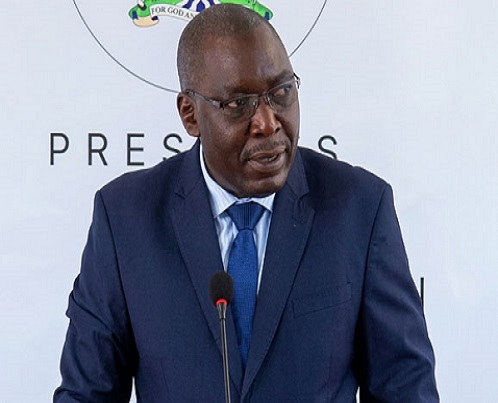

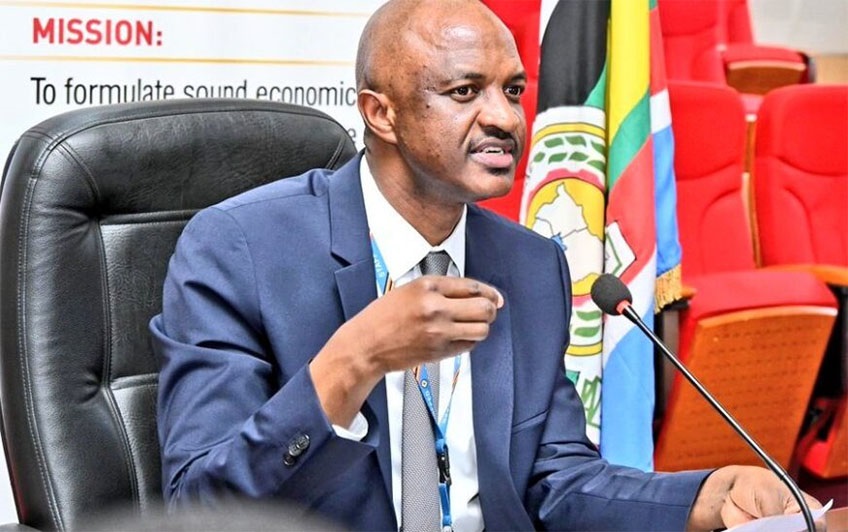
Ramathan Ggoobi announcing the Q4 release
HABARI DAILY I Kampala, Uganda I Government has unveiled expenditure limits for the fourth quarter of the Financial Year 2025/26, releasing Shs 17.444 trillion to finance key priorities, with a strong emphasis on statutory obligations, infrastructure, wealth creation, and human capital development.
According to Ramathan Ggoobi, the Permanent Secretary and Secretary to the Treasury at the Ministry of Finance Planning and Economic Development, the latest release brings the cumulative total for the financial year to Shs 77.001 trillion.
“The total release for Quarter Four amounts to Shs 17.444 trillion. This brings the cumulative total release for FY2025/26 to Shs 77.001 trillion, which is 106.4 percent of the approved budget and 95.1 percent of the revised budget,” Ggoobi said.
Pension and gratuity
He emphasized that the quarter’s expenditure limits are anchored on meeting critical government obligations while sustaining economic growth.
“We have prioritised statutory commitments, including debt servicing, wages, and pensions, to ensure fiscal stability and maintain confidence in the economy,” he noted.
A significant portion of the funds—Shs 6.38 trillion—has been earmarked for debt and treasury operations, while Shs 2.04 trillion will cater for wages and salaries across government. Pension and gratuity payments will take Shs 343.39 billion, with additional allocations going to Parliament (Shs 204.04 billion), the Judiciary (Shs 73.01 billion), and the Office of the Auditor General (Shs 12.66 billion).
Ggoobi highlighted that the expenditure framework also supports the government’s ATMS strategy—Agro-industrialisation, Tourism, Minerals, and Science and Technology—as key drivers of tenfold economic growth.
“Under agro-industrialisation, we have provided Shs 314.9 billion, particularly to fast-track research and innovations such as the anti-tick vaccine,” he explained. “Tourism development has been allocated Shs 48.6 billion, including support to the ‘Explore Uganda’ campaign and the development of the Uganda Martyrs Shrine at Namugongo.”
Oil production prioritised
As Uganda looks forward to becoming an oil producing country come August this year, Ggoobi disclosed that Shs 24.3 billion has been directed to the Petroleum Authority of Uganda to accelerate the country’s first oil project, while Shs 184.5 billion will boost science, technology, and innovation, particularly expanding internet connectivity and digitisation.
On wealth creation, Ggoobi confirmed the full release of Parish Development Model funds. “We have released all the remaining balances for the Parish Development Model amounting to Shs 542.3 billion, as well as Shs 74.7 billion for other wealth creation initiatives, including capitalisation of key development institutions,” he said.
Security expenditure remains a priority, with allocations to the Ministry of Defence, State House, police, prisons, and intelligence services collectively taking hundreds of billions to maintain national stability.
Infrastructure development commands one of the largest shares, with Shs 1.762 trillion going to the Ministry of Works and Transport. “This funding supports critical projects such as Uganda Airlines, the Standard Gauge Railway, and national road infrastructure,” Ggoobi stated.
The energy sector has been allocated Shs 331.03 billion to expand rural electrification and power generation, while urban development in Kampala will benefit from substantial external financing for roads, drainage, and sanitation improvements.
In the social sectors, Shs 372.88 billion has been released to the Ministry of Health, alongside Shs 342 billion for essential medicines through National Medical Stores. Education and sports will receive Shs 257.54 billion, while public universities have been allocated Shs 113.76 billion.
Domestic arrears crucial
Local governments will receive Shs 519.8 billion to facilitate service delivery and project implementation.
Ggoobi also underscored government’s commitment to clearing domestic arrears. “We have provided Shs 454.2 billion this quarter for domestic arrears, bringing the total for the financial year to Shs 973.1 billion,” he said.
He reaffirmed that the expenditure limits are designed to sustain service delivery, stimulate growth, and maintain macroeconomic stability as the financial year draws to a close.







About the Author