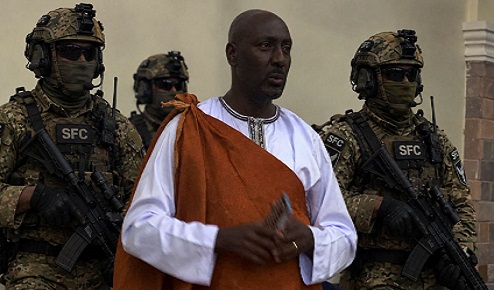

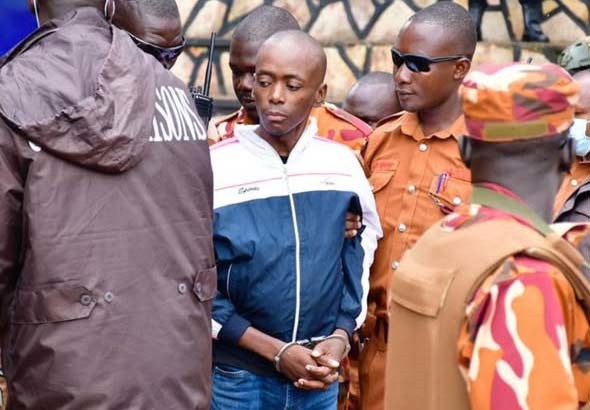
Christopher Okello Onyum as he was presented for the hearing
HABARI DAILY I Kampala, Uganda I As proceedings continue in the Ggaba toddler murder case, the courtroom has increasingly become a battleground over one central question: was Christopher Okello Onyum mentally in control of his actions?
On Friday, prosecutors leaned heavily on testimony from senior police doctor Dr Emmanuel Nuwamanya, who painted a picture of a man সচ composed, responsive, and aware during medical evaluation. According to the doctor, Okello maintained steady eye contact, communicated clearly, and showed no immediate signs of mental instability at the time of examination.
That assessment now forms a key pillar of the prosecution’s argument—that Okello should be held fully responsible for the deaths of four young children.
But the defence is pushing back, raising concerns about whether deeper psychological issues may have been overlooked.
During cross-examination, defence lawyer Sarah Awelo questioned why Okello was not referred to Butabika National Referral Mental Hospital, Uganda’s leading psychiatric facility, for a more comprehensive evaluation. The decision not to escalate the assessment has become a focal point of the defence’s strategy, suggesting that critical gaps may exist in understanding the accused’s mental history.
Dr Nuwamanya acknowledged that Okello spoke of past struggles, including earlier mental health challenges. However, he told court there was no documented medical history to support those claims, leaving the court to weigh self-reported experiences against clinical observation.
Legal analysts say this tension is not unusual in serious criminal trials, especially where a mental health defence is raised. Courts must carefully distinguish between past psychological distress and a defendant’s state of mind at the exact time an offence was committed.
“The issue is not whether someone has ever struggled mentally,” one legal observer noted outside court. “It’s whether those struggles impaired their judgment during the act itself.”
As more witnesses are expected to take the stand, the case is shaping into a complex legal contest—one that goes beyond the facts of the crime and into the difficult territory of mental responsibility.
For now, the court must sift through competing narratives: one portraying a calculated individual aware of his actions, and the other hinting at a troubled mind that may not have been fully understood.
The outcome could set an important tone for how similar cases involving mental health claims are handled in Uganda’s justice system.