
HABARI DAILY I Kampala, Uganda I Uganda’s proposed Shs 84.39 trillion budget for the 2026/27 financial year marks one of the most ambitious fiscal expansions in the country’s history, driven largely by preparations for the 2027 Africa Cup of Nations (AFCON) and accelerated investment in the oil and gas sector.
The sharp increase of over Shs 11 trillion from the previous year underscores government’s determination to fast-track strategic infrastructure and position the economy for long-term growth, even as concerns mount over rising debt levels.
Its also driven by critical spending to accelerate commercial oil production. Key investments include stadium construction, airport expansion, and the East African Crude Oil Pipeline (EACOP).
At the heart of the budget expansion is Uganda’s commitment to successfully host AFCON 2027 under the PAMOJA bid alongside its regional partners. This continental tournament has compelled government to significantly scale up spending on sports and urban infrastructure within a limited timeframe.
Key Drivers For Increased Budget
The government is betting big on the PAMOJA AFCON 2027 bid, investing heavily in urban infrastructure, specifically the construction of Hoima City Stadium and upgrading the Kampala stadium to meet CAF standards. These projects go beyond sports, encompassing road upgrades, accommodation facilities, and urban beautification efforts aimed at enhancing the country’s international image.
The urgency to meet Confederation of African Football (CAF) requirements has meant frontloading expenditure, contributing significantly to the spike in the national budget. Beyond the tournament, government anticipates that these investments will boost tourism, create jobs, and leave behind lasting infrastructure that can support future economic activity.
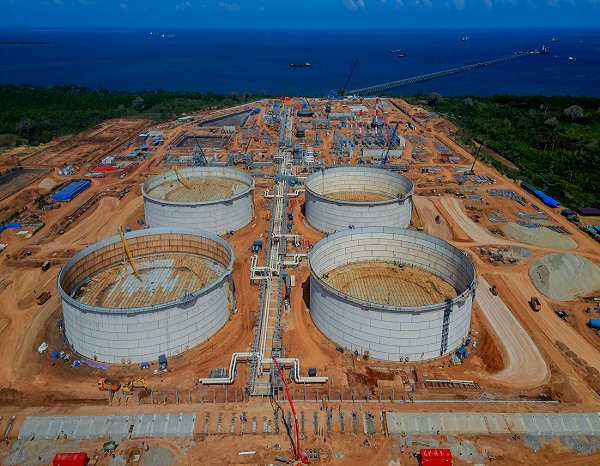
Concerning the Oil and Gas Sector Development, the 2026/27 budget also prioritizes Uganda’s long-awaited “First Oil” agenda. Significant funding has been allocated to finalizing the East African Crude Oil Pipeline (EACOP), advancing development of the Hoima refinery, and supporting upstream activities in oil-rich districts such as Buliisa and Kikuube.
These investments are critical for unlocking Uganda’s petroleum potential, which government views as a key driver of future revenue and industrialization. However, the capital-intensive nature of oil and gas projects has placed immediate pressure on public finances, contributing to the ballooning budget.
Standard Gauge Railway
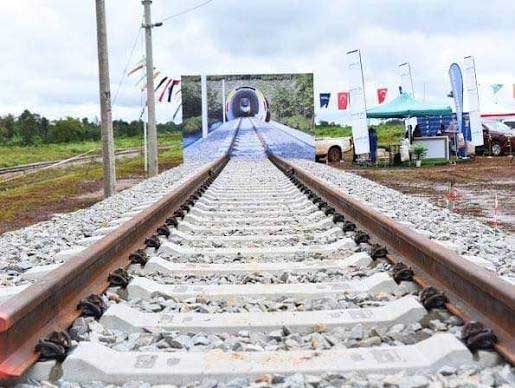
In order to facilitate both oil production and broader economic growth, government is also investing heavily in enabling infrastructure. This includes continued construction of Kabalega International Airport in Hoima, development of the Standard Gauge Railway (SGR), and expansion of national road networks to improve trade and connectivity.
These projects are intended to support logistics for oil exports while simultaneously strengthening Uganda’s position as a regional trade hub. However, their scale and cost have further pushed up government expenditure.
The budget is financed through domestic revenue (Shs 44.18 trillion), petroleum fund (Shs1.44 trillion), and budget support/borrowing. Debt Management: A significant portion (35% or Shs 20.726 trillion) is dedicated to debt servicing, highlighting concerns over public debt, note. Strategic Goal: The government intends for this expansionary budget to boost competitiveness in science, innovation, and trade.
While the expansion signals an ambitious fiscal agenda, the increase in Government spending has been overshadowed by mounting concern over Uganda’s rising public debt and the growing share of the budget committed to debt servicing.
Debt repayment
According to the approved estimates, government will spend Shsb33.6 trillion, about 40 percent of the total budget, on debt repayment, at a time when the national debt stock stood at Shs 126.18 trillion as of December 2025.
Presenting the Budget Committee report, Vice Chairperson Remigio Achia (Pian County) raised red flags over the persistent underfunding of domestic arrears, warning that the current allocation risks eroding government credibility with suppliers. Parliament approved Shs 317 billion for domestic arrears in FY2026/27, down sharply from Shs 1.4 trillion in FY2025/26, despite the Auditor General placing the outstanding stock at Shs 8.4 trillion.
Budget Committee report, Vice Chairperson Remigio Achia “Government could take decades to clear arrears at the current rate of payment,” Achia cautioned, noting that annual allocations have historically averaged about Shs 200 billion, far below required levels.
Domestic arrears, unpaid obligations largely arising from procurement contracts, remain a key fiscal risk, although the Auditor General reported a 39.1 percent decline in arrears, from Shs 13.8 trillion in FY2023/24 to Shs 8.4 trillion in FY2024/25.
Alternative view
The minority report, presented by Shadow Finance Minister Ibrahim Ssemujju Nganda and Lulume Bayiga, painted a more pessimistic picture, arguing that the structure of the budget leaves little room for transformative investment.
Ssemujju told Parliament that debt servicing, wages, and administrative costs will consume the bulk of public resources Shs 33.6 trillion (40%), debt servicing, Shs 14.1 trillion (16.7%), wages and allowances, UGX8.2 trillion (9.7%), operational expenses and Shs 2.6 trillion (3.1%), classified expenditure.
“These four items alone will consume about 70 percent of the entire budget,” Ssemujju said. “What remains for debate and development is roughly Shs 25.7 trillion. This is a highly constrained budget that requires serious restructuring if it is to deliver meaningful impact.”
The minority further warned that debt repayment costs are rising sharply, from Shs 27.5 trillion in FY2025/26 to Shs 33.2 trillion in FY2026/27, with cumulative interest payments projected to reach Shs 46.9 trillion over six years.
Beyond existing obligations, concerns were raised over government’s continued reliance on borrowing to finance the budget. Government plans to raise Shs 25.9 trillion from the domestic market, including commercial banks and pension funds. Of this, Shs 11.97 trillion will finance the budget deficit, while Shs 13.9 trillion will go toward refinancing maturing debt.
Critics argue that this borrowing cycle risks deepening fiscal vulnerabilities, particularly where loan absorption remains weak.
ICT and National Guidance Minister Chris Baryomunsi dismissed opposition concerns as overly critical, arguing that borrowing is a standard practice globally and necessary for development.
“The issue is not borrowing per se, but how the borrowed funds are utilised,” Baryomunsi said. “As Parliament, we must ensure that every shilling borrowed delivers value.”
However, Leader of the Opposition Joel Ssenyonyi described Uganda’s debt trajectory as “alarming,” citing poor planning and inefficiencies in loan utilisation.
“In many cases, funds are borrowed before projects are ready, leaving money idle while interest accumulates,” Ssenyonyi said. “At the same time, corruption continues to drain public resources, worsening the debt burden.”
He rejected comparisons with other economies, arguing that Uganda’s borrowing lacks discipline and strategic alignment.
Feasibility studies missing
Speaker Anita Among echoed concerns over government’s borrowing practices, particularly the failure to conduct feasibility studies before securing loans.
“As a House, we agreed that borrowing should follow proper planning, feasibility studies and designs must come first,” Among said. “But what is happening is the reverse: funds are borrowed first, and planning comes later. That is what is creating these challenges.”
The approved budget prioritises implementation of the National Development Plan IV, with significant allocations to key programmes such as development Plan Implementation Shs 35.7 trillion (42%), human Capital Development (health, education, social services) Shs 13.5 trillion, governance and Security Shs 10.2 trillion, and transport Infrastructure Shs 8.8 trillion.
However, sectors such as digital transformation, housing, industrial development, and public sector reform received comparatively modest funding, each below Shs 500 billion.
Ultimately, the surge in Uganda’s 2026/27 budget highlights the dual pressures of delivering a successful AFCON tournament and fast-tracking oil production. While both are expected to generate long-term economic benefits, they have significantly increased short-term fiscal demands.
The passage of the Appropriation Bill underscores a widening tension in Uganda’s fiscal policy: balancing ambitious development goals with rising debt obligations and limited fiscal space.
While government maintains that the budget will drive growth under the National Development Plan IV framework, critics warn that without stronger oversight, improved project execution, and stricter fiscal discipline, the increasing cost of debt could constrain service delivery and long-term economic transformation.







About the Author