
Museveni Holds Key To Christopher Okello’s Execution, Which Could Be Conducted In 14 Days
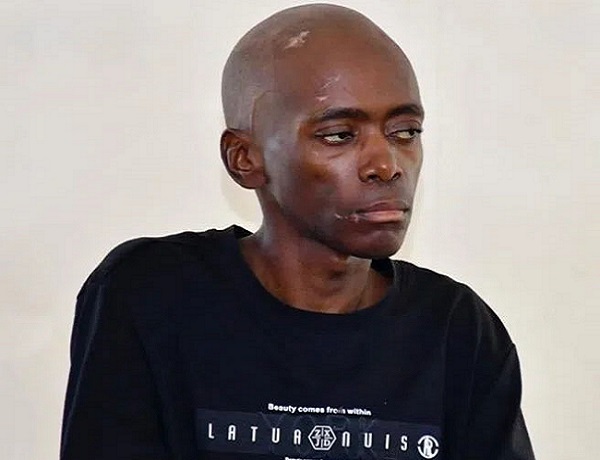
Christopher Okello Onyum
HABARI DAILY I Kampala, Uganda I 14 days to live, is the period after which Christopher Okello Onyum, 38, a Ugandan-American citizen who was convicted of murdering four children will be executed after President Yoweri Museveni has signed his death warrant.
That stark timeline has reignited a national debate about capital punishment in Uganda, following the High Court’s decision to sentence Christopher Okello Onyum to death for the brutal murder of four children in Ggaba.
Okello’s conviction, handed down by Justice Alice Komuhangi Khauka at a specially convened court session at the crime scene, placed the case in what the judge described as the “rarest of rare” category—warranting the maximum sentence under Ugandan law. The ruling was met with approval from state prosecutors and grieving families, but it also reopened long-standing questions about whether Uganda actually carries out executions.
While the sentence itself is clear, the path to execution is anything but immediate.
Swearing in gift?
Many a Ugandan is asking whether President Museveni is likely to give Ugandans a swearing-in gift by signing Okello’s death warrant before or shortly after swearing in for another term of office. Hanging Okello, who has become a national disgrace would prove to a popular act to be applauded by millions who were distraught by his actions.
Under Ugandan law, Okello has 14 days to file an appeal in higher courts. This period effectively means that, despite the death sentence, his execution cannot proceed until that window lapses or any appeals are exhausted. Legal experts note that most death row inmates pursue appeals, a process that can stretch for years.
Even more crucially, the execution of any death sentence ultimately depends on the approval of Yoweri Museveni, who must sign a death warrant before any hanging can take place.
Prisons would hang him in 72 hours
According to the Commissioner General of the Uganda Prisons Service, Johnson Byabashaija, once that warrant is signed, the timeline becomes dramatically shorter.
“Once the (presidential) warrant is out, the subject will be executed within 72 hours. No worries,” Byabashaija said in response to public concerns about the prison system’s readiness.
His remarks were intended to reassure the public that, despite more than two decades without civilian executions, Uganda’s execution infrastructure remains intact. Questions had emerged about whether the country still maintains functional gallows or trained execution personnel.
Byabashaija dismissed those concerns, emphasising that executions are a specialised duty handled by trained staff and that the system is ready to act when required. Yet history suggests that readiness does not necessarily translate into action.
Uganda retains the death penalty for serious offences such as murder and aggravated robbery, but executions have been exceedingly rare in recent decades. The last widely recorded civilian executions occurred on April 30, 1999, when 28 prisoners were hanged at Luzira Prison. A subsequent execution linked to military offences was reported in 2003.
Since then, no civilian executions have taken place, creating what legal scholars describe as a “de facto moratorium.” Courts continue to sentence offenders to death, but the punishment is seldom implemented.
Supreme Court ruling
A major turning point came in 2009 following a landmark Supreme Court case involving death row inmate Susan Kigula. The court ruled that the mandatory death penalty was unconstitutional and directed that judges must consider mitigating circumstances before imposing such sentences.
The ruling also introduced a critical safeguard: prisoners who spend more than three years on death row without execution are entitled to have their sentences reviewed. At the time, more than 400 inmates were awaiting execution, and the decision significantly reduced that number while reshaping sentencing practices.
By 2023, estimates suggested that about 145 inmates remained on death row in Uganda, many of whom have spent years awaiting the outcome of appeals or possible clemency.
Human rights organisations argue that the reality of death row often involves prolonged uncertainty rather than swift execution. Inmates frequently endure overcrowded conditions, limited medical care, and lengthy legal delays. In some cases, prisoners die of illness or natural causes before their cases are concluded.
Against this backdrop, Okello’s case stands out—not only because of the severity of the crime, but also due to renewed political signals بشأن the potential enforcement of death sentences.
President may re-instate executions
In 2018, Yoweri Museveni publicly expressed willingness to revisit his stance on capital punishment. He cited rising crime rates and warned that excessive leniency could embolden criminals.
“My hesitation to sign death warrants came from my Christian background,” Museveni noted at the time, “but being lenient is causing people to think they can cause harm and get away with it. I will revise my position.”
Those remarks have taken on fresh significance in light of Okello’s sentencing.
If the President chooses to sign a death warrant after the appeals process, the timeline outlined by the Uganda Prisons Service suggests that Okello could be executed within three days of that approval. Combined with the 14-day appeal window, this creates a theoretical scenario in which execution could occur within weeks.
However, legal analysts caution that such an outcome remains unlikely in the short term, given Uganda’s long-standing practice of not carrying out executions.
Presidential pardon
The President retains the constitutional authority to commute death sentences to life imprisonment—a power that has been exercised in several past cases. Museveni can also extend a pardon to Okello, commute his sentence to life, or allow him to walk free.This adds another layer of uncertainty to Okello’s fate.
For now, the clock on Okello’s 14-day appeal window is ticking. Whether it marks the beginning of a swift path to execution or the start of a prolonged legal journey similar to that of many death row inmates before him remains to be seen.
What is certain is that the case has once again brought Uganda’s death penalty into sharp focus, raising difficult questions about justice, deterrence, and the practical realities of capital punishment in a country where the law allows it—but history shows it is rarely carried out.
About the Author