
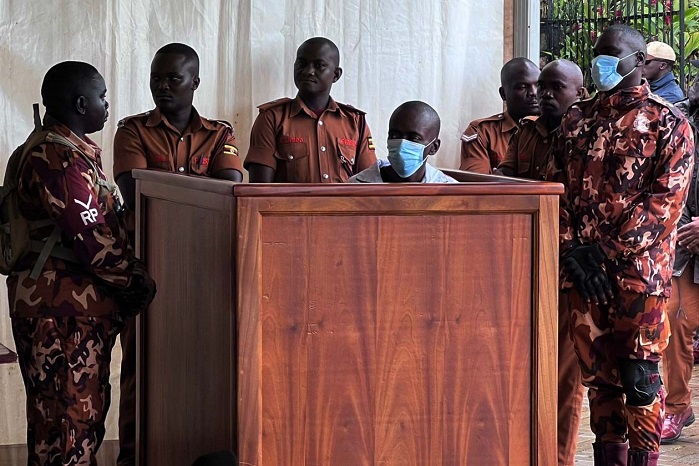
HABARI DAILY I Kampala, Uganda I Today the High Court will deliver it’s verdict on the culpability of Christopher Okello Onyum in the slaying of the four minors at the child child care center in Ggaba.
After the prosecution’s solid evidence, which include a combination of alleged confession, forensic findings, digital tracking data, and witness testimony that collectively place him at the centre of the brutal killing of four toddlers in Ggaba, we are likely to receive a guilty verdict.
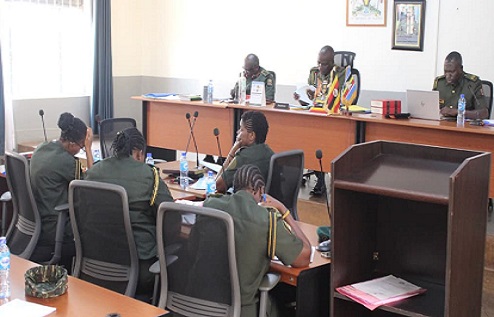
The High Court, presided over by Alice Komuhangi Khaukha has patiently listened to witnesses from both sides, and the balance appears to tilt heavily in favour of the prosecution. The defence’s decision to close its case without presenting two key witnesses has further weakened an already fragile position, leaving critical prosecution claims largely unchallenged.
The case against Onyum Okello has been built methodically over weeks, with state attorneys Jonathan Muwaganya and Anna Kiiza presenting a detailed account of what they describe as a premeditated and deliberate attack at a daycare centre in Ggaba.
Confession
One of the most compelling pillars of the prosecution’s case is the alleged confession made by Okello shortly after his arrest. Detective Assistant Superintendent of Police Eserait James testified that the accused openly admitted to killing the four children. According to his testimony, Okello not only acknowledged responsibility but also explained his motive, stating that he was seeking wealth.
“He told me he was arrested after killing four children at a day care centre in Ggaba,” Eserait told court, adding that the suspect described how he had planned the attack in advance.
If the court finds that this confession was made voluntarily, it will significantly strengthen the prosecution’s case. While the defence has attempted to dismiss the statements as coerced, it has not provided independent evidence—such as medical or legal documentation—to substantiate claims of torture or duress. In criminal law, unsubstantiated allegations of coercion often carry little weight when set against consistent and corroborated testimony.
Premeditated murder
Closely linked to the confession is the issue of premeditation, a key ingredient required to prove murder. The prosecution presented evidence that Okello allegedly surveilled the daycare centre before the attack, noting security weaknesses such as the absence of guards and the presence of mostly female staff. This level of planning, if accepted by the court, directly supports the element of malice aforethought.
Further strengthening this argument is the recovery of physical evidence. Police testified that six knives—five black and one grey—were found at the accused’s residence. These were allegedly purchased prior to the incident and used during the attack. The presence of multiple weapons suggests preparation and intent, rather than a spontaneous or accidental act.
In addition to physical evidence, digital forensic findings have played a crucial role in linking the accused to the crime scene. Telecommunications data presented by Detective Inspector Aggrey Mpamiizo tracked a phone number associated with Okello moving from Kyanja through central Kampala and eventually to Ggaba within the timeframe of the killings. The phone was reportedly detected near Ggaba Beach between 11:07 a.m. and 11:38 a.m., aligning with the estimated time of the murders.
The court also heard that the same phone number made a 39-second emergency call at 11:25 a.m., a detail prosecutors argue occurred shortly after the attack. This kind of timestamped digital evidence is often difficult to refute, particularly when it forms a consistent pattern that aligns with other elements of the case.
Digital analysis extended beyond location data. Assistant Superintendent of Police Kenneth Henry Angulo testified that a Motorola phone linked to the accused contained internet searches related to nursery schools, kindergartens, and play centres in the days leading up to the killings. The device reportedly showed a progression from general searches such as “schools near me” to specific locations within Kampala and Wakiso.
Prosecutors argued that this pattern indicated deliberate targeting and preparation. Additional searches, including inquiries about police stations and firearm licensing, were presented as further evidence of planning and awareness of potential consequences.
Financial and circumstantial evidence has also contributed to the prosecution’s case. Testimony from car rental operator Juma Hashim revealed that Okello had handled significant sums of money, including Shs16 million in cash deposits and Shs4 million via mobile money. He also identified himself as a resident of Ggaba, placing him in close proximity to the crime scene.
Taken together, this combination of confession, physical evidence, digital tracking, and financial records forms a tightly woven case that prosecutors argue leaves little room for reasonable doubt.
Intentional wrongdoing
In contrast, the defence has struggled to dismantle this narrative. Okello denied intentional wrongdoing, insisting that he did not deliberately cause the deaths of the children. He claimed that statements attributed to him were made under pressure and that he had been subjected to coercion.
However, these claims were not backed by independent evidence, and the defence’s failure to call key witnesses further undermined its position. Despite being granted additional time by the court, defence lawyer Richard Kumbuga ultimately informed the court that the witnesses could not be reached.
The judge noted that the defence had only provided phone contacts without physical addresses, making it difficult for court officials to trace them. This procedural shortcoming has been interpreted as a sign of weak case preparation and has deprived the defence of potentially critical testimony.
Moreover, Okello’s own account may have inadvertently strengthened the prosecution’s case. While he denied intent, he acknowledged being under psychological distress and suggested that he may have experienced mental health challenges. However, without expert psychiatric evidence, such claims are unlikely to meet the legal threshold required to negate criminal responsibility.
The broader context of the crime also weighs heavily on the case. The victims—four toddlers at a daycare centre—underscore the severity of the offence and the expectation of accountability. The brutality and vulnerability of the victims amplify the importance of a thorough and credible judicial outcome.
Under Uganda’s legal system, the case will now proceed to closing arguments, after which court assessors will provide their advisory opinions. While these opinions are not binding, they often reflect public sentiment and can influence the court’s reasoning.
Closure sought
Given the strength of the prosecution’s evidence and the weaknesses in the defence case, legal observers believe that a conviction is increasingly likely. The court’s final judgment is expected to bring a measure of closure to a case that has shocked the nation.
Beyond the courtroom, the trial has sparked broader discussions about security, mental health, and the protection of children in early learning centres. It has also raised questions about investigative procedures and the role of digital evidence in modern criminal prosecutions.
As the country awaits the verdict, the case stands as a stark reminder of the devastating consequences of violence and the critical role of the justice system in delivering accountability.







About the Author