

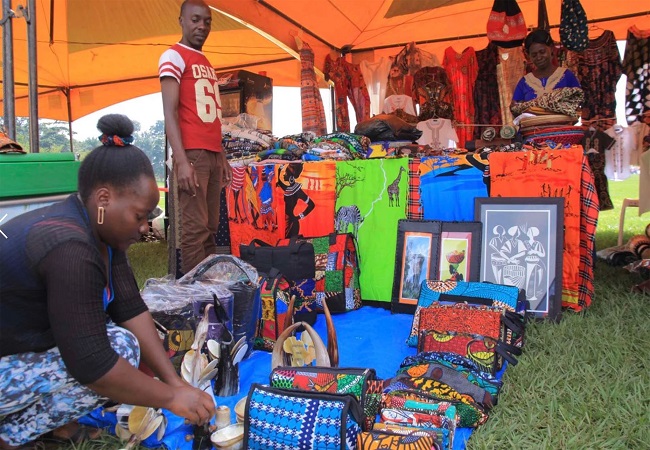
Women engaged in trade
HABARI DAILY I Kampala, Uganda I Trade and commerce have emerged as the dominant sectors among beneficiaries of the Generating Growth Opportunities and Productivity for Women Enterprises (GROW) loan facility, underscoring the central role women entrepreneurs play in Uganda’s commercial economy.
According to the GROW Project Quarterly Report (October–December 2025), a significant majority—68.7 percent—of women borrowers have invested their loans in trade and commerce activities. This places the sector far ahead of others such as agriculture and agribusiness, which account for 21.3 percent, and business and financial services at 3.1 percent. Smaller shares were recorded in construction and engineering (2.7 percent), as well as tourism, hospitality, and creative industries (2.5 percent).
The strong uptake in trade highlights the accessibility and scalability of commerce-related enterprises for women, many of whom operate in retail, wholesale, and cross-border trade. These businesses often require relatively lower start-up capital and offer quicker returns, making them attractive for entrepreneurs transitioning from micro to small and medium enterprises.
The report further indicates that most GROW loan borrowers are individual women entrepreneurs, with a large proportion being first-time borrowers. This signals the project’s success in expanding financial inclusion and reaching women who previously had limited access to formal credit.
In terms of demographics, the majority of beneficiaries—81.6 percent—fall within the economically active age bracket of 31 to 50 years, while 6.5 percent are youth aged between 18 and 30. This suggests that the facility is largely supporting women with established or growing businesses, rather than start-ups alone.
Access to the loans has also been geographically widespread, with women from 13 regions across Uganda benefiting from the facility. In addition, refugee women entrepreneurs have not been left behind, with at least 10 accessing loans worth over Shs70 million. This inclusive approach reflects the project’s broader goal of empowering vulnerable groups and promoting equitable economic participation.
Financial institutions have played a key role in delivering the loans, with 19 participating financial institutions (PFIs) actively disbursing funds. Among these, Centenary Bank, Finance Trust Bank, and Pearl Bank Uganda have been particularly prominent. The involvement of multiple PFIs has enhanced outreach and improved access to financing across different regions.
Collateral requirements remain a significant aspect of the loan process. The report shows that 98.7 percent of borrowers presented some form of collateral, with the majority using registered land titles or mortgaged properties. Others relied on unregistered land agreements, while a small number accessed loans using customary land certificates. Only 1.3 percent of borrowers did not present collateral, indicating ongoing barriers for women without formal asset ownership.
Interestingly, spousal guarantees were relatively low, with only 3.1 percent of borrowers reporting support from spouses. This suggests that many women are independently accessing and managing credit, reflecting growing financial autonomy.
Overall, the dominance of trade and commerce among GROW loan beneficiaries points to a vibrant and expanding sector driven by women entrepreneurs. With continued support, these businesses are expected to scale further, create jobs, and contribute significantly to Uganda’s economic growth.