
Christopher Okello
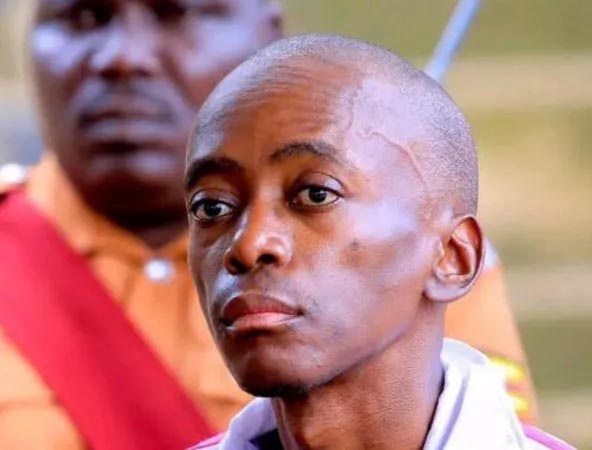
HABARI DAILY I Kampala, Uganda I Jubilations erupted all over Ggaba town, a surburb of Kampala Justice Alice Komuhangi Khauka delivered a death sentence today evening, hours after convicting Christopher Okello on four counts of murder on all four counts.
People may jubilate or celebrate after a death verdict is delivered by a court of law for several reasons rooted in a desire for justice, relief from fear, and perceived closure.
Such reactions often appear following high-profile or heinous crime cases, representing a public sentiment that the punishment fits the crime.
Justice Khauka ruled that the case met the threshold for the “rarest of rare” offences deserving of capital punishment.
“…I find no reason not to hand Mr Okello the maximum sentence. I hereby sentence him to suffer death,” declared the judge as the court erupted in applause.
In her sentencing remarks, Justice Khauka said she had carefully weighed both the mitigating factors presented by the defence and the aggravating circumstances raised by the prosecution.
“Under our sentencing guidelines for courts of judicature… a court may pass the death sentence in exceptional circumstances in the rarest of rare cases where imprisonment for life or other custodial sentences are demonstrably inadequate,” she said. Justice Khaukha noted that while the defence had argued that Okello came from a dysfunctional family, the gravity of the crime outweighed those considerations.
“This offence was brutal and heinous and gruesome and the families of the deceased and the entire nation still grieve for the death of the four children on April 2nd, 2026,” she ruled.
The judge emphasized that the murders were not spontaneous, but carefully planned and executed with chilling precision. “I have considered that the convict meticulously with a lot of sophistication planned and premeditated this offence. He attacked defenceless, innocent children who depend on protection from adults,” she said.
In her assessment, the nature of the attack demonstrated a complete disregard for human life. “He targeted them in their defenceless state and went ahead to slaughter them like animals… and had no fear, no shame, no consideration for human life,” Justice Khaukha said.
The court also placed significant weight on the conduct of the convict during trial and sentencing. Justice Khaukha pointed to Okello’s refusal to show any remorse, even when given an opportunity to address the court. “I have also considered that the convict has shown no remorse at all because I would have expected an apology to the families, but he chose not to,” she added.
During the sentencing session, Okello remained silent despite being invited twice to speak. When asked whether he wished to apologise to the bereaved families or the nation, he said he had nothing to say—a response that further influenced the court’s decision.
The prosecution, led by Chief State Attorney Jonathan Muwaganya from the Office of the Director of Public Prosecutions, had urged the court to impose the maximum sentence, arguing that the circumstances of the case warranted the harshest penalty available under the law. “It is our considered prayer that the ends of justice in this matter will best be served if the highest sentence is passed,” he submitted.
The prosecution’s case had been built on the testimony of 18 witnesses, supported by forensic, digital, and eyewitness evidence. Key elements included DNA findings linking Okello to the murder weapon, CCTV footage tracking his movements, and call data placing him at the scene. Two daycare staff members also testified that they witnessed him attacking the children.
In contrast, the defence, led by Sarah Awelo, pleaded for leniency, citing Okello’s status as a first-time offender and his health condition. “The convict is a first offender with no previous conviction. He suffers from sickle cell and can still be productive to the community,” Awelo argued. She also pointed to his background, describing him as coming from a “broken dysfunctional family” and noting his plans to take up farming in Nwoya District.
However, the court found these factors insufficient when weighed against the severity and circumstances of the offence. Justice Khaukha reiterated that the calculated nature of the killings, the vulnerability of the victims, and the absence of remorse justified the ultimate penalty.
Although Uganda no longer enforces a mandatory death sentence, courts retain discretion to impose it in exceptional cases. In this instance, the judge concluded that the crime met that threshold.
Before concluding the session, the court informed Okello of his right to appeal the sentence, marking the next possible step in the legal process.







About the Author