
HABARI DAILY I Kampala, Uganda I Known as Africa’s backwater for many years, Rwanda is increasingly positioning itself as an international partner in major diplomatic and economic arrangements, with five European countries now preparing to establish a migrant deportation centre on its territory, expected to begin receiving transfers in 2027.
Germany, Denmark, Austria, Greece and the Netherlands have agreed to establish what they describe as a “return hub” in Rwanda, in a controversial arrangement intended to facilitate the removal of migrants who have exhausted all legal avenues to remain in their respective countries.
The Dutch and Danish governments announced the agreement in separate statements, saying the facility would provide an alternative destination for people who cannot be returned to their countries of origin.
Unlike the abandoned British-Rwanda migration arrangement, which sought to transfer asylum seekers to Rwanda for their claims to be processed, the new European initiative will target people whose asylum applications or other legal avenues to remain in the five countries have been exhausted.
Under the proposed arrangement, deportees transferred to Rwanda will have two options: integrate into Rwandan society or return voluntarily to their countries of origin.
Those choosing to settle in Rwanda will be granted residence rights and access to education, healthcare, employment opportunities and the country’s legal system.
Rwandan Interior Minister Vincent Biruta said Kigali was committed to cooperating with its European partners to establish a migration arrangement that respects the dignity of those involved.
He described the initiative as an opportunity to provide a “safe, legal and dignified solution for migrants”, while addressing what he called the global imbalance in economic opportunities, which he identified as a major driver of irregular migration.
Project to start with 100 migrants
Although the facility is expected to become operational in 2027, diplomatic sources cited by AFP indicate that the arrangement will initially operate as a pilot programme, accommodating approximately 100 migrants.
Each participating European country could initially transfer about 20 people to Rwanda.
The Netherlands has indicated that the first phase will only involve single adult men, with its participation focusing on individuals originating from countries within the same region as Rwanda.
The International Organisation for Migration (IOM) could also play a supporting role in the programme.
An IOM spokesperson said the organisation had extensive experience assisting migrants in transit situations, including complicated migration environments, and was in discussions with some European countries regarding plans for establishing return hubs and similar arrangements.
The agreement follows recent European Union reforms that created room for member states to establish migration return facilities outside the bloc.
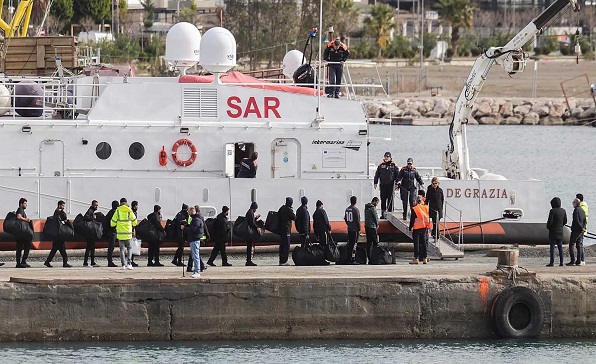
Speaking at a joint press conference in Vienna on Monday, Austrian Chancellor Christian Stocker said the five countries wanted to reduce pressure on European asylum systems and disrupt human trafficking networks responsible for organising dangerous journeys across the Mediterranean.
The initiative also comes amid growing political pressure on European governments to demonstrate control over irregular migration, particularly as several countries approach elections.
Human rights concerns emerge
However, the arrangement has attracted criticism from human rights organisations, which question whether Rwanda is an appropriate destination for migrants facing deportation.
Human Rights Watch senior Africa researcher Clementine de Montjoye warned that Rwanda’s human rights record raises serious concerns about the safety and treatment of people transferred there.
She cited allegations of repression of dissent, arbitrary detention, ill-treatment in detention facilities and Rwanda’s alleged support for armed rebels in neighbouring Democratic Republic of Congo.
She argued that financing Kigali to host the programme could expose deportees to suffering while providing political and financial benefits to a government accused of serious human rights violations.
The European Union Agency for Fundamental Rights has also cautioned that any third country hosting a return hub must respect fundamental rights.
It particularly emphasised that migrants should not be transferred to countries where they face serious risks of persecution. Unaccompanied children should also be excluded from such arrangements, a position the Dutch government has confirmed it will respect.
Spain’s Prime Minister Pedro Sánchez has also criticised the initiative, describing it as lacking both humanity and a sustainable future.
“I don’t see any future or humanity in that. It’s not the solution,” Sánchez told Spanish broadcaster Telecinco, according to AFP.
Meanwhile, the British government has not ruled out participating in the arrangement, with Downing Street indicating that it would watch developments with interest.
The United Kingdom previously attempted a separate migration agreement with Rwanda, but legal challenges prevented its implementation before the incoming Labour government abandoned it in 2024.
Migration pressures behind the deal
The five-country agreement comes despite a decline in irregular migration into Europe.
According to the European Border and Coast Guard Agency, almost 110,000 irregular border crossings into the European Union were detected during the first 10 months of 2026, representing a 29% decrease compared with the corresponding period in 2025.
October recorded approximately 18,100 crossings, 6% below October 2025, although arrivals increased by 22% compared with September, largely because of increased movement along the Western African route towards the Canary Islands.







About the Author