
HABARI DAILY I Kampala, Uganda I For over five years, Nation Media Group media outlets have been accused of pursuing what government officials describe as “journalism of activism” instead of objective and balanced reporting.
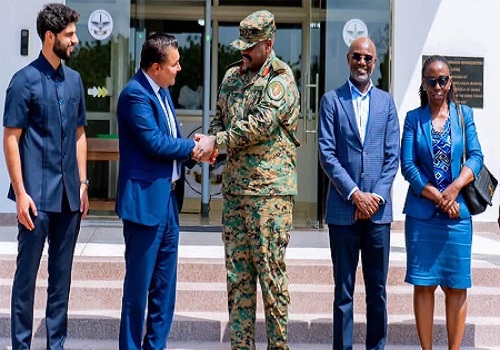
The allegations culminated in a high-level meeting at the Special Forces Command headquarters in Entebbe, where Chief of Defence Forces Gen Muhoozi Kainerugaba handed over a detailed report to the owners of Nation Media Group (NMG), accusing the company’s Ugandan media outlets of sustained bias against the government.
The meeting came against the backdrop of the closure of NMG Uganda’s operations, including Daily Monitor, NTV Uganda, KFM, Dembe FM and Spark TV. The shutdown followed a security-led inquiry ordered by President Yoweri Museveni, with security personnel maintaining a presence at the company’s premises in Namuwongo while investigations continued.
Media house’s coverage over 5 years
At the centre of the discussions was a comprehensive five-year dossier compiled by the government. According to veteran journalist Andrew Mwenda, who spoke after the meeting as a spokesperson for the Patriotic League of Uganda (PLU), Gen Muhoozi presented an extensive report examining the media house’s coverage of government and opposition affairs over the past five years.
Mwenda described the report as a detailed assessment of the 100 leading front-page stories and major news reports published by the Daily Monitor and broadcast by NTV Uganda concerning the government. According to the findings presented by the Chief of Defence Forces, 97 percent of the stories about the government were negative in tone, while coverage of opposition figures was described as 100 percent sympathetic.
Deliberate, negative editorial position
The report formed the basis of Gen Muhoozi’s argument that the media house had departed from the principles of objective journalism and instead embraced activism. According to Mwenda, the government believes the pattern of reporting demonstrates a deliberate editorial position rather than impartial news coverage.
“Gen Muhoozi Kainerugaba met with the owners of Nation Media Group about a series of complaints that the government has accumulated over so many years against the media company. He had a report this thick, about stories they have done over the last five years that are biased and untrue,” Mwenda said after the meeting.
He added that the report sought to demonstrate that many of the stories published by the Daily Monitor and aired by NTV Uganda contained inaccuracies, lacked proper context and failed to present balanced perspectives.
According to Mwenda, Gen Muhoozi argued that journalism should uphold fairness, accuracy, balance and truthfulness regardless of the subject being reported. He said the Chief of Defence Forces maintained that consistently portraying government actions negatively while treating opposition actors sympathetically amounted to political activism disguised as journalism.
Activism at play
“Gen Muhoozi’s argument is that this is not journalism; this is activism. We don’t have a newspaper, we have an opposition party mouthpiece. All that the government of Uganda wants is a paper that is fair and balanced and truthful and accurate and that provides context,” Mwenda explained.
The meeting was attended by NMG owner Rostam Aziz, his son Saam Aziz, Taarifa Limited Chief of Staff Georgia Mutagaywa, Andrew Mwenda and the acting Defence Public Information Director, Col Chris Magezi. The gathering was aimed at addressing the concerns that led to the closure of the media company’s operations and exploring a possible path toward reopening.
According to those who attended the discussions, Gen Muhoozi used the meeting to present the government’s accumulated grievances against the media house rather than merely discussing the immediate closure. The report, officials said, represented years of documented complaints regarding reporting that the government considers inaccurate, misleading and unfairly hostile.
Following the presentation of the dossier, Nation Media Group’s leadership reportedly acknowledged the concerns raised during the discussions and committed themselves to adopting what participants described as a more patriotic, balanced and objective approach to journalism going forward. The commitment was presented as an effort to rebuild confidence and address the issues highlighted in the government’s report.
Museveni’s verdict
However, the fate of the media house remains subject to a final decision by President Museveni. Gen Muhoozi indicated that he would prepare and submit a comprehensive report on the outcome of the Entebbe meeting to the President, who will determine when the company’s offices can resume normal operations.
The closure of Nation Media Group’s Ugandan outlets has also attracted international attention. Reuters reported that employees remained unable to access their workplaces as negotiations continued between the government and the company’s leadership.
ICT Minister Justine Kasule Lumumba stated that the shutdown was linked to a security inquiry involving the Uganda People’s Defence Forces, the Criminal Investigations Directorate of the Uganda Police Force, other security agencies and technical experts. According to the minister, the investigation was ordered by President Museveni.
Global condemnation
The developments have also prompted criticism from press freedom advocates. Amnesty International described the closure as part of what it called a broader campaign of harassment and intimidation directed at independent media organisations and civil society groups in Uganda. The organisation urged authorities to respect media freedom and ensure that journalists are able to operate without undue interference.
Even as differing perspectives continue to emerge over the closure and the government’s allegations, the five-year report presented by Gen Muhoozi has become the central document informing discussions between the state and Nation Media Group. Whether the findings will lead to significant editorial changes and ultimately pave the way for the reopening of Daily Monitor, NTV Uganda and the company’s other media outlets now rests on the outcome of consultations with President Museveni.







About the Author