
Julius Mukunda
HABARI DAILY I Kampala, Uganda I Civil Society Organisations (CSOs) have intensified calls on government to urgently reform digital taxation policies, arguing that current levies on mobile money transactions and smartphones are locking millions of Ugandans out of the digital economy.
Uganda’s digital taxation, enforced by the Uganda Revenue Authority (URA), focuses on taxing digital service providers (5% digital service tax), 12% excise duty on internet data, 18% Value Added Tax (VAT) on digital services, as well as a 0.5% withdrawal tax on mobile monet transactions.
In a renewed push led by the Civil Society Budget Advocacy Group (CSBAG), stakeholders say reducing taxes on mobile money and exempting low-cost smartphones from import duties could unlock financial inclusion, stimulate economic growth, and create jobs, particularly for youth and low-income earners.
The proposals are anchored in findings that existing taxes are not only regressive but also counterproductive to Uganda’s own development targets under the National Development Plan, which aims to expand internet usage and digital financial services.
Mobile Money Tax Burden
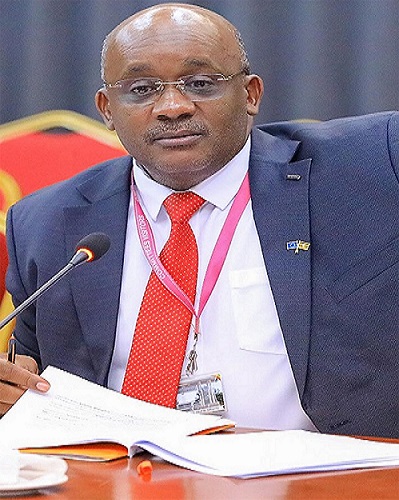
Julius Mukunda, the CSBAG Executive Director the mobile money withdrawal tax, currently set at 0.5 percent, is rubbing operators the wrong way.
“The tax disproportionately affects low-income earners who rely heavily on mobile money as their primary financial service,” he said during a recent press conference at the CSBAG offices in Ntinda. He referred to the continued tax burden on mobile money as not being just a tax issue but a fairness issue.
He added that whereas mobile money is the backbone of financial inclusion in Uganda, it is being taxed far more heavily than traditional banking services. “That imbalance punishes the very people we are trying to bring into the formal economy.”
According to the data presented, withdrawing sh1m via mobile money attracts about Shs6,630 in taxes—more than 20 times higher than comparable bank or ATM charges.
Regressive Tax Regime
Mukunda added that past experience shows the damaging effects of such policies. “When mobile money taxes were first introduced in 2018, we saw a dramatic drop in usage—about 40 percent. That tells you everything. When you tax access, people simply opt out,” he said.
He warned that the current tax regime risks reversing gains made in financial inclusion, particularly in rural areas where mobile money remains the most accessible financial tool.
“Mobile money is not a luxury—it is a lifeline. It is how people send school fees, pay for health services, and run small businesses. Over-taxing it is equivalent to taxing survival,” Mukunda emphasised.
Fairer Tax Structure
CSBAG and its partners are now proposing a reduction of the withdrawal tax from 0.5 percent to 0.25 percent, alongside introducing a cap of Shs5,000 per transaction and exemptions for small withdrawals.
They argue that such reforms would encourage usage, reduce the incentive to revert to cash transactions, and ultimately increase government revenue through higher transaction volumes.
John Walugembe, the managing director of the Federation of Small and Medium Sized Enterprises, echoed these sentiments, stressing the burden on small businesses.
“Small and medium enterprises depend heavily on mobile money for daily transactions. The current taxes eat directly into their already thin margins,” Walugembe said.
He added: “If government is serious about supporting SMEs, then it must address the cost of doing business in the digital space. Lower taxes on mobile money would translate into increased liquidity, more transactions, and ultimately higher productivity.”
Walugembe further noted that Uganda risks falling behind regional peers that have adopted more progressive digital tax policies.
“We are competing in a regional and global economy. If our digital services are more expensive, businesses will suffer, and innovation will slow down,” he warned.
Smartphone Taxes
Beyond mobile money, CSOs are also raising alarm over the high cost of smartphones, which they say remains a major barrier to digital inclusion.
They pointed out that despite Uganda having over 57 million registered SIM cards, only about 20 million users own smartphones capable of accessing internet-based services. The rest remain stuck on basic feature phones, unable to participate fully in the digital economy.
“The infrastructure is there—4G and even 5G networks cover most of the population,” Mukunda noted, adding: “But people cannot afford the devices needed to use that infrastructure. It’s like building roads but denying people vehicles.”
CSOs argue that taxes on entry-level smartphones have made them unaffordable for ordinary Ugandans, undermining earlier government commitments to lower handset prices.
To address this, they are proposing a full tax exemption on smartphones valued below Shs350,000, including removal of import duty, VAT, and other levies.
10-Fold Growth Strategy
Mukunda pointed out that in broader economic terms, the current state of affairs in the digital realm may affect implementation of the 10-fold growth strategy.
“If we want to achieve a $500 billion economy by 2040, we cannot leave the majority of our population in digital darkness. Smartphones are not just gadgets—they are tools for education, business, and participation in modern society,” he said.
For those working within the mobile money ecosystem, the impact of these taxes is deeply felt.
Jenepher Tumwebaze, a mobile money booth operator in Kampala, described how high transaction costs affect her customers daily.
“Many customers complain about the charges, especially when they withdraw small amounts,” she said, adding that some even choose to keep money at home or ask friends to withdraw for them to avoid repeated charges.
Tumwebaze added that the situation has affected her business as well. “When people reduce transactions, it affects our commissions. We depend on volume, so when customers avoid mobile money, we also lose income,” she explained.
She believes reducing taxes would benefit both customers and agents. “If charges go down, more people will use mobile money again. That means more business for us and more convenience for them,” she said.
1.5% GDP Boost
CSOs argue that reducing taxes does not necessarily mean loss of revenue. Instead, they point to the potential for increased usage to offset initial losses.
Research cited in the proposal indicates that a 10 percent increase in smartphone penetration could boost GDP by up to 1.2 percent. Similarly, expanding the number of smartphone users could generate trillions in tax revenue through data usage and related services.
Walugembe emphasized this point, saying: “Government should look at the bigger picture. The goal is not just to collect taxes at the point of entry but to grow the economy. A digitally connected population will generate far more revenue over time.”
The organisations also link digital access to key government programmes such as the Parish Development Model, which relies on digital platforms for efficiency and transparency.
As Uganda pushes toward a digital future, CSOs further urge policymakers to rethink current tax policies to ensure inclusivity and sustainability.
“Mobile money is like blood in the economy. You don’t tax blood—you ensure it flows freely. If we get this right, we will not only improve lives but also unlock Uganda’s full economic potential,” says Mukunda.
The debate over digital taxation is likely to remain at the forefront of Uganda’s economic policy discussions in the months ahead, as Ugandans try to make sense of the variety of high profile digital assets before them.







About the Author